
Blue solutions to protect our oceans and waterways
On this page...
The ocean is our planet’s largest carbon sink, absorbing 90% of the heat and energy generated from rising greenhouse emissions. It is also the world’s largest source of food, providing 20% of humanity’s animal protein. We need to support and protect our oceans, rivers, and other waterways from the detrimental impacts of climate change. There are many ways to contribute to “blue solutions”. Watch the videos below to learn how these changemakers are supporting these vital aquatic ecosystems.
70% of our planet is water. It is really important that we look after this place. Tiahni Adamson, Wildlife conservation biologist
© Australian Museum
Tiahni Adamson
Tiahni Adamson is a proud Aboriginal and Torres Strait Islander wildlife conservation biologist and a leader in climate solutions. A prominent member of Seed, Tiahni is also recognized as a Superstar of Stem and Young South Australian of the Year. At CH4Global, she focuses on using First Nations knowledge to encourage seaweed aquaculture as a nature-based solution to climate change.
We're born from the sea, and we go back to the sea. Tiahni Adamson, Wildlife conservation biologist
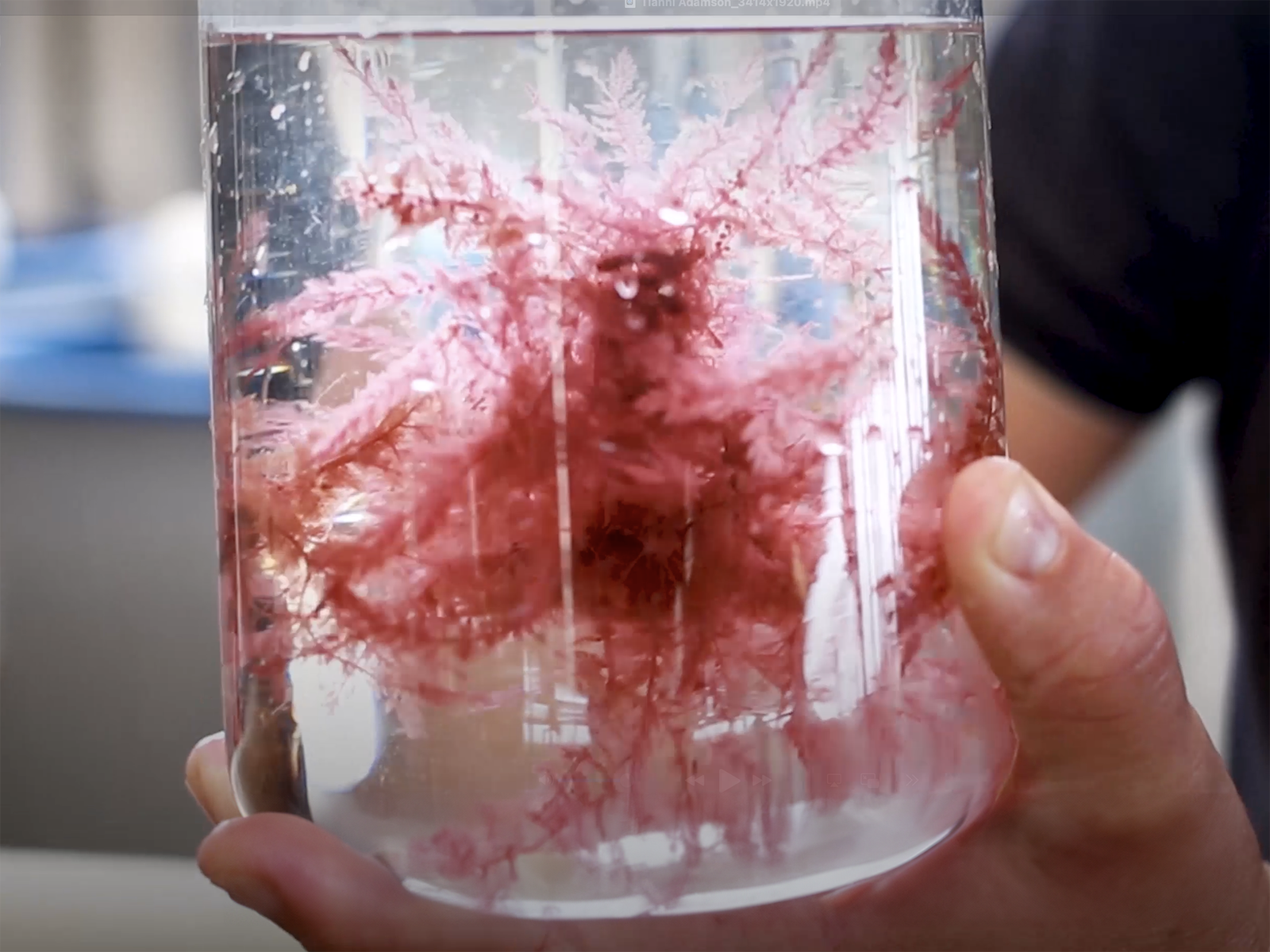
We've found this fantastic seaweed called Asparagopsis. It's native to Australia and Aotearoa, and you can find it all over most of the coast. It has this really incredible potential to reduce methane when we grow it, produce it into a cattle food, and feed it to cattle. We only give about 50 grams of the seaweed product to cattle per day, so it's only a little bit in their diet, and it has a methane reduction potential of up to 90%. So it's a really incredible climate solution.
First Nations management of sea country has happened for over 65,000 years. Most of us from communities are saltwater people around the coastline. We're born from the sea, and we go back to the sea.
Camilla Drieberg
Camilla Drieberg is a Riverkeeper at the Parramatta River Catchment Group (PRCG), where she cares for the health of the Parramatta River and surrounding catchment. PRCG established the Parramatta River and Waterways Network (PRAWN), a not-for-profit collective that aims to educate, protect, and restore the natural environment by building a collective knowledge base and bringing individuals together to care for Country.
I think everyone deserves to have access to a clean waterway, especially people in western Sydney with climate change, with the urban heat island effect. Rivers play a huge role. Camilla Drieberg, riverkeeper at the Parramatta River Catchment Group (PRCG)
The Riverkeeper is the community-facing role of the Parramatta River Catchment Group. The group is an alliance of member councils, state government agencies, and community groups. So, it's my job to go out, make the connections with the community groups that help manage the waterways and the surrounding catchment.
A big agenda of our organization is to dissolve those boundaries, get everyone working together on similar projects. We have a network that we've recently started called PRAWN, which is the Parramatta River And Waterways Network, and that is a chance to unite community groups who sometimes think they're working in isolation, and then they can sort of realize, "Oh, there's other people that are doing the work we're doing."
So, right now is a really exciting time. There's a global movement to make rivers in urban areas swimmable again, and it's exciting to be part of a movement that we've sort of been building and building over the last 10 years, and it seems like it's still only just the beginning.
I have always been very interested in water. I've always loved swimming, and I think it did start from that love of swimming and that I think everyone should have access to a body of water. And I understand that not everyone might like swimming, but I think everyone deserves to have access to a clean waterway, especially people in Western Sydney with climate change, with the urban heat island effect. You know, Western Sydney can be 10 degrees hotter than the coast, and it's not feasible for people to travel to the beach.
I think that with the majority of the world's population living in urban areas, we need to make them sustainable, which means enhancing and protecting the natural environment that's there. And rivers play a huge role. They shouldn't be piped, they shouldn't be put under concrete or underground, they shouldn't be treated as rubbish dumps. They can be the central artery that connects our communities in urban areas, and I think that's gonna be really important for the future, especially with climate change. It's not only about mitigating the impacts of heat and increased temperature, but also dealing with flooding, and extreme weather events, and sort of making cities able to withstand the changes that are coming ahead for us.
Julia Strykowksi
Julia Strykowski is a Riverkeeper Ambassador for the Friends of Toongabbie Creek, a collaborative group that aims to enhance the health, beauty, and ecological health of Toongabbie Creek through shared local activities and raising awareness. They support a variety of projects, including citizen science, Streamwatch, bush care, and litter clean ups.
If 1% more people care each year, maybe because of the work that we do, then that's many, many more eyes on the creek, helping care for country. Julia Strykowski, riverkeeper ambassador for the Friends of Toongabbie Creek
I'm an ecologist. I'm an environmental educator. So look, I love the environment. I'm passionate for the environment. I'm also a bit madly in love and hate with plastic waste. So, I'm an eco-artist and I love to work with plastic waste, but I use it as an educational tool to show its horrors, its complexity, its ubiquitousness.
Friends of Toongabbie Creek is a grassroots community group. We look after a sub-catchment approach to Toongabbie Creek, which is 12 kilometers long. There's beautiful bushland along its length. 85 species of birds, fish, eels, frogs, reptiles, and it's also where thousands of Western Sydney siders live. So, we care for the creek, we care for country in a range of ways.
What I'm seeing more and more is families wanting to engage with the waterways, report on its wellbeing, share information with the EPA, with our local council, and we have people coming to us all the time saying, "I've seen this. What do I do? What's the solution to this problem?"
What we do in the upper end of the catchment, how we treat each other, how we treat wildlife around us, is essential to our health and wellbeing.
Cleanups are really band-aid, end of pipeline solutions. Halfway through the cleanup, I see people get maybe a little bit despondent and then their thinking starts switching to, "What else can I do to make a difference?"
I think more people care. Urban growth is increasing all the time so we've got more and more people living along the creek and if 1% more people care each year, maybe because of the work that we do, then that's many, many more eyes on the creek, all helping care for country.
