
Eight-legged evolution under the microscope
New research released in Genome Biology & Evolution significantly advances the understanding of spider evolution, assembling the genome of a North American tarantula for the first time and uncovering surprising patterns across the spider family tree.
Despite spiders being one of the world's most recognisable and widespread groups of animals, their genomics remain vastly understudied. Of the roughly 54,000 known spider species worldwide, only around 180 genomes are publicly available.
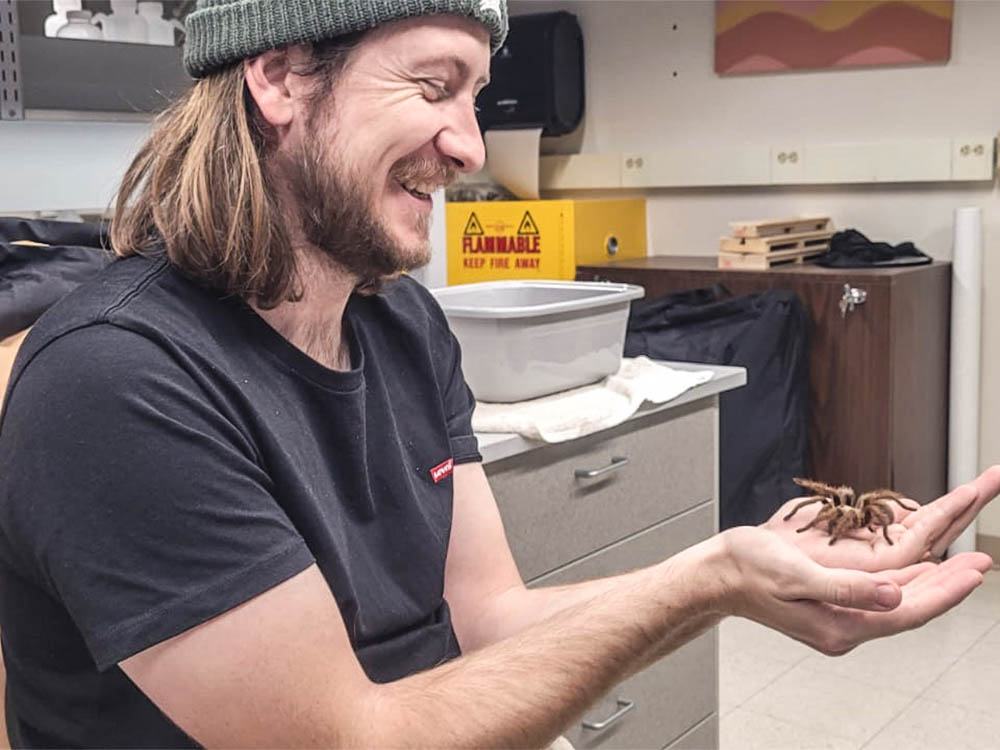
© Briggs et al.
Led by the Australian Museum’s Chadwick Biodiversity Fellow, Dr Ethan Briggs, who began the work at the University of Idaho with Associate Professor Chris Hamilton, the research indicates this creature still carries many evolutionary secrets.
"Spiders are everywhere, yet genomically, they're largely a mystery. Assembling a tarantula genome gave us a remarkable window into the sheer scale and complexity of spider DNA, and when we started comparing it with other species, several exciting evolutionary patterns began to emerge," Dr Briggs said.
The research focused on the tarantula genome. Remarkably, it was found to contain 18 chromosomes and 6.5 billion base pairs, which is more than double the size of the 3.1 billion base pair human genome, and is among the largest spider genomes published to date.
“Nearly 80 percent of the tarantula genome is repetitive sequence, a striking characteristic that raises fundamental questions about how and why spider genomes are structured the way they are. The pace at which new arachnid genomes are becoming available is genuinely exciting, and I think we're at the beginning of a much richer understanding of these animals,” said Dr Briggs.
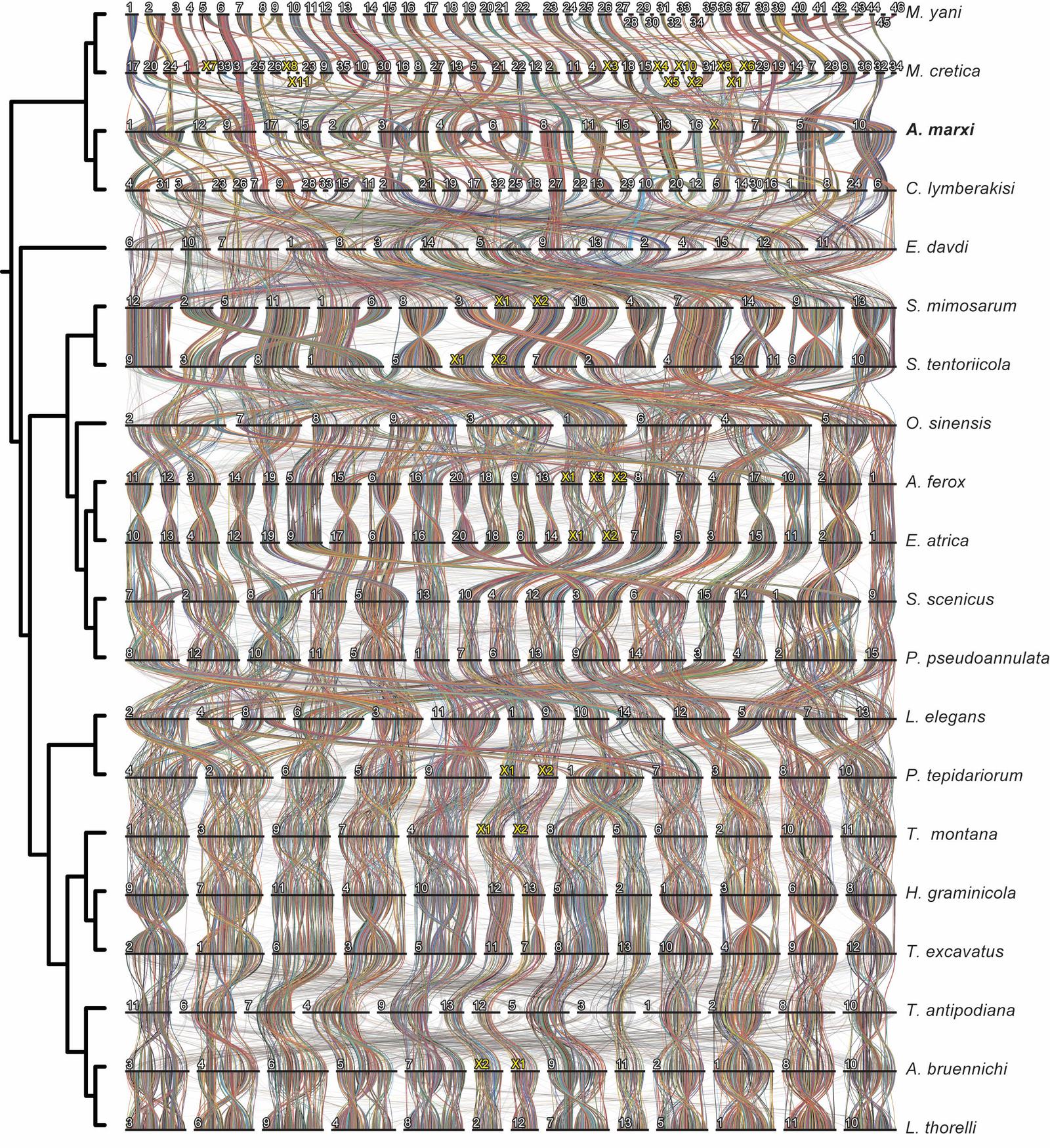
© Briggs et al.
Professor Shane Ahyong, Chief Scientist at the Australian Museum Research Institute (AMRI), said the research was a strong example of the kind of foundational biodiversity science that typifies AMRI’s work.
"Understanding the genomic architecture of spiders is foundational to understanding the evolution and diversity of life on Earth. Dr Briggs' research adds a vital new layer to our knowledge of arachnids, and we look forward to seeing this work continue to grow as more genomes become available."
The research was conducted in collaboration with the University of Idaho. Dr Briggs continues his arachnid research at the Australian Museum, where the Chadwick Biodiversity Fellowship supports early-career scientists working at the frontier of biodiversity discovery.
