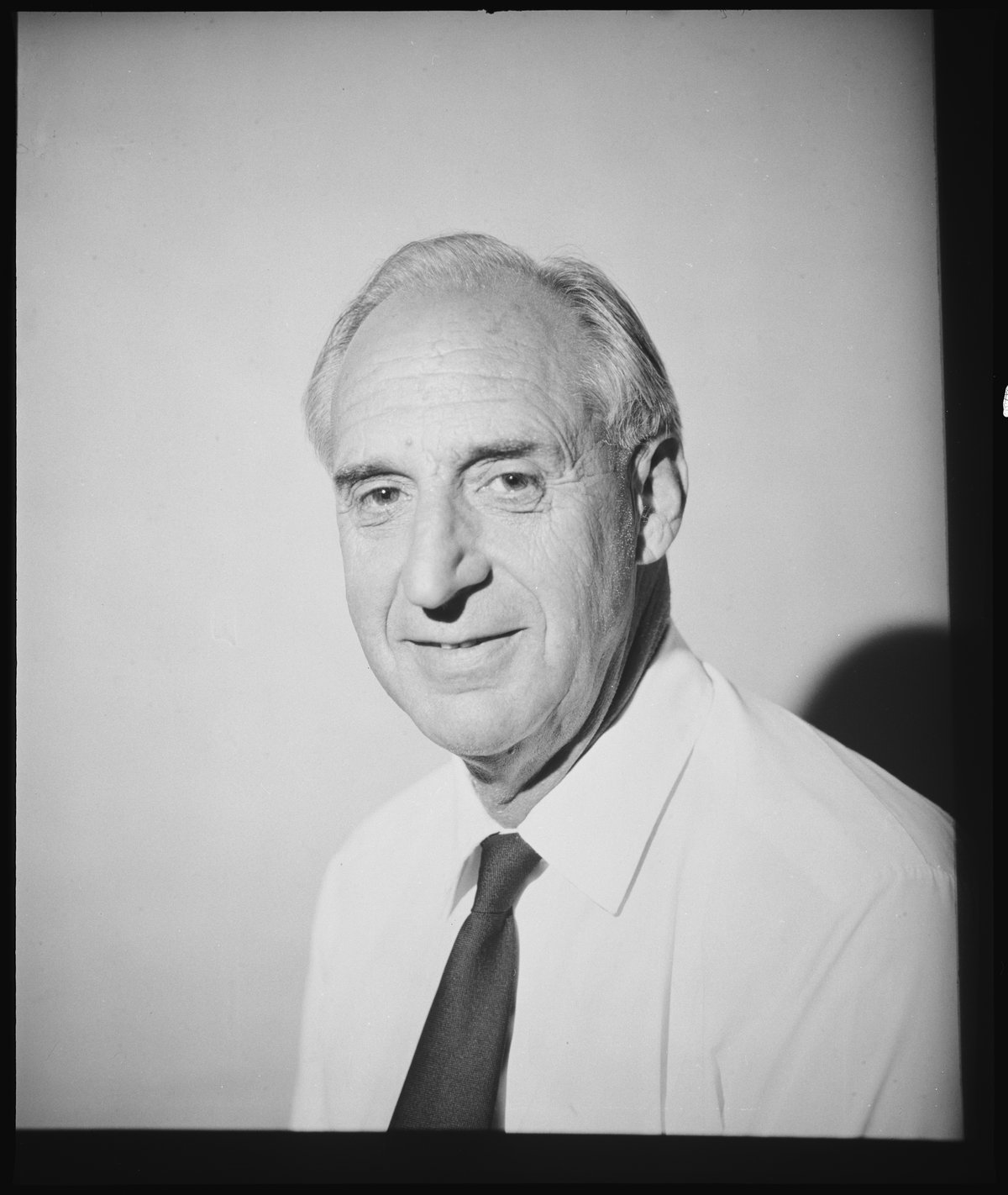
Courtenay Neville Smithers
![AMS391/M02314 [Portrait of Courtenay Smithers]](https://media.australian.museum/media/dd/thumbnails/images/AMS391M02314_Portrait_of_Courtenay_Smithers.width-800.b826df9.jpg) Click to enlarge image
Click to enlarge image
© Australian Museum
Entomologist Courtenay Neville Smithers (1925-2011) spent much of his long career celebrating some of the world’s most overlooked animals, inviting the public into the wondrous world of insects. As the Australian Museum's Curator of Insects (amongst other roles) from 1960-1985, he transformed the AM into a world-class centre for entomological research, while also engaging the public through ground-breaking citizen science programs.
© Australian Museum
Early life and background
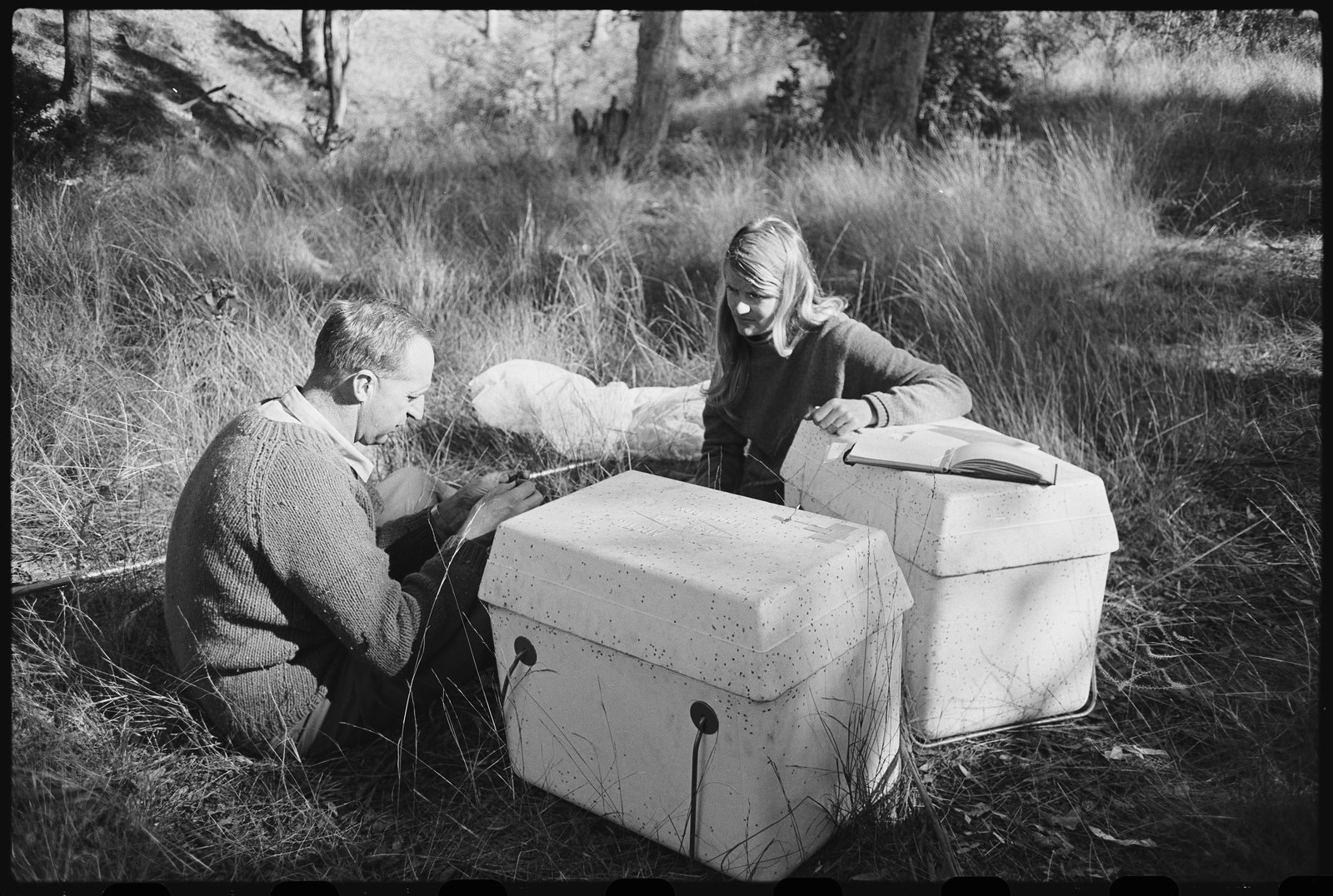
Smithers was born in 1925 in Pretoria, South Africa but after his father’s death in 1934, his family moved to England in 1938. Football has been his first love during these early years, though his time at school quickly changed the trajectory of his career path. Through his schooling, he became more interested in natural history and spent much of his spare time watching birds and collecting insects.
The onset of World War II further changed Smithers' career trajectory. He enlisted in the British Army in 1943, landing in France on D-Day in June 1944. Not long after, he was captured and held as a prisoner of war until the following year.
Following his discharge from the Army in 1947, he returned to South Africa to pursue his love of natural history, studying agriculture at the University of Pretoria. He majored in entomology and botany, then moved to Rhodes University to further his studies in entomology, eventually completing a Masters degree in the early 1950s. During this time period, he also found his other great love, marrying a teacher Aletta du Preez (affectionately known as Smila).
Early research into bark lice
Ever the practical man, Smithers decided to put further studies on hold after his Masters, figuring he'd learn best in the field. As such, he began his working scientific career in a position with the Rhodesian Government, focused on understanding the tsetse fly problem that was plaguing the region. He then picked up a role a few months later in Southern Rhodesia, where he quickly developed a fascination with Pscoptera, commonly known as bark lice. At the time, these insects were largely unknown to the public, with many species still undescribed.
Unfazed by their obscurity, Smithers leaned in. Over decades, he became one of the world’s leading authorities on the insects, producing a vast body of research and helping establish their importance in understanding biodiversity. His wife Smila was a key collaborator, becoming an expert collector in her own right. Together, they turned an underappreciated insect order into a serious field of study.
© Australian Museum
Joining the Australian Museum
Smithers joined the Australian Museum in Sydney in 1960, following the death of leading entomologist and Curator of Insects, Anthony Musgrave. Musgrave had been planning to retire and had already hired Smithers to join him, but suddenly passed away in June 1959 while Smithers' letter of offer was in the mail.
Arriving in Australia with Smila the following year, Smithers took up Musgrave's post of Curator of Insects, which at that stage also included spiders, centipedes and scorpions (a far cry from bark lice!) This required Smithers to rapidly upskill and expand his expertise on Australian insects of all sorts, such as Sydney funnel-web spiders.
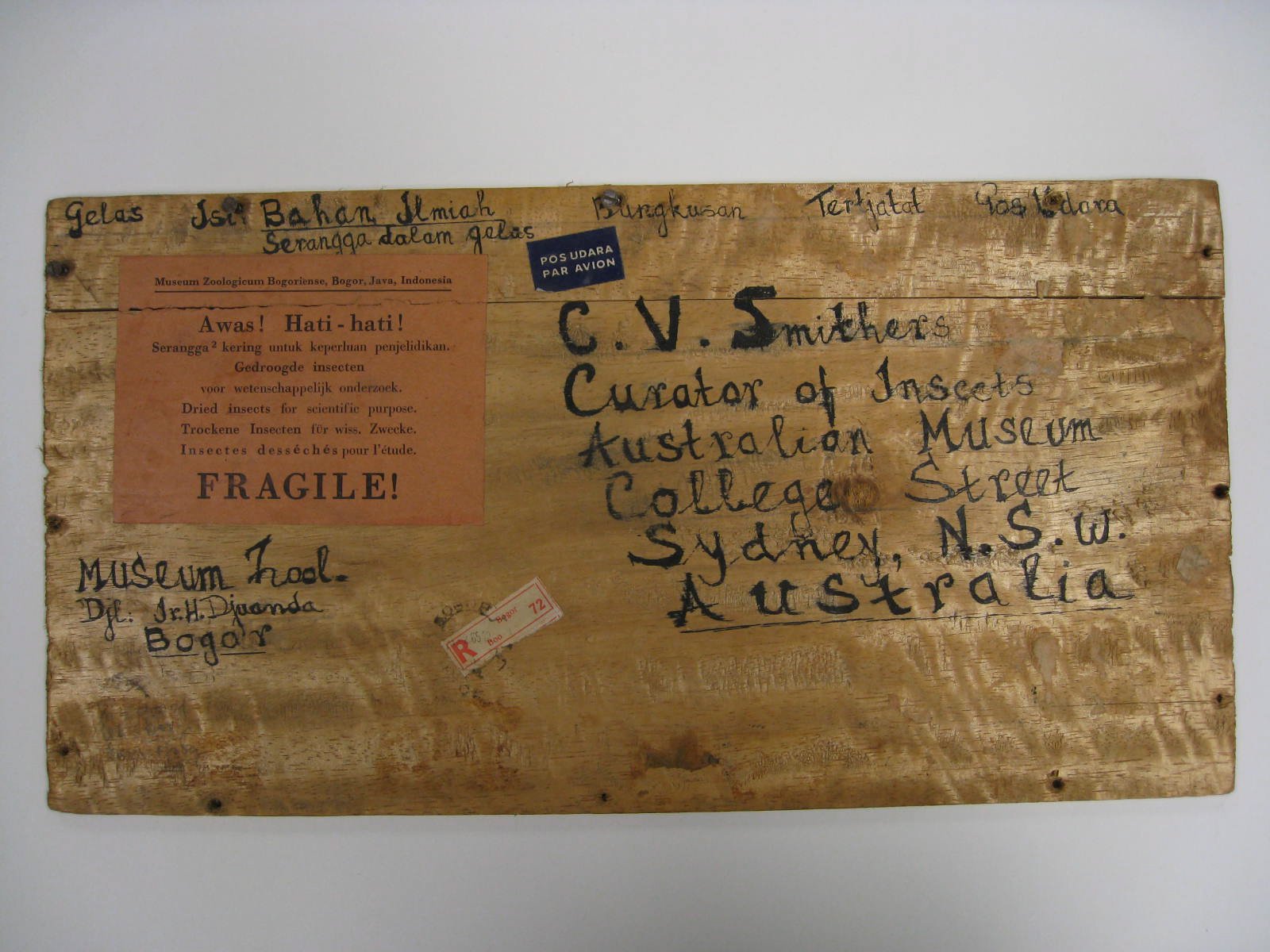
Through extensive fieldwork across Australia (including a three-month expedition to Cape York) in the years to come, he expanded the AM’s entomological collections and deepened scientific understanding of insect biodiversity. His international specimen exchanges even helped establish the Australian Museum as a global centre for bark lice research.
In the 1960s, Smithers also used his position at the AM to help build Australia’s entomological community. He attended major international congresses in 1964 and 1968, and later served as organising secretary for the 1972 International Congress of Entomologists in Canberra. He also helped found the Australian Entomological Society in 1963, with the society later recognising his leadership with a presidency and honorary life membership, along with similar recognition from the Entomological Society of New South Wales.
© Australian Museum
Science for everyone
If Smithers had a second scientific passion after bark lice, it was people. He believed strongly that science should not stay inside museum walls. Known for his approachable nature, he encouraged anyone with curiosity to participate, regardless of formal training.
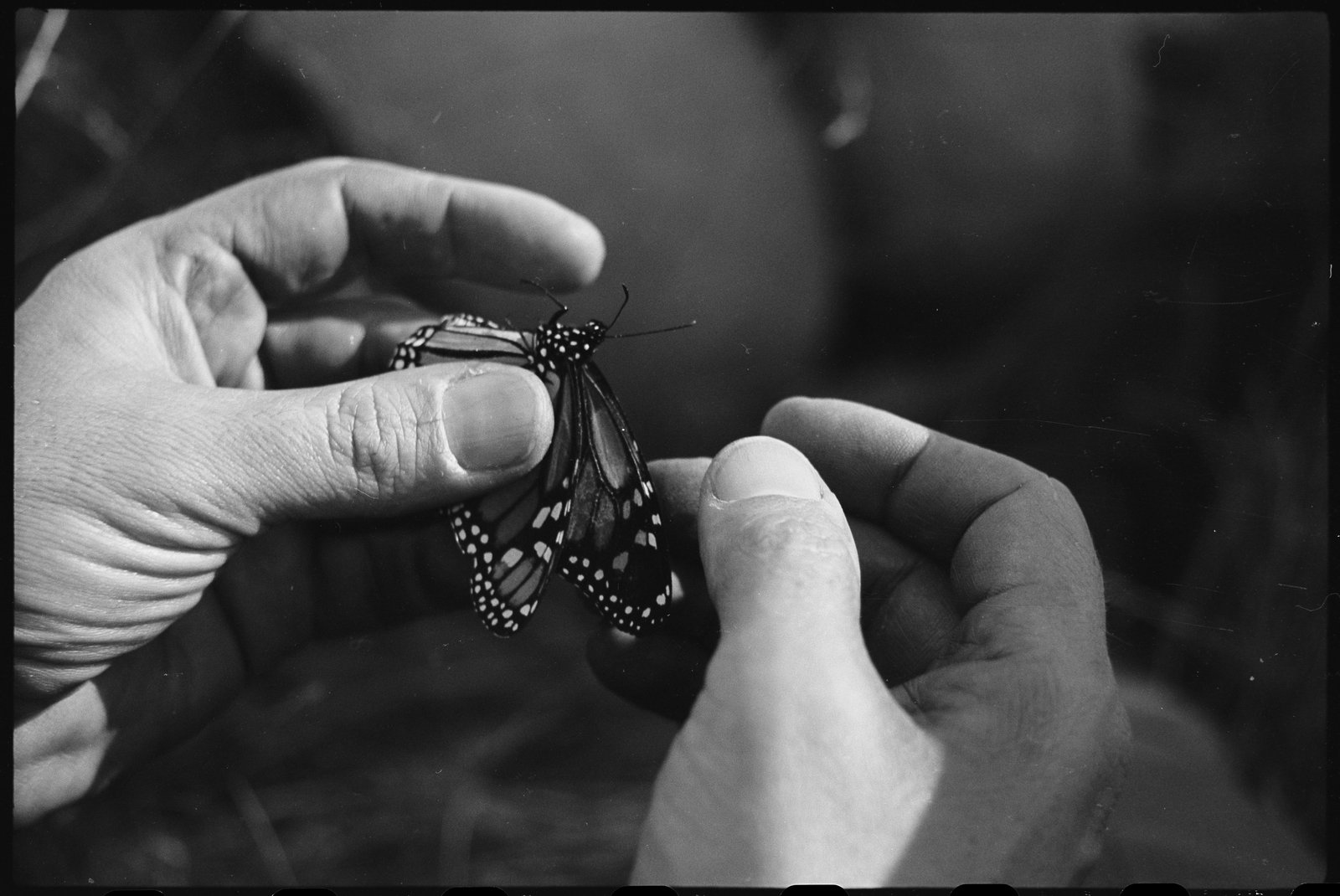
His co-authored book Australian Insects in Colour (1972) opened the door to entomology for a broad audience. But his most enduring public contribution came through citizen science programs. For example, Smithers led a butterfly tagging program that mobilised volunteers across New South Wales, South Australia and Victoria. Participants (many from non-scientific backgrounds) tagged and recorded butterfly movements, contributing valuable data to migration studies. He maintained correspondence with many of these contributors, carefully preserving their letters and responding with enthusiasm. He regarded them as “scientific confederates”, partners in discovery whose observations enriched professional research.
© Australian Museum
Legacy and impact
In the late 1960s, Smithers balanced an extraordinary workload. In 1967, he stepped up to serve as Deputy Director of the Australian Museum while simultaneously leading the Entomology Department, acting as Secretary for the International Congress Organising Committee and completing his doctoral research. He was eventually awarded a PhD from Rhodes University in 1970 for his global revision of bark lice classification, stepping down as Deputy Director the same year and continuing as Principal Curator until his retirement in 1985.
Retirement, for Smithers, simply meant more time to work. He continued researching and publishing on bark lice, scorpion flies, butterflies and lacewings well into later life, producing more than 280 scientific works. His contributions included major references such as Psocoptera (Insecta): World Catalogue and Bibliography and chapters in the landmark CSIRO publication Insects of Australia. His final work, on beekeeping, was accepted for publication just days before his death.

Beyond his scientific output, Smithers was a generous mentor and enthusiastic collaborator. His belief in connecting people with science continues through the Australian Museum’s citizen science initiatives, volunteer programs such as DigiVol and public-facing services like Ask an Expert.
In the Australian Museum Collections
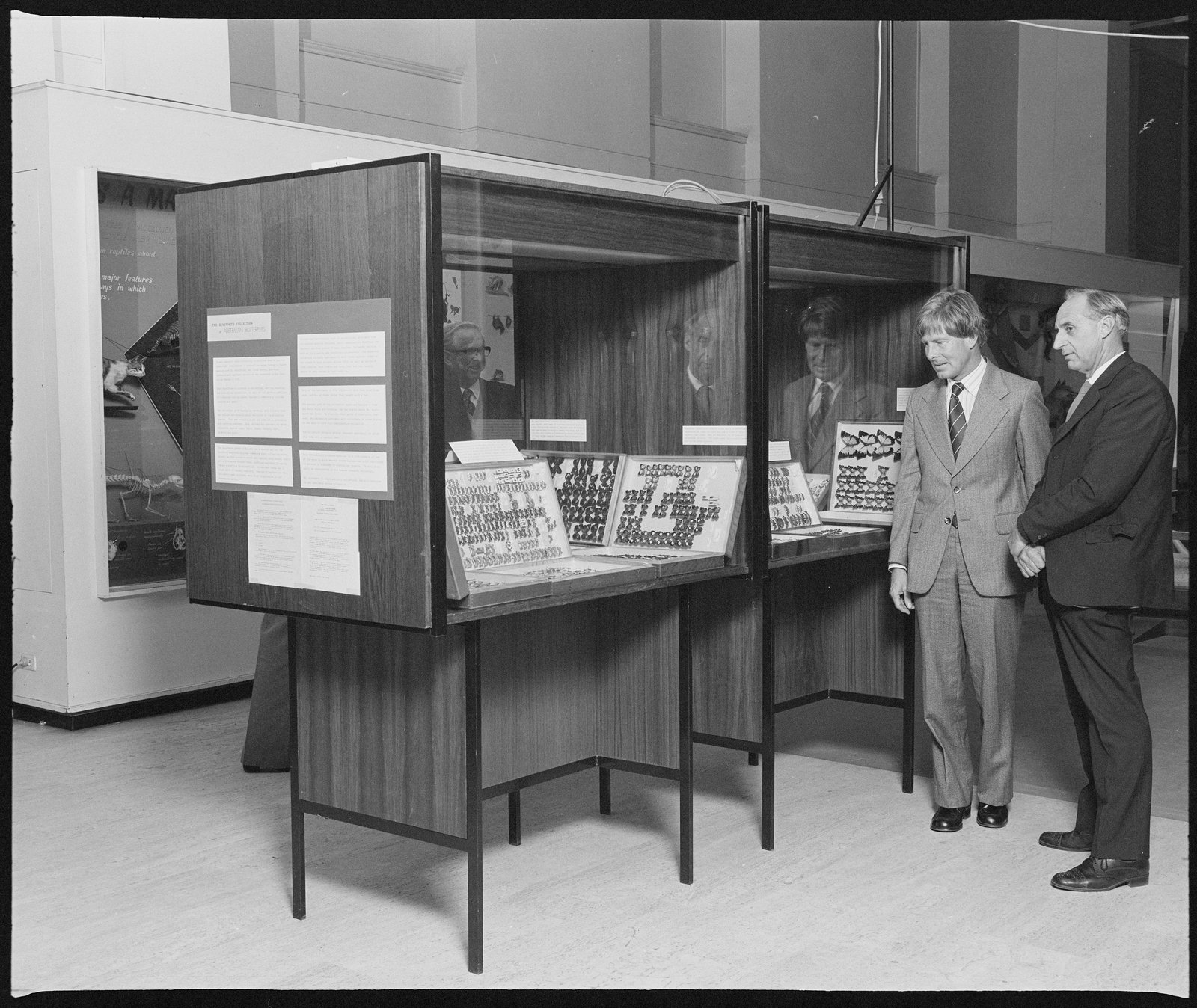
Smithers worked at the Australian Museum during a time of transformation and consequently made a lasting impact on its collections. Faced with cramped and inconsistent storage in the 1960s, he designed modular cabinets that allowed delicate pinned specimens to be handled and moved safely—systems that remain in use today.
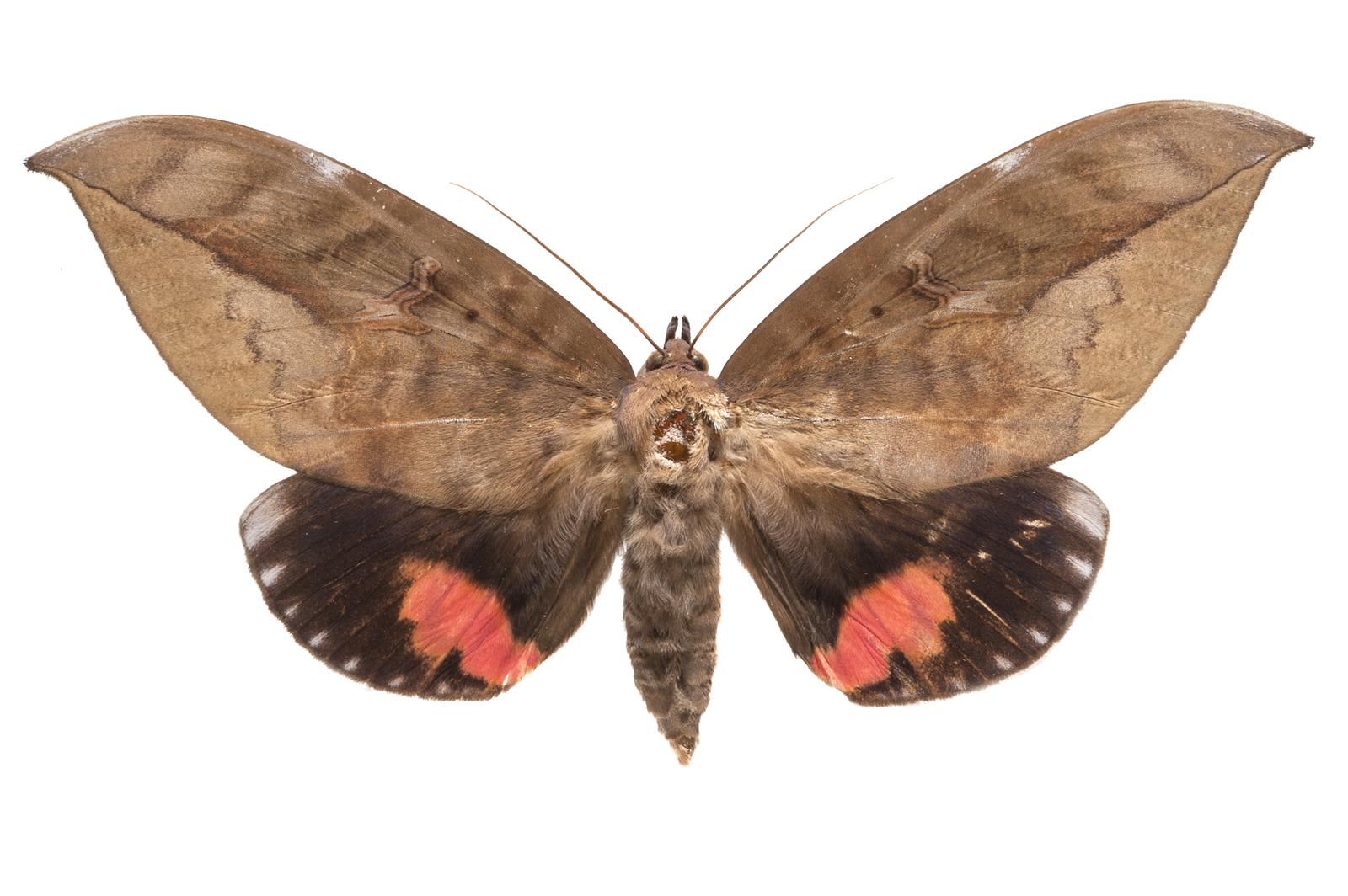
Alongside these cabinets, the AM’s Entomology Collection holds an extensive assemblage of bark lice from Australia and across the Southern Hemisphere, much of it collected by Smithers and his wife, Smila.
In the Archives, his research papers and correspondence provide a rich record of his work and his enthusiasm for engaging the public in scientific discovery.
© Australian Museum