
Norfolk Island expeditions
Explore Norfolk Island, a small island with a big history and unique biodiversity. Learn about the 2022 and 2025 expeditions and the ongoing research conducted by Australian Museum scientists.


The Australian Museum, known for its exciting scientific expeditions to places like Lord Howe Island, Balls Pyramid and the Solomon Islands, conducted scientific research at Norfolk Island across 2 expeditions in 2022 and 2025. Norfolk Island has a diverse environment and notable historic sites offering a unique heritage seldom found elsewhere around the world.
The Australian Museum and its collaborators travelled to Norfolk Island to undertake multiple phases of research. The expeditions were a broad-scale, multi-pronged collaborative program of biodiversity surveys and archaeological fieldwork.
The expeditions took place over two phases:
Norfolk Island Expedition: 2022 Phase 1
Terrestrial biodiversity survey and archaeological excavations
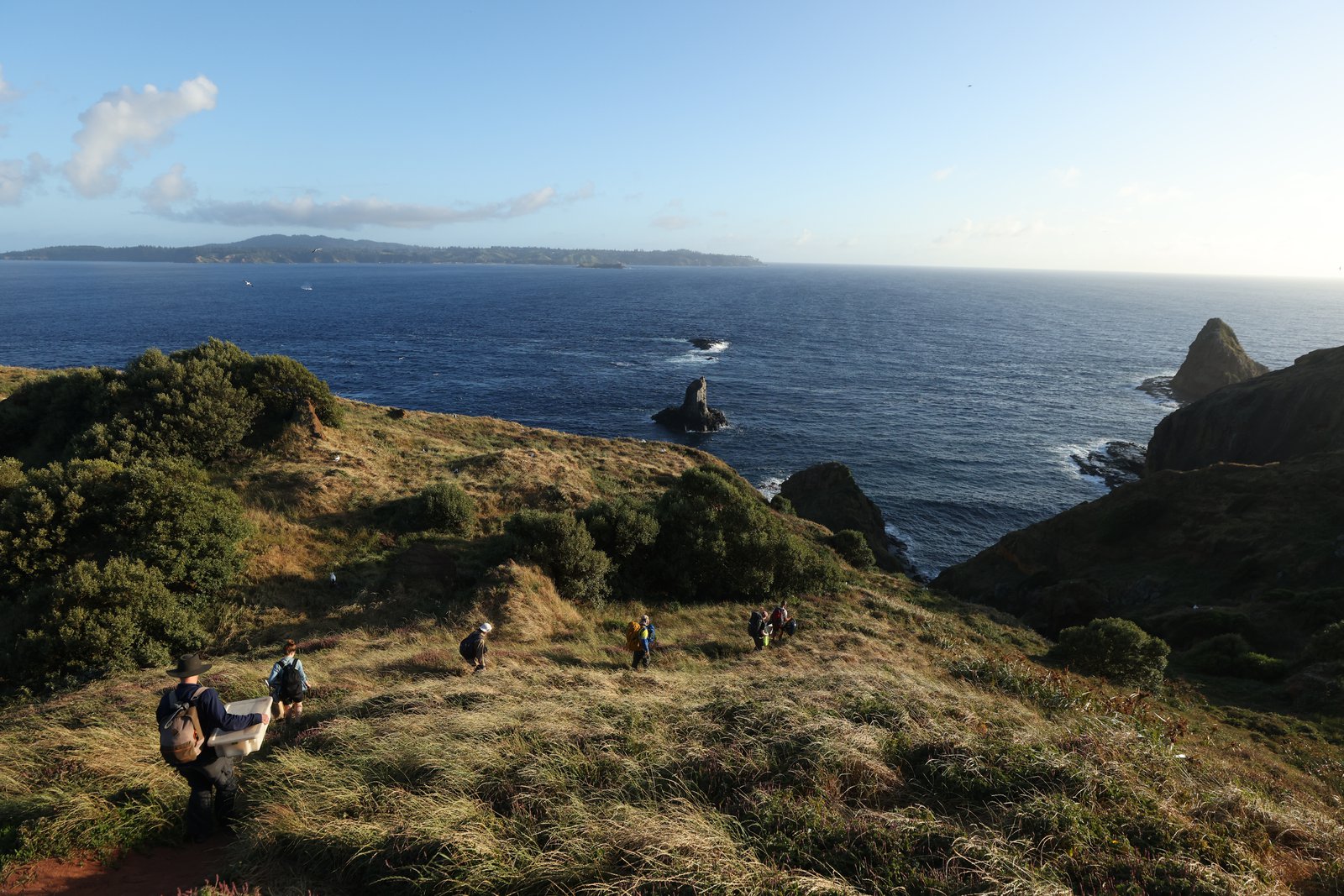
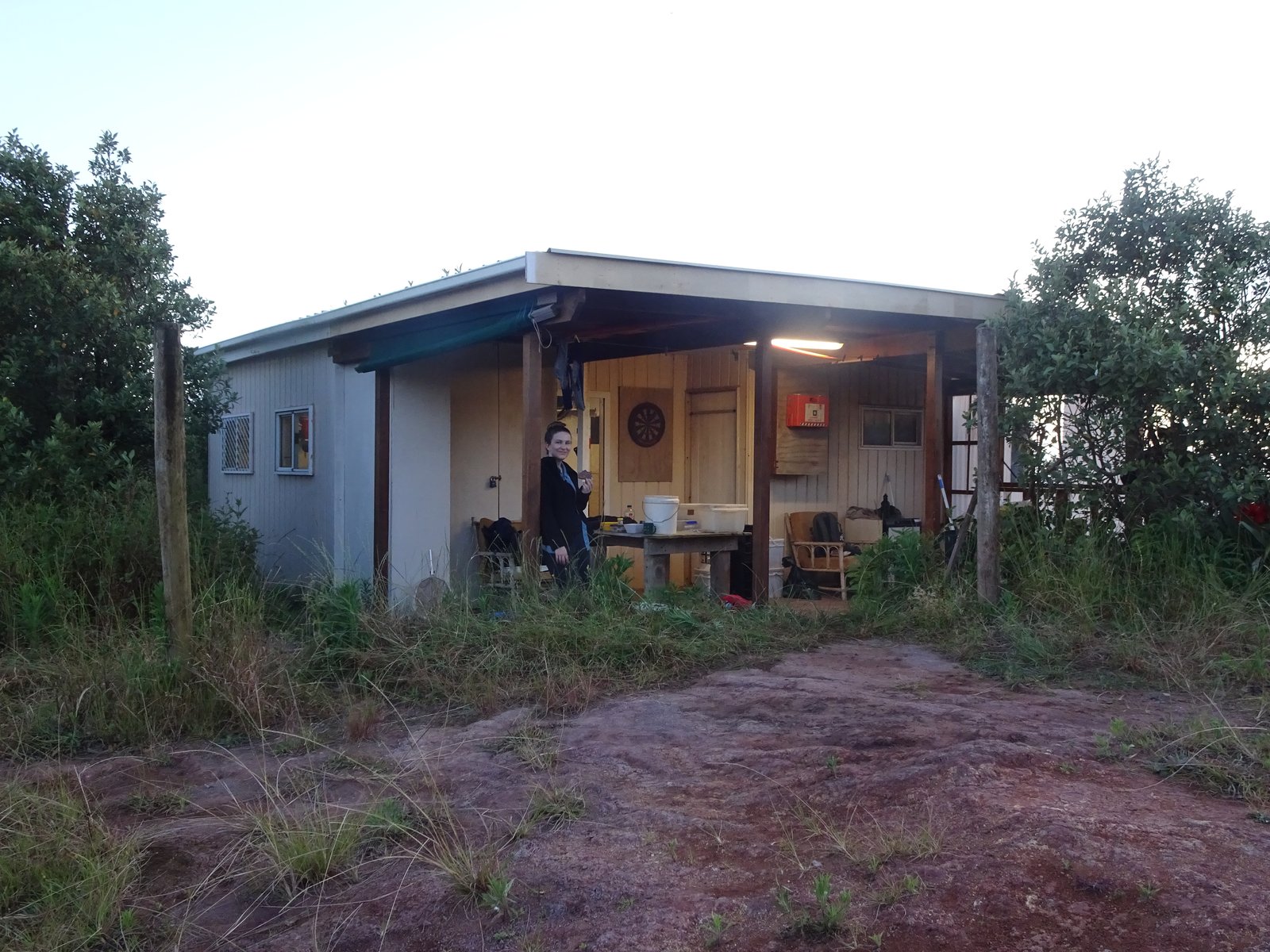
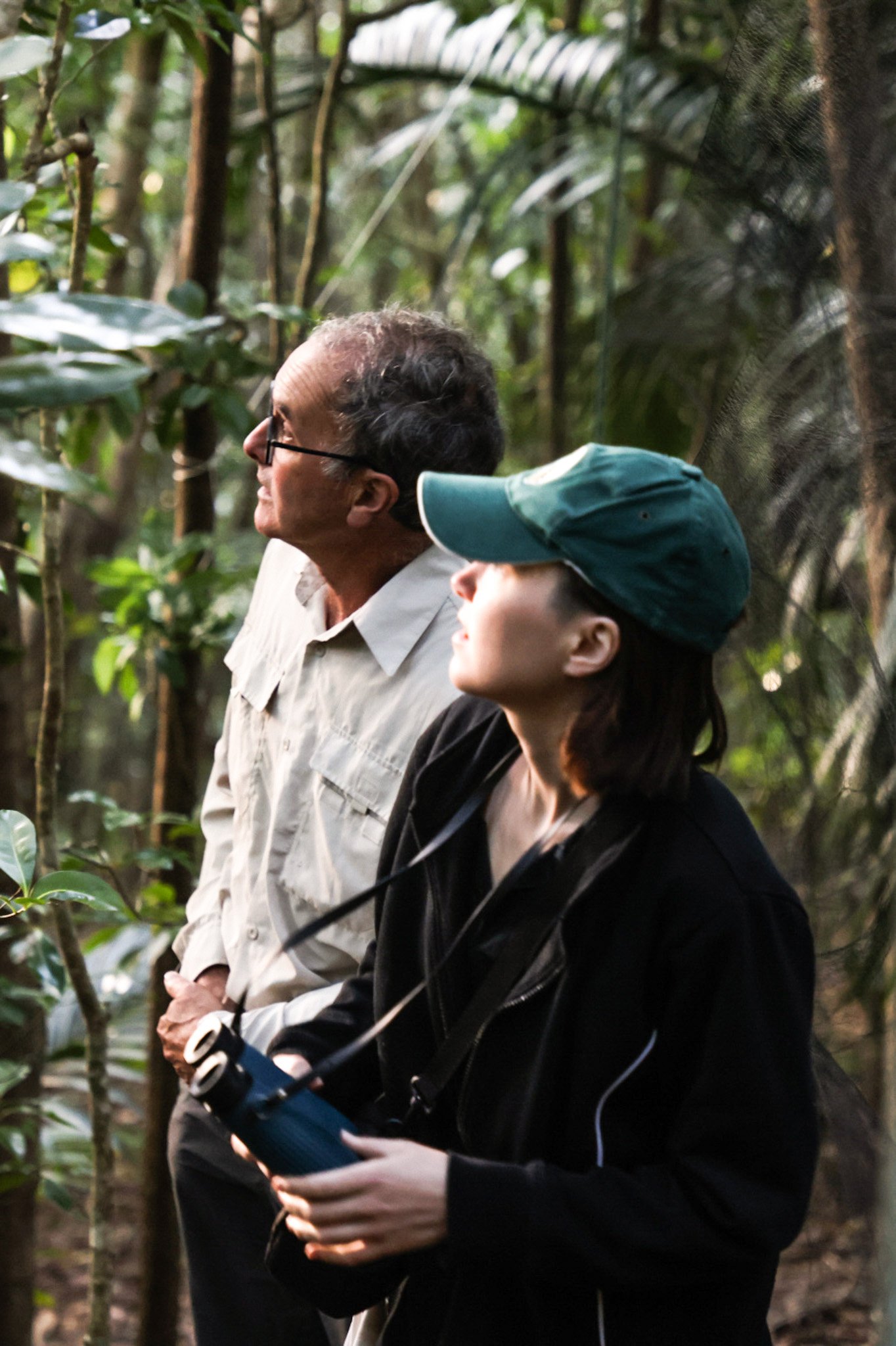
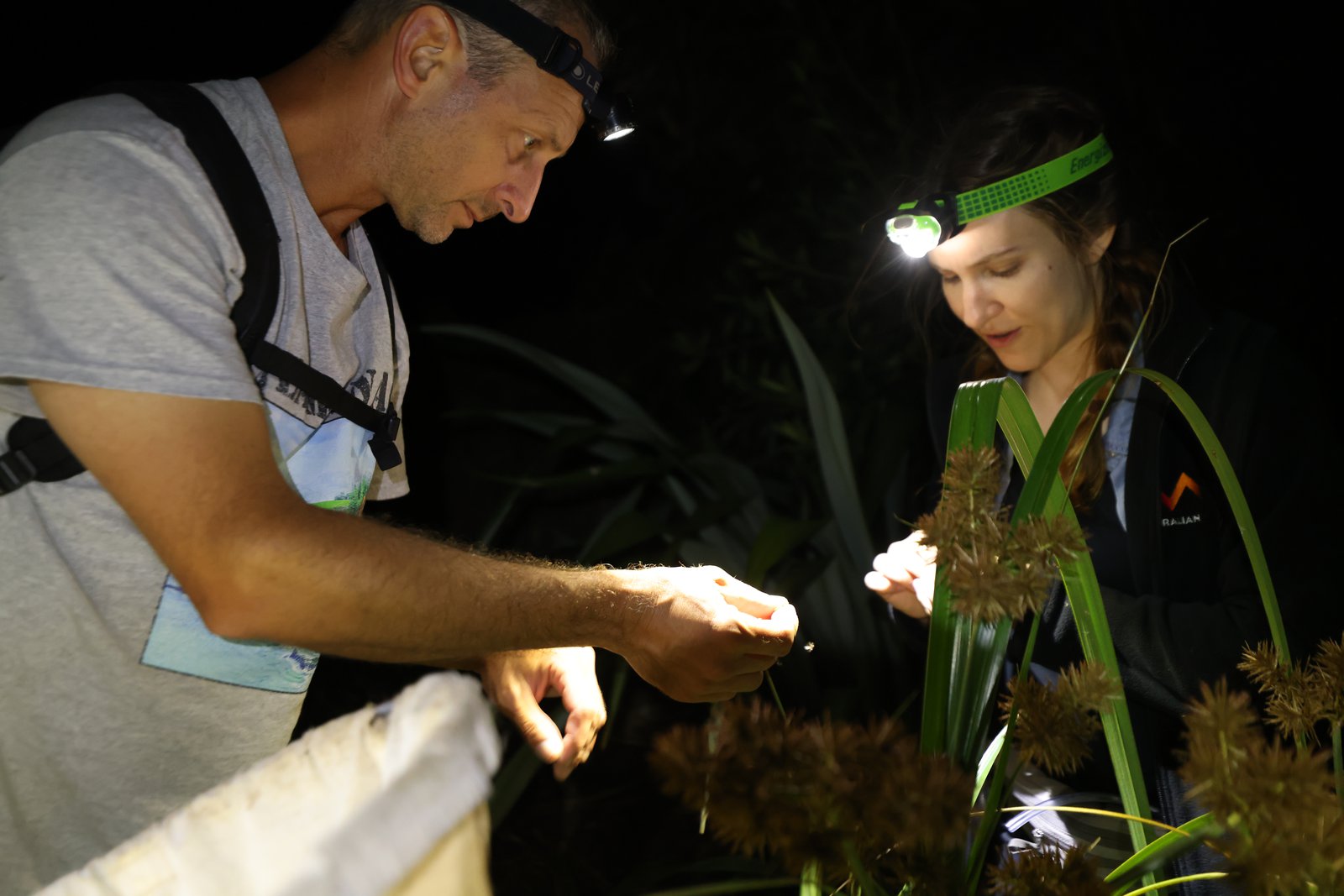
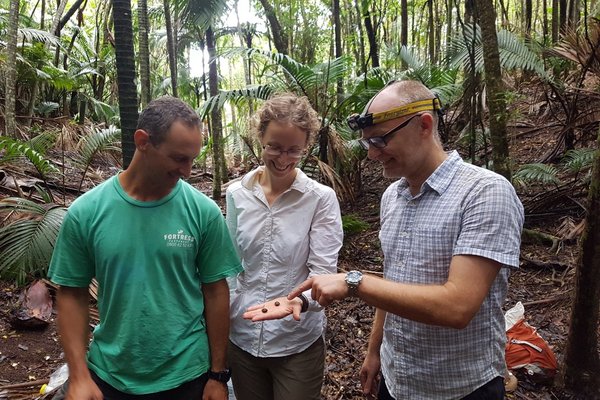
In collaboration with the Norfolk Island community, Parks Australia, the Australian Institute of Botanical Science and the Auckland War Memorial Museum, Australian Museum scientists conducted biodiversity surveys of native and introduced fauna and flora, adding to the existing scientific knowledge of the biodiversity of the Island and inform management practices.
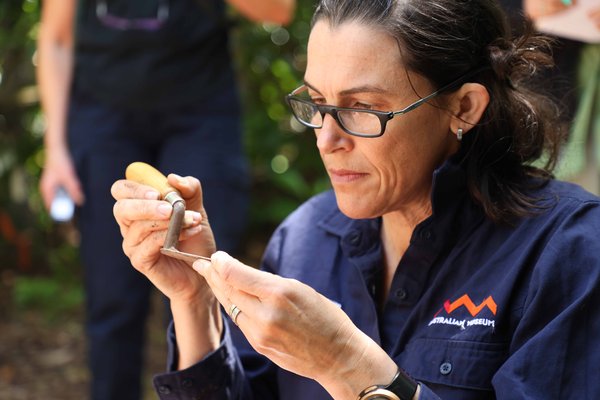
A program of archaeological fieldwork, including excavation, was conducted by University of Sydney Masters student Nicola Jorgensen and Australian Museum scientist Dr Amy Way in collaboration with the Norfolk Island community. This excavation has furthered our understanding of pre-European, Polynesian settlement on Norfolk Island and explored the nature and extent of this occupation through the objects they left behind.
Discover the expedition on film
Watch the two short videos of the 2022 expedition to Norfolk Island and a smaller venture to Phillip Island captured by cinematographer Tom Bannigan.
Norfolk Island expedition: 2025 Phase 2
Marine Biodiversity Survey
The second phase of its Norfolk Island scientific expedition focused on shallow marine biodiversity surveys to understand climate change impacts and species distributions. Joining the AM scientists were scientists from the Te Papa Tongarewa Museum of New Zealand, Auckland War Memorial Museum and the University of Sydney.
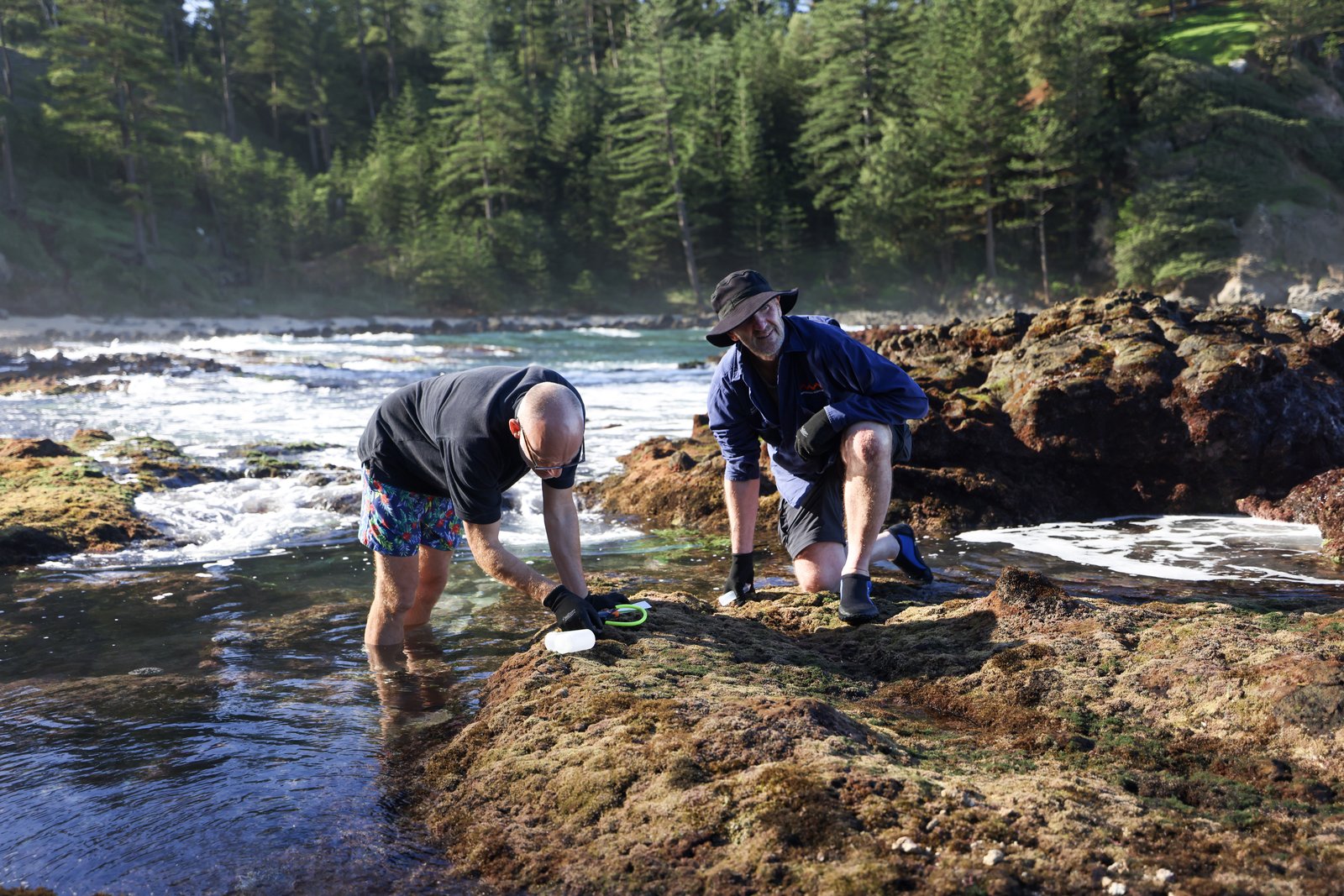
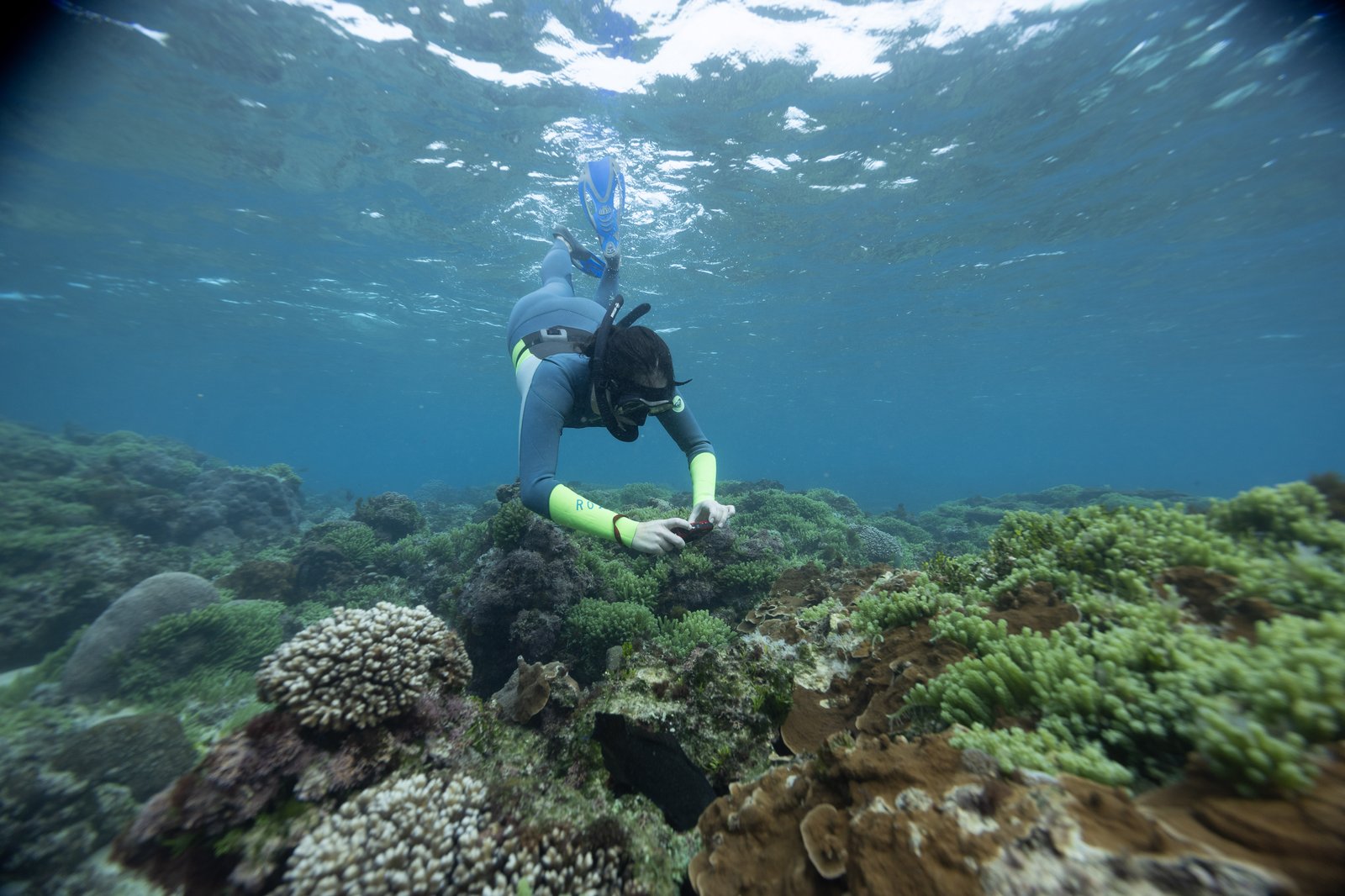
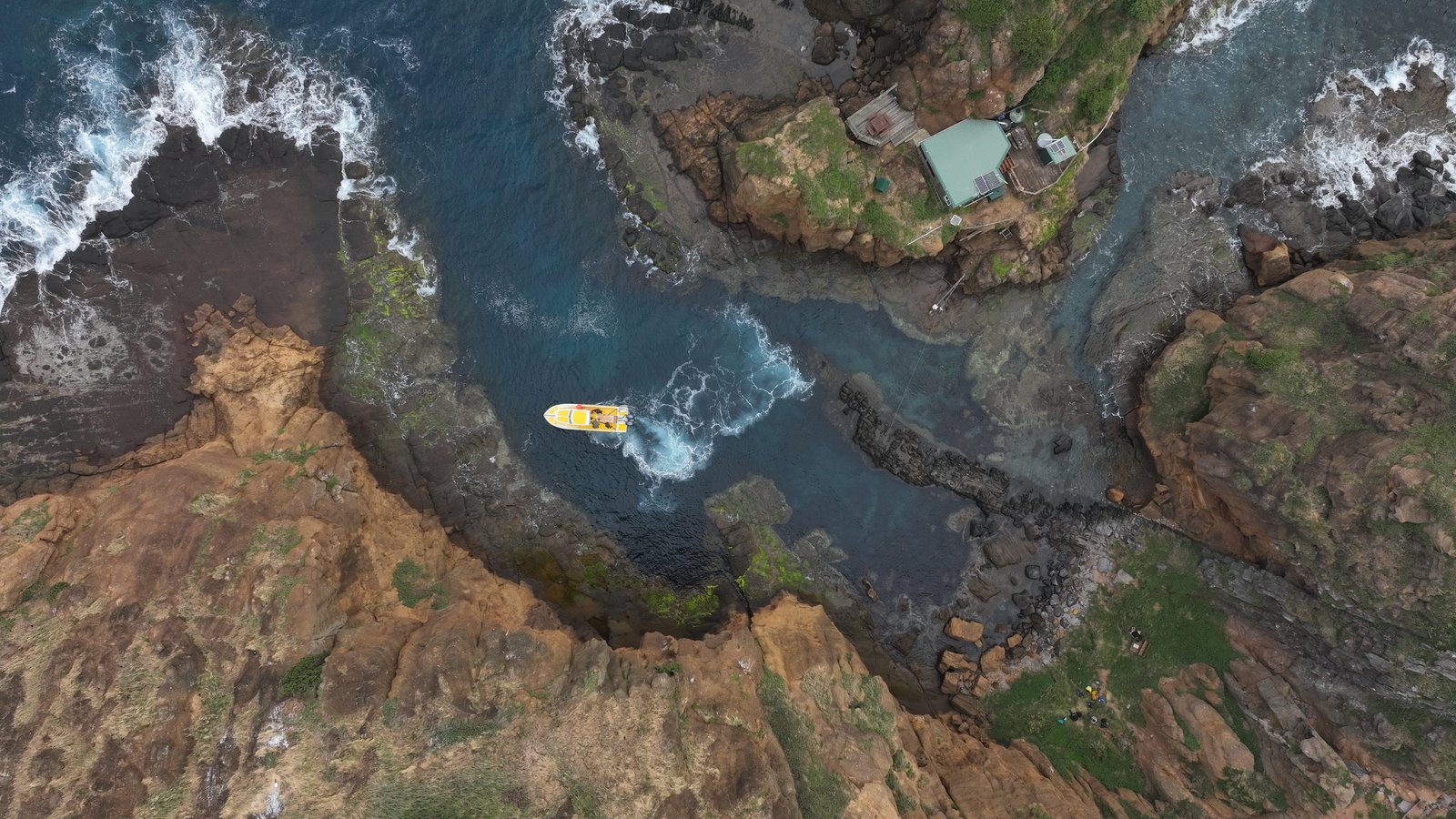
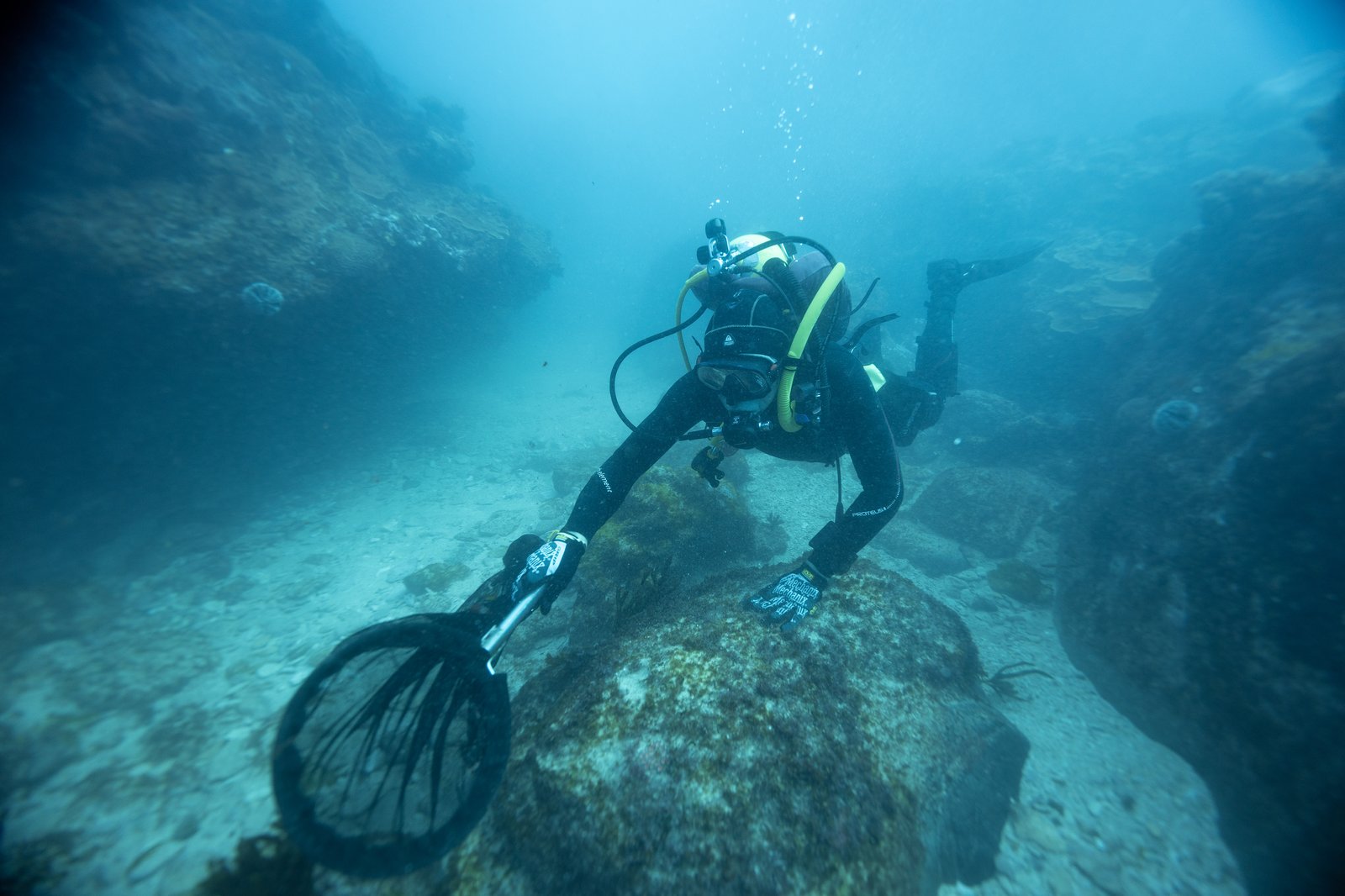
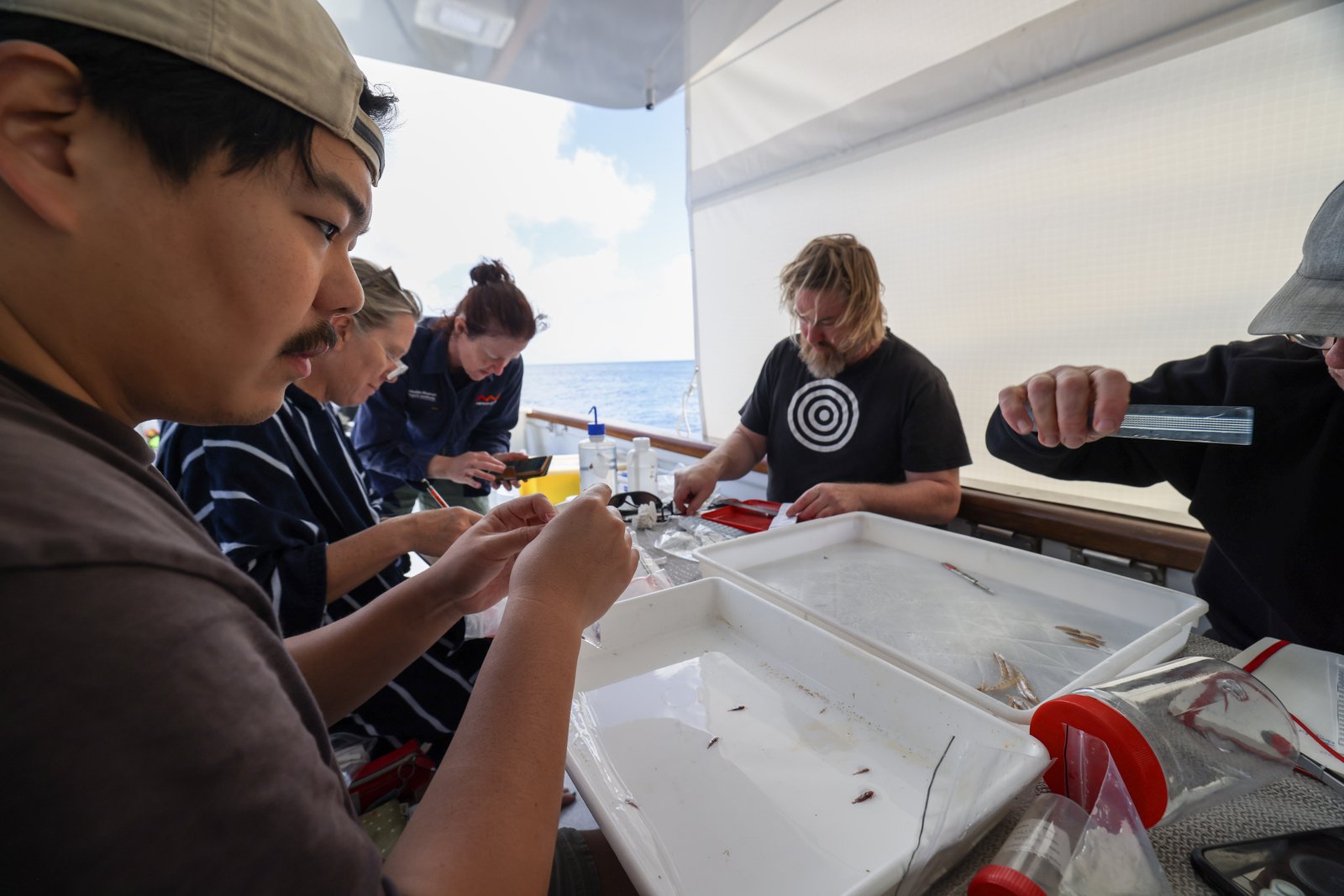
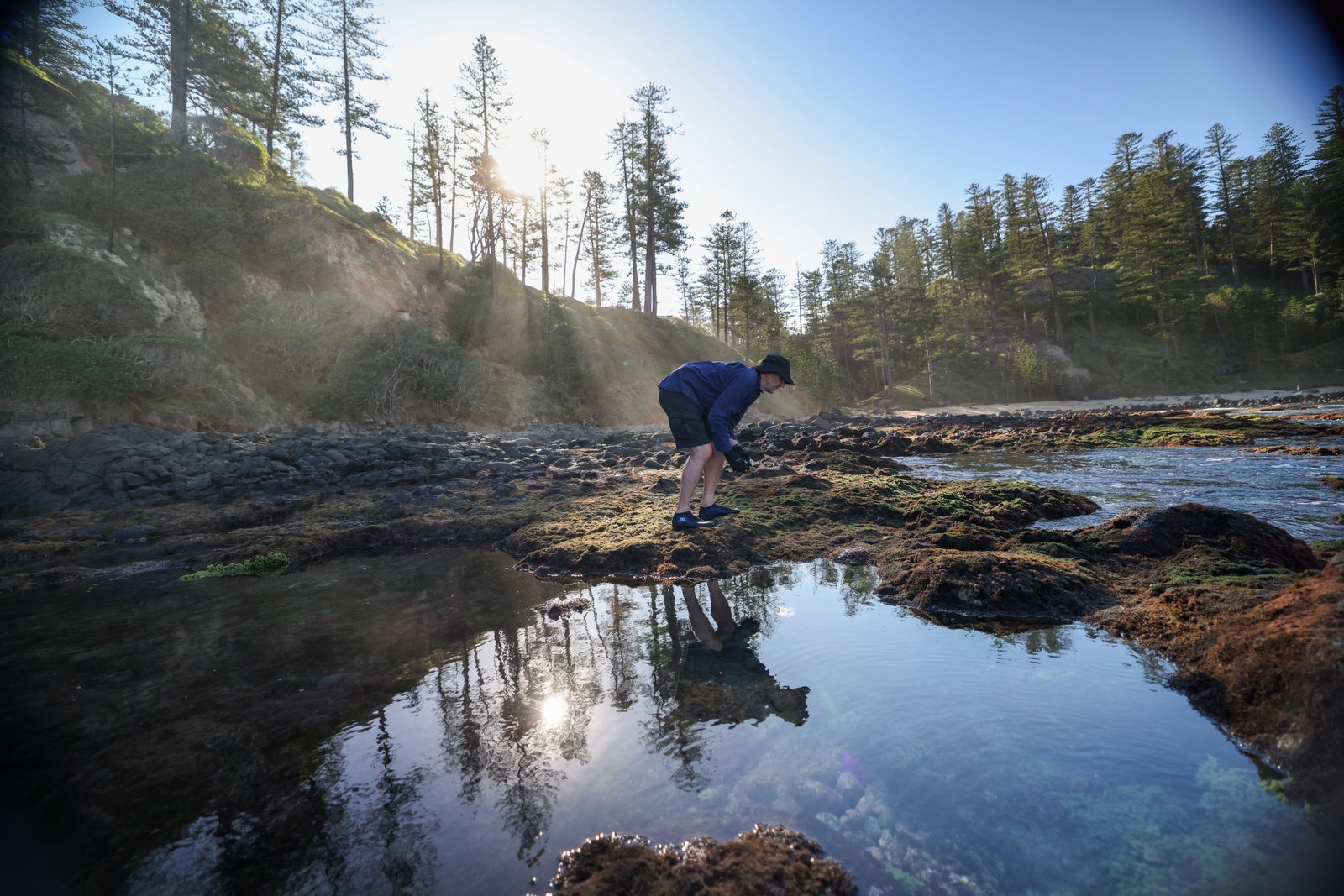
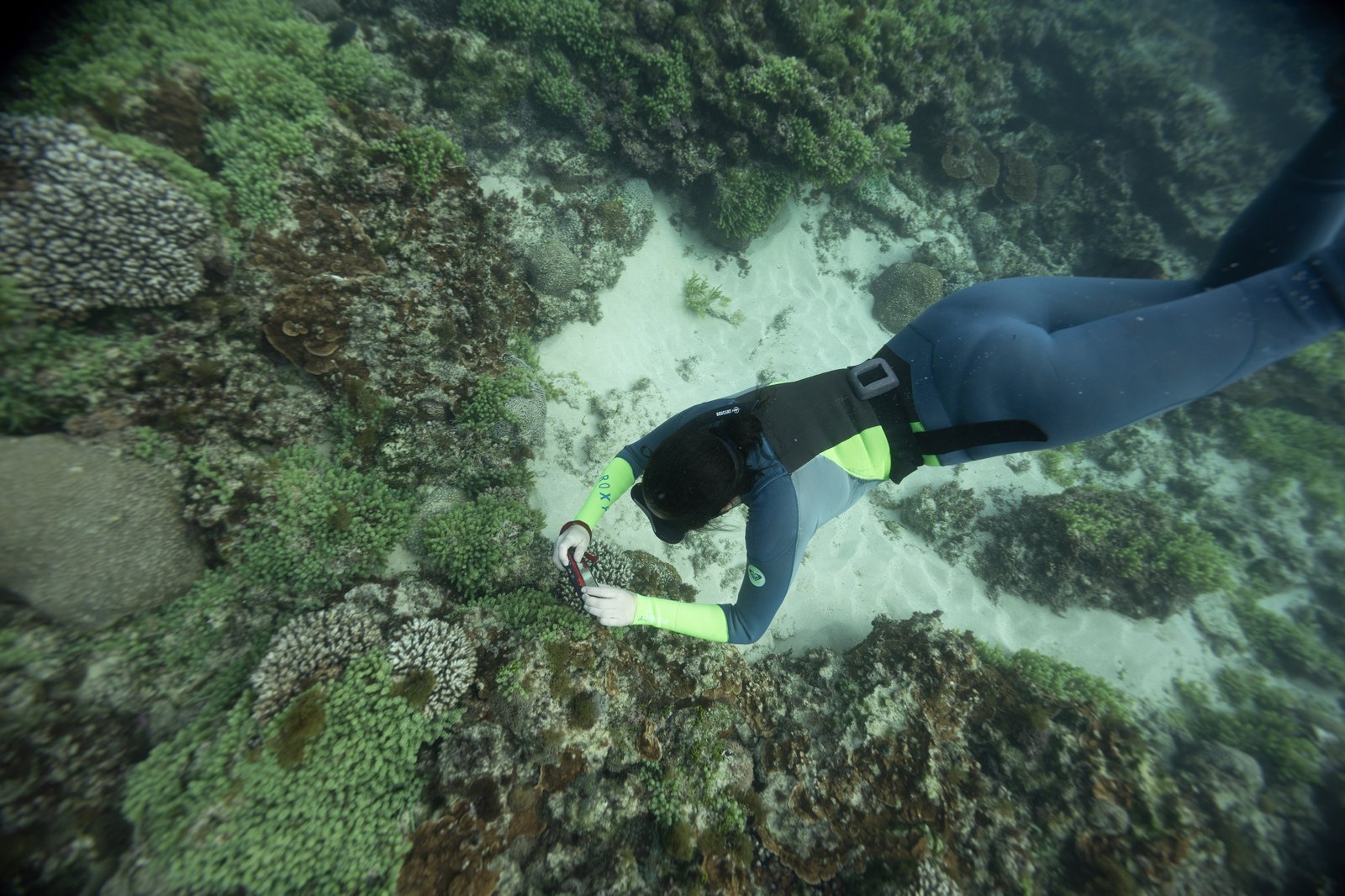
The team of scientists conducted shore and vessel-based activities to collect fishes and marine invertebrates such as worms, crabs and molluscs as well as algae. The scuba diving team, working from the FV Manakai, a New Zealand based fishing vessel chartered for the expedition, collected specimens from a broad range of habitats whilst the shore team focused their efforts on hand collecting from the many rock pools and wading and snorkeling in nearshore habitats as the sometimes challenging weather conditions permitted. The collection of specimens from this expedition will fill many knowledge gaps in support of current museum research, as well as provide present-day samples vital for future morphological, taxonomic, and genetic research.
The expedition provided an exciting opportunity for testing the use of an innovative Autonomous Underwater Vehicle Systems (AUVs), developed and deployed for exploration of marine environments by expedition partner, University of Sydney. The AUV is fully autonomous and extendable, with the capacity to provide accurately located high resolution image capture to depths of 300 metres. Working from a small boat the University of Sydney team were able to capture imagery across a broad range of habitats working in at times challenging conditions, the imagery of which will be made publicly available through online marine image platform custom built for the exploration of marine habitats.

Alongside the work being conducted on the island by our scientists, the education team delivered multi-disciplinary lessons to all year levels at Norfolk Island Central School. Bridging cultural and scientific knowledge, 281 students engaged with Pasifika practices and traditions, exemplifying the community’s deep connection to and commitment toward caring for the natural environment. The lessons highlighted the importance of scientific research in enhancing our understanding of the environment, ensuring these traditions continue to thrive.
While results from the Norfolk Island expedition are yet to be fully documented, this fieldwork will enhance our research and collections for an area of national and international significance. A number of species new to science are anticipated to be described and it is expected that the resulting collections of specimens, tissues and genetic data will be significant in improving the knowledge base for future decision making in the Norfolk Marine Park and other marine environments in the southwest pacific.
The Expedition was an outstanding success overall and no doubt over the coming months more valuable information will be gleaned from collected specimens and samples to be shared with the local community and global scientific community.
The team is hugely grateful for the interest and support shown by the local community and their willingness to share their knowledge and to learn from us as well.
Dive into the expedition story
Watch the the video of the 2025 expedition to Norfolk Island captured by cinematographer Tom Bannigan.
Terrestrial expedition
- Paul Flemons, Manager, Citizen Science and Expeditions, Australian Museum
- Professor Kristofer Helgen, Chief Scientist and Director AMRI (former), Australian Museum
- Dr Frank Köhler, NSW Principal Research Scientist and Group Manager Malacology, Australian Museum
- Dr Isabel Hyman, NSW Research Scientist and Research Scientist Malacology, Australian Museum
- Meagan Warwick, AMRI & External Partnership Coordinator, Australian Museum
- Charlie Kingsford, Education Project Officer, Australian Museum
- Tom Bannigan, Cinematographer, Contractor
- Dr Amy Way, Scientific Officer Archaeology, Australian Museum
- Nicola Simpson, Masters Student, University of Sydney
- Dr Mark Eldridge, Research Scientist Mammals, Australian Museum
- Sandy Ingleby, Collection Manager Mammals, Australian Museum
- Dane Trembath, Acting Head of Life and Geosciences, Australian Museum
- Dr Richard Major, Research Fellow, Australian Museum
- Emily Cave, Technical Officer Ornithology, Australian Museum
- Parnee Bonson, Keeper Backyard to Bush, Taronga Zoo
- Helen Smith, Technical Officer Arachnology, Australian Museum
- Natalie Tees, Technical Officer Digitising Entomology, Australian Museum
- Andrew Orme, Senior Technical Officer, Botanic Gardens of Sydney
- Marco Duretto, Science Education and Conservation Operations Manager, Botanic Gardens of Sydney
- Wayne Cherry, Botanist, Botanic Gardens of Sydney
- Matt Renner, Botanist, Botanic Gardens of Sydney
- Rebecca Bray, Manager Natural Science Collections, Auckland War Memorial Museum
Marine Expedition
- Paul Flemons, Manager Citizen Science and Expeditions, Australian Museum
- Julie Elmers, Acting Director AMRI, Australian Museum
- Dr Frank Köhler, NSW Principal Research Scientist and Group Manager Malacology, Australian Museum
- Alison Miller, Collection Manager Malacology, Australian Museum
- Dr Isabel Hyman, NSW Research Scientist and Research Scientist Malacology, Australian Museum
- Dr Francesco Criscione, Scientific Officer Deep Sea Fauna Malacology, Australian Museum
- Dr Claire Rowe, Collection Manager Marine Invertebrates, Australian Museum
- Alex Hegedus, Technical Officer Marine Invertebrates, Australian Museum
- Amanda Hay, Collection Manager Ichthyology, Australian Museum
- Kerryn Parkinson, Technical Officer Ichthyology, Australian Museum
- Baylah Betar, Education Project Officer, Australian Museum
- Dr Yi-Kai Tea, Curator Ichthyology, Australian Museum
- Lisa Hodgson, Technical Officer Digitising Malacology, Australian Museum
- Jennifer Caiza, Technical Officer Malacology, Australian Museum
- Anne Leitch, Research Fellow/Project Officer CoastAdapt, Griffith University
- Tom Bannigan, Cinematographer, Contractor
- Dr Tom Trnski, Head of Natural Sciences, Auckland War Memorial Museum
- Carl Struthers, Research and Technical Officer Ichtyology, Te Papa Tongarewa
- Clinton Duffy, Curator of Marine Biology, Auckland War Memorial Museum
- Professor Stefan Williams, Professor of Marine Robotics, Sydney University
- Nadav Schwalb, PhD Researcher, Sydney University
- Lachlan Toohey, Senior Technical Officer Marine Robotics, Sydney University
- Tim Allen, Mechatronic Engineer, Sydney University
- Dr Roberta d'Archino, Marine Biologist, Earth Sciences New Zealand
- Simon Gorta, PhD Candidate, UNSW
- Peter Allen, Researcher, Monash University
- Severine Hannam, Natural and Social History Curator, Puke Ariki
- Dr Thom Linley, Curator of Fishes, Te Papa Tongarewa
- Mark Scott, Naturalist, Norfolk Island local
Explore more from the expeditions




More information:
- Sydney Morning Herald (2022). ‘Not a scrap of vegetation’: The decades-long fight to bring Phillip Island back from the brink.
- Sydney Morning Herald (2022). A sick turtle and a forgotten reef: The story that has become a social media sensation.
- Sydney Morning Herald (2022). Norfolk Island find solves part of Pacific’s most enduring mystery.
- Australian Geographic (2022). Ancient stone tools uncovered on Norfolk Island by Australian archaeologists will rewrite history.
Do you have any feedback about the Norfolk Island expedition? Please contact AMRI using the form below.
Contact AMRI
Norfolk Island is located in the Pacific Ocean between New Zealand and New Caledonia, 1,412 kilometres (877 mi) directly east of Australia's Evans Head and about 900 kilometres (560 mi) from Lord Howe Island. Together with the neighbouring Phillip Island and Nepean Island, the three islands collectively form the Territory of Norfolk Island. At the 2021 ABS census, it had 2,188 inhabitants living on a total area of about 35 km2 (14 sq mi), its capital is Kingston.
The first known settlers in Norfolk Island were East Polynesians but they had already departed when Great Britain settled it as part of its 1788 settlement of Australia. The island served as a convict penal settlement from 6 March 1788 until 5 May 1855, except for an 11-year hiatus between 15 February 1814 and 6 June 1825, when it lay abandoned. On 8 June 1856, permanent civilian residence on the island began when descendants of the Bounty mutineers were relocated from Pitcairn Island. In 1914 the UK handed Norfolk Island over to Australia to administer as an external territory, but as a distinct and separate settlement.
This remote island is also of major biological importance, still relatively poorly understood in a marine sense, and has many rare and endangered species unique to the island and surrounding area. This expedition offers a rare opportunity to survey nearshore biodiversity not impacted by commercial fishing with an expectation of discovering new species amongst its broad array of unique habitats. Changing global weather patterns and oceanic circulation impacts marine fauna and a key goal of this expedition will be looking for evidence of changes in distributions of open water and nearshore vertebrate and invertebrate marine species.
On the Islands themselves, the status and origins of NI terrestrial fauna will benefit from further scientific investigation. The AM will clarify the status of vertebrate and invertebrate species, native and introduced, on the main and offshore islands to inform management of these areas and contribute to an understanding of the origins of these species and how they fit into the global puzzle of species radiation to inform management of the fauna on other similarly remote islands. An example of how AM scientists can work together with Norfolk Islanders to promote conservation management, is the recent rediscovery of land snail Advena campbellii by Norfolk Island local Mark Scott in 2020, leading to a conservation program initiated by the AM.
- Norfolk Island Regional Council. Native Vegetation Mapping Project.
- Parks Australia. Norfolk Island National Park.
- Invasive Species Council. Norfolk Island conservation project.
- Australian Marine Parks. 2021. Norfolk Island seafloor mapping reveals deep reefs and diverse habitat.
- Williams, A., Althaus, F. and Furiani, D. 2006. Assessment of the conservation values of Norfolk Seamounts area. Report to the Department of Environment and Heritage, CSIRO.
- Invasive Species Council and Island Conservation. November, 2017. Norfolk Island: Protecting an Ocean Jewel. Recommendations for stronger biosecurity for the Norfolk Island group. Fairfield, Victoria, Australia.
- CSIRO. 2021. Argentine ant: Norfolk Island eradication campaign.
ACKNOWLEDGEMENTS
We acknowledge the Polynesian/Tupuna/Tipuna who first called Norfolk Island home, whose story is still being written and pieced together. Through our work, we endeavour to add pages to their widely unknown narrative. We honour their connection to this land/whenua/fauna in times gone by and invite them to guide and breathe life back into the treasures which they left for us to uncover and to piece together the story they did not tell.
We extend that acknowledgement to the descendants of the Pitcairn Islanders who still walk this land and whose Polynesian ties link them back to the East of this Great Ocean – Tahiti. We honour their Pacific story on this land, we acknowledge their Tupuna/Tipuna ancestors and the culture they forged here on Norfolk Island. A culture that continues to thrive today.
And finally, we acknowledge the other Pacific Island communities that now call this Island home. The Pacific diasporas from across the Great Ocean – whose connection to this land may be more recent but whose presence also adds to the Pacific narrative of Norfolk Island in the here and now.
THANK YOU
The Australian Museum would like to thank donors and the Australian Museum Foundation for their support of this expedition. The first phase was made possible by the generosity of the Vonwiller Foundation and Vanessa Tay.
