
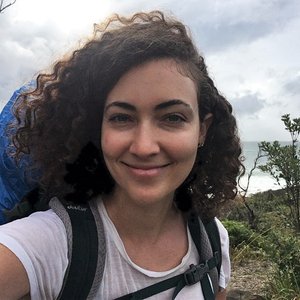
Dr Thais Sasso
Key Info
-
- Position Title
- Research Assistant, UNSW
-
- Section
- Herpetology Collection
- Division
- Australian Museum Research Institute
-
- Google Scholar Profile
- https://scholar.google.com/citations?user=l41GUlgAAAAJ&hl=en
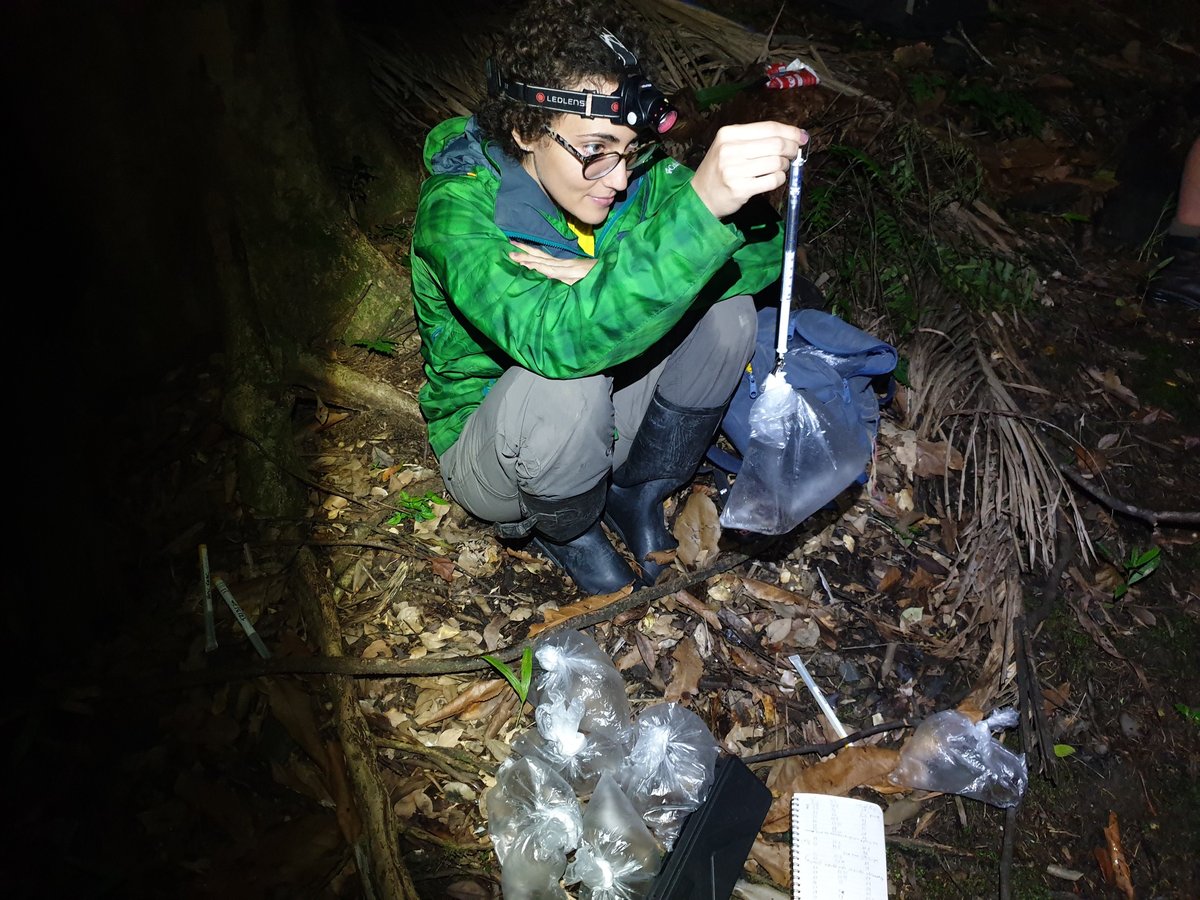
I’m a research assistant in the Herpetology team at UNSW and the Australian Museum, where I’m part of a team assessing the recovery status of threatened Australian amphibians.
I first stepped into the world of biology with a Bachelor’s degree from the University of São Paulo, Brazil (2013). For my honours thesis, I reviewed the phylogeny of a South American snake group, looking at how their reproductive and feeding strategies varied over time. I was mesmerized by the many patterns and processes that shape how predators diversify.
Shortly after, I worked for one year at the University of São Paulo Museum of Zoology, assisting in the Herpetology Lab with molecular analysis on reptiles from the Brazilian Amazon and Atlantic Forest. I then returned to uni for a Master’s in Ecology, focusing on using environmental DNA to detect frog communities in streams, and comparing this new methodology to traditional field surveys. I also described how sympatric torrent frogs differ in their use of microhabitats in streams along the Atlantic Forest.
Next stop: the mountains of Honduras, as a herpetologist for Operation Wallacea. I joined their field research group, conducting daytime and nighttime surveys for unique amphibians and reptiles, monitoring for skin diseases, and engaging university students in fieldwork. The cloud forests in Cusuco NP, the so many vipers and chunky frogs are absolutely unforgettable.
Then I crossed the globe for the first time to Australia, taking up a PhD at Griffith University. My research combined eDNA and extreme climate events to study how amphibian populations recover after declines caused by chytrid fungus. I’m interested in examining spatial variation in host infection risk and decline severity, as well as identifying the factors that influence disease transmission dynamics.
Outside the lab and field, I’m usually rock climbing, dancing forró or watching movies.
If any of my research sparks interest (or you just want to tell me your favourite movie), feel free to reach out.
Qualifications
- PhD, Griffith University, Australia (2023). From skin to water: Chytrid fungus in Fleay's barred frog populations and their rainforest streams. Thesis: https://dx.doi.org/10.25904/1912/4993
- Master in Ecology, University of Sao Paulo, Brazil (2016). Spatial and temporal occurrence of stream frogs in the Atlantic Forest and their detection through environmental DNA. Dissertation: https://doi.org/10.11606/D.41.2016.tde-20102016-142913
- BSc. Biological Science (Honours), University of Sao Paulo, Brazil (2013).
Publications
- T. Sasso, H. McCallum, D. Newell, L. Grogan. 2024. Extreme climatic events modulate chytrid infection across the landscape. Biological Conservation, 296, 110702.
- T. Sasso & J. Wilson. 2022. Litoria pearsoniana (Pearson's Green Tree Frog). Predation. Natural history notes, Herpetological Review, 53 (4), 654.
- T. Sasso, H. McCallum, L. Grogan. 2021. Occurrence of Batrachochytrium dendrobatidis within and between species: a review of influential variables as identified from field studies. Biological Conservation, 262, 109300.
- C. M. Lopes, D. Baêta, T. Sasso, A. Vanzetti, K. R. Zamudio, P. Taberlet, C. F. B. Haddad. 2021. Power and limitations of environmental DNA metabarcoding for surveying leaf litter communities. Environmental DNA, 3 (3), 528-540.
- L. A. Brannelly, H. McCallum, L. F. Grogan, C. J. Briggs, M. Ribas, M. Hollanders, T. Sasso, M. F. Lopez, D. A. Newell, A. M. Kilpatrick. 2021. Mechanisms underlying host persistence following disease emergence determine appropriate management strategies. Eco. Let., 24 (1), 130-148.
- T. Sasso, D. Gilroy, C. Cox. 2018. Social behavior in Nototriton brodiei in the cloud forest of Cusuco National Park, Honduras. South American Journal of Herpetology, 17 (1), 29-32.
- T. Sasso, C. M. Lopes, A. Valentini, T. Dejean, K. R. Zamudio, C. F. B. Haddad, M. Martins. 2017. Environmental DNA characterization of amphibian communities in the Brazilian Atlantic Forest: potential application for conservation of a rich and threatened fauna. Biological Conservation, 215, 225-232.
- C. M. Lopes, T. Sasso, A. Valentini, T. Dejean, M. Martins, K. R. Zamudio, C. F. B. Haddad. 2017. eDNA metabarcoding: a promising method for anuran surveys in highly diverse tropical forests. Molecular Ecology Resources, 17 (5), 904-914.
