Unfinished Business
Experience an accessible 3D photography exhibition detailing personal stories from Aboriginal and Torres Strait Islander peoples living with disabilities across Australia.
Please note: Aboriginal and Torres Strait Islander Peoples should be advised there are names, images and voices depicting deceased persons.
Unfinished Business brings together the voices of 30 Aboriginal and Torres Strait Islander people living with disabilities from remote, regional, and urban communities across Australia. Honouring story-telling truths, the exhibition is a thought-provoking recognition of the ongoing impact of colonisation, and a call for meaningful social and systemic change. Each participant determined how their visual story would be shared, using their own words, chosen narrators and imagery to give audiences direct insight into their personal experiences.
Utilising the 3D-effect of lenticular photography, which creates an illusion of depth, movement and transformation, and documentary film, each image demonstrates the diversity of disability. This powerful body of work was created by Sydney-based human rights documentarian Belinda Mason OAM and her sons Dieter and Liam Knierim.
Unfinished Business at the Australian Museum also raises the bar on accessibility through creating a carefully considered exhibition space. Designed for an inclusive experience, audiences are invited to engage through multiple sensory elements, including tactile panels, audio descriptions, online resources, and Auslan content.
We are grateful to The Balnaves Foundation for supporting this presentation of Unfinished Business, which invites deeper connection and understanding by acknowledging the strength and resilience of each participant.
Thank you to Vision Australia and Expression Australia for their support and advice on accessibility.
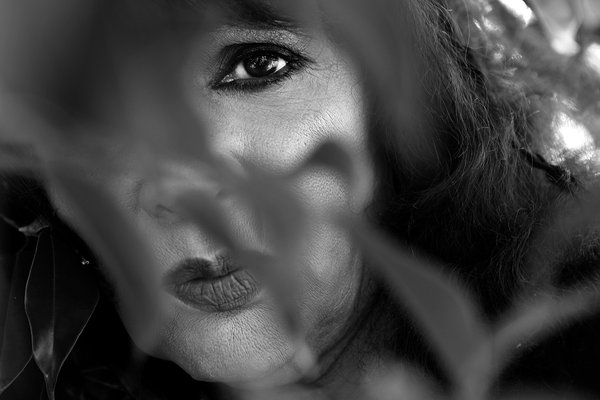
Banner Image: Gayle Rankine, Ngarrindjeri woman. Chairperson, First Peoples Disability Network (Australia). Chairperson of the Indigenous Persons with Disabilites Global Network. Photography: ©Belinda Mason OAM
Exhibition highlight: Uncle John Baxter
Uncle John Baxter, a respected Latja Latja and Narungga Elder, is deeply committed to strengthening cultural identity, advocating for justice, and empowering future generations. Through decades of advocacy, he has become a guiding figure in promoting understanding, inclusion and reconciliation. Learn more about Uncle John's story here.
Meet Uncle John
Saturday 1 November: 11.30am – 12.30pm & 1.30pm – 2.30pm
As a participant of the Unfinished Business exhibition and 2025 AM Mob at the Museum Cultural Resident, Uncle John welcomes you to join him in the exhibition space to connect, listen, and share in conversation. Drawing from his lived experience, Uncle John speaks openly about the intersections of disability, culture, and identity, using his voice to inspire resilience, pride, and healing in communities across the country. Come together for an opportunity to reflect and contribute to an evolving conversation.
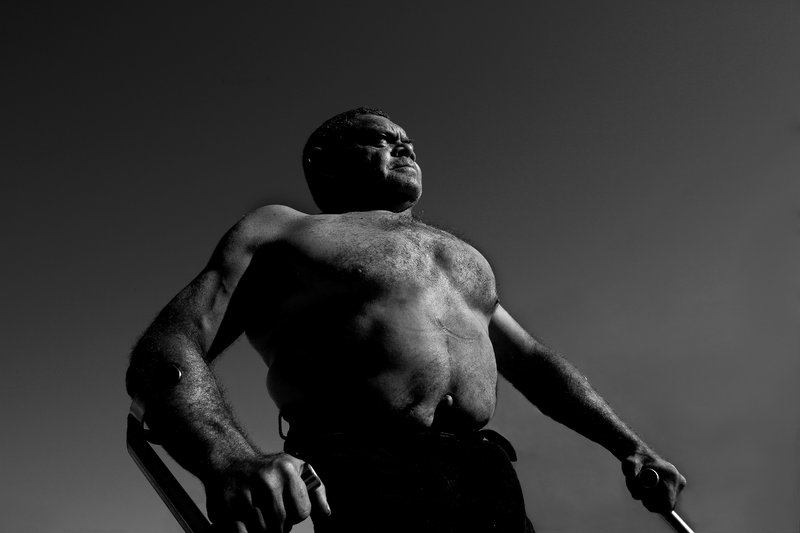
Image: John Baxter, Latja Latja and Narungga man. Board member of Reconciliation Victoria, Board member First Peoples Disability Network. Photography: ©Belinda Mason OAM
Access and inclusion
The Australian Museum has provided inclusive spaces for every visitor to form a connection with the exhibition content.
At the entrance to the exhibition is a QR code that gives visitors access to the labels in different formats: audio labels; Auslan Interpretation; and the label as text.
In the exhibition, at each image, is a tactile representation of the photograph that visitors can touch. Each tactile panel is accompanied by an audio description which can be accessed via the QR code at the bottom right of the panel.
Explore the accessible content
Unfinished Business documentaries
Meet the people who make Unfinished Business a thought-provoking experience.
What is the Unfinished Business exhibition about?
Warning: First Nations Peoples should be aware that this exhibition contains images, voices, or names of deceased persons.
The 3D lenticular photographic exhibition shares the deeply personal experiences of Aboriginal and Torres Strait Islander people with disabilities. These intimate first-person stories highlight the complexities and challenges of people with disabilities living in Australia, specifically as a First Nations person. Each photograph introduces a range of disabilities present in Aboriginal and Torres Strait Islander communities and seeks to explore the intersection between systemic ableism and racism.
What is 3D lenticular photography?
Lenticular is a method used to produce printed images with an illusion of depth, or the ability to change when viewed from different angles. It creates the sense of added movement, so viewers can appreciate a deeper sense of perspective.
How has this exhibition ensured subjects of the photos have agency in how their story is told and represented?
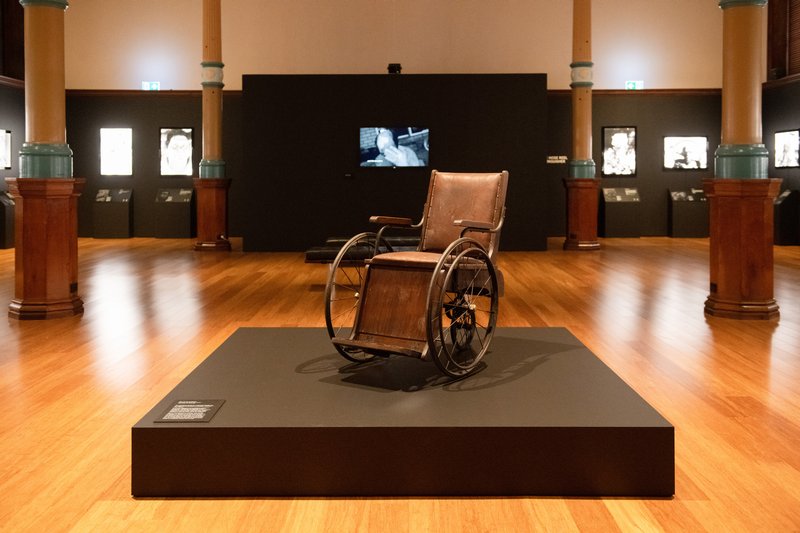
This collaborative project sees First Nations communities working alongside photographer Belinda Mason to share their lived experiences of disability. The First Peoples Disability Network have expressed deep pride in their association with this groundbreaking work. Subjects of the portraiture have worked with photographer Belinda Mason to control how they are portrayed and tell their story behind each image. Uncle John Baxter, AM 2025 Mob at the Museum Cultural Resident and a participant within the exhibition, has worked closely with the AM team on the installation of the works and the experience for visitors in the space. Uncle John curated the items displayed in the exhibition, including a wheelchair and mobility aids, which are included with express permission as a reminder of the realities of disability. Furthermore, the AM consulted with Vision Australia and Expression Australia to help inform the exhibition space and experience.
Is the exhibition accessible for visitors with disabilities?
The exhibition space has been created to prioritise the experience of people with accessibility needs. The AM consulted with Vision Australia and Expression Australia to uphold universal accessibility standards and include audio descriptions, tactile elements, large print labels, easy-read materials, wheelchair-accessible pathways, and quiet spaces for visitors with sensory needs. The exhibition’s design prioritises the experience for people with disabilities. The decision not to include braille alongside picture labels is deliberate and informed by advice that demonstrates people with vision impairment have a preference for assistive technologies in exhibition formats.
Why does the exhibition focus on First Nations people living with disability?
Systemic issues are acknowledged as a part of the challenges that face the disabled community. Within the First Nations disabled community these issues are further compounded by the inequities experienced due to race. The First Peoples Disability Network reported that in 2022, 45 per cent of Aboriginal and Torres Strait Islander people were living with disability or long-term health condition, with 11.6% having a profound or severe limitation. The report also shows First Nations people are 2.1x more likely to be living with disability than other Australians. Through Unfinished Business, the personal experiences of these individuals, who often face significant disadvantages, will be shared to highlight the complex issues of First Nations people and to draw attention to the profound resilience that can be found in the world's oldest continuing culture.
In addition, the Australian Museum as the custodian for one of the largest Aboriginal and Torres Strait Islander collections is committed to providing a platform for First Nations voices. We are proud to host an exhibition that platforms Aboriginal and Torres Strait Islander disabled community members and their stories.
Why is the exhibition so colourless and plain?
The Australian Museum's streamlined, simple exhibition design for Unfinished Business is a deliberate choice to prioritise accessibility and inclusivity. By stripping away visual clutter and complexity, the AM has created a space that serves visitors with diverse accessibility needs.
This simplified approach emerged from extensive consultation with Vision Australia and Expression Australia, who guided the Museum toward universal accessibility standards. The black-and-white colour scheme serves a functional purpose: high contrast supports visitors with vision impairments, making navigation and content engagement much easier. The chosen font was designed to support people with dyslexia.
Rather than competing visual elements, the simplified aesthetic allows the AM to add tools for accessibility while simultaneously allowing the photographs to remain the hero of the exhibition. The clean, uncluttered design supports the integration of essential accessibility features like audio descriptions, tactile elements, and large print labels without overwhelming the space or creating sensory overload.
The AM’s streamlined approach demonstrates that inclusive design often means doing less, not more. By paring back visual elements and focusing on clear, accessible presentation, the exhibition content will remain as the focus for all visitors, regardless of their accessibility needs.
How long should I plan for to the complete exhibition?
Most visitors spend 30-60 minutes exploring the full exhibition, but you're welcome to take as much time as you need. The space is designed to accommodate different visiting styles and energy levels.
Is the exhibition suitable for children and families?
The exhibition does include portraits that portray people living in vulnerable circumstances, and the subject matter is deeply intimate, with themes of sexual abuse and violence discussed in the personal stories that accompany portraits; parental discretion is advised. Overall, the exhibition has been designed to offer an educational experience for different age groups. Young people can learn about diversity, inclusion, and empathy through impactful and first-person focused storytelling.
Can I bring my assistance animal or mobility aid?
Yes, assistance animals are welcome throughout the AM, and all mobility aids including wheelchairs, walkers, and scooters are fully accommodated. The exhibition space has been designed with wide pathways and rest areas.
Are there any special programs or events?
The AM hosts regular panel discussions with disability advocates, workshops on accessibility and inclusion, creative programs led by artists with disabilities, and community events. Check the website or sign up to the What’s On at the AM newsletter.
How do I provide feedback about my visit?
The AM values feedback from all visitors. You can share your thoughts through our accessible online feedback form, speak with staff during your visit, or contact us by phone or email. Your input helps us continuously improve the exhibition experience.
Unfinished Business is a free exhibition thanks to the generous support from The Balnaves Foundation.