
Dr Aaron Eger: champion of global marine conservation
Who Dr Aaron Eger
What Dr Aaron Eger champions one of Earth’s most vital yet overlooked ecosystems: underwater kelp forests. He founded the Kelp Forest Alliance, uniting 340 organisations across 25 countries from science, community and policy. His leadership informs a global ambition to protect and restore 4 million hectares of kelp forests by 2040.
Winner of the 2025 Eureka Prize for Emerging Leader in Science.
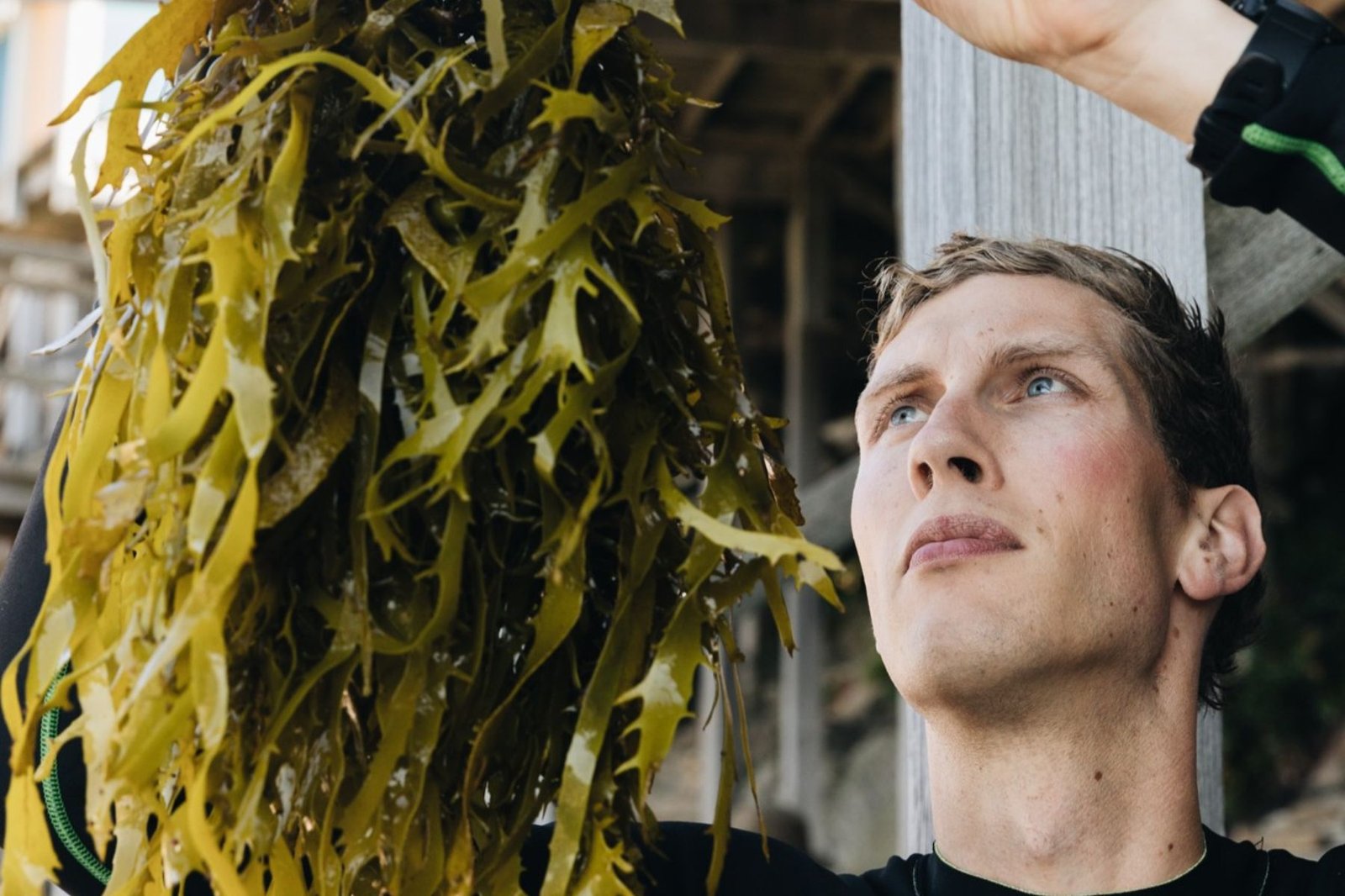
Dr Aaron Eger, Winner of the 2025 Eureka Prize for Emerging Leader in Science.
Image: UNSW© UNSW
Public understanding about the importance of kelp forests has increased over the past few years. Why do you think this is, and why is this shift important?
Public perception of kelp forests is increasing, I think primarily due to the hard work and dedication of people around the world who have been connected to and working to save these ecosystems for many years. In recent years, the growing recognition of our reliance not only on nature but on the ocean in particular has allowed kelp forests to emerge as a vitally important habitat that supports the ocean and the environment across much of our planet yet has been relatively underappreciated to date.
This shift is important because we need a basic understanding of what these ecosystems are before we can invest in protecting and restoring them. Much of our work focuses on building that awareness and connection, so that both public and private actors have the incentive to invest in conservation.
What are the key priorities of the Kelp Forest Alliance?
Our key priority is to protect and restore 4 million hectares of kelp forests by 2040. Within that, we prioritise a societal-level solution that brings together scientists, businesses, governments, Indigenous communities, artists, educators—anyone with a connection to or passion for kelp forests—to be part of this movement. Together, we aim to provide not only essential knowledge but also the community connections needed to help mobilise this knowledge through kelp forests.
How have you managed to bring together so many organisations and countries to find solutions?
I think we’ve really benefited from being a bit of an underdog! And underdogs love to work together. But more than that, we’ve put forward a very positive, very inclusive vision for how we want to achieve this big conservation outcome. I think people and organisations see not only the value and the greater agenda but also the purpose in their personal contribution. They’re able to find a home for their work and their passion, which were previously quite isolated.
“I think we’ve really benefited from being a bit of an underdog! And underdogs love to work together. But more than that, we’ve put forward a very positive, very inclusive vision for how we want to achieve this big conservation outcome”
What are some of your favourite facts about kelp?
Kelp is really like duct tape. It’s been used for just about everything. It’s been used as a children’s game, as art, to pay taxes, as medicine, as a building material, as a chemical compound, and as food for fish. It’s also habitat and produces oxygen. So, in essence, my favourite fact is really an amalgamation of all these facts: in so many places you look, we are connected to kelp forests in very unexpected ways.
What are the most challenging aspects of your work?
It’s both a challenge and an opportunity, but by building such a global alliance across different backgrounds and professions, you have to speak many different languages—both literally and figuratively—and find common ground for people to come together and work toward a unified goal. Whether they’re in a tech company, a fishing business, a university, or a not-for-profit, it can be hard to keep everyone happy because people think differently and prioritise different things. But we’ve had a lot of success so far in bringing people together through this shared vision to help our kelp.

Dr Aaron Eger accepting the 2025 Eureka Prize for Emerging Leader in Science. Photo by Getty.
Image: Wendell Teodoro/Getty Images for Australian Museum© 2025 Getty Images
What does winning a Eureka Prize mean to you?
It’s pretty bewildering, really, to have been nominated—and even more so to have actually won the prize. It’s an award that goes to a leading cause in science in a country that does so much great work, from quantum research to clean energy to biomedicine. To me, it feels like we’re taking real steps toward recognising nature as an integral part of our society, and I’m only too pleased to be playing a part in that.
The Australian Museum Eureka Prizes are the country’s most comprehensive national science awards, honouring excellence across the areas of research & innovation, leadership, science engagement, and school science.
