
Mānawatia a Matariki – Celebrate Matariki
Ka whakamanahia i te mana whenua o Gadigal me te whenua e tū nei te whare tāonga o Ahitereiria. Ka whakamanahia ngā tūpuna o nehe me ngā uri o nāianei. Tēnā koutou katoa.
We acknowledge the Gadigal people as the Traditional Custodians of the land on which the Australian Museum stands. We honour the ancestors of the past and the descendants of today. Greetings to you all.
© Department of Conservation
Long before colonisation and written calendars reached Aotearoa New Zealand, Māori tracked the passage of time through the maramataka — the traditional lunar calendar. The maramataka is perhaps most widely known for its use in celestial navigation, which enabled tūpuna (ancestors) of the Māori people to traverse the Pacific Ocean, one of the largest regions on earth, and settle in Aotearoa, the Land of the Long White Cloud, now known as New Zealand. Guided by the phases of the moon, the movement of stars, the flowering of native plants, the arrival of migratory birds and shifting weather patterns, the maramataka shaped when tūpuna planted, harvested, fished, hunted and gathered.
The use of the maramataka and Māori astronomical knowledge declined following European colonisation, as the Gregorian calendar replaced traditional timekeeping alongside policies of assimilation, urbanisation, and restricted access to ancestral lands and natural resources. These changes disrupted the passing of knowledge between generations, weakening connections to language, cultural practices, and the environments that shaped Māori ways of knowing. As a result, many Māori became disconnected from the maramataka and the rich ecological, cultural, and spiritual knowledge it encompasses. In recent decades, iwi (tribes), hapū (sub-tribes), kaiako (educators), and kairangahau (researchers) have led efforts to revitalise Māori astronomy and cultural practices, helping elevate Matariki to national recognition and its establishment as Aotearoa New Zealand's first Indigenous public holiday in 2022.
The maramataka remains a living system of knowledge, drawn from generations of close observation of the natural world, providing a vital framework for interpreting time, environment cycles and wellbeing in Te Ao Māori (The Māori World).
Matariki
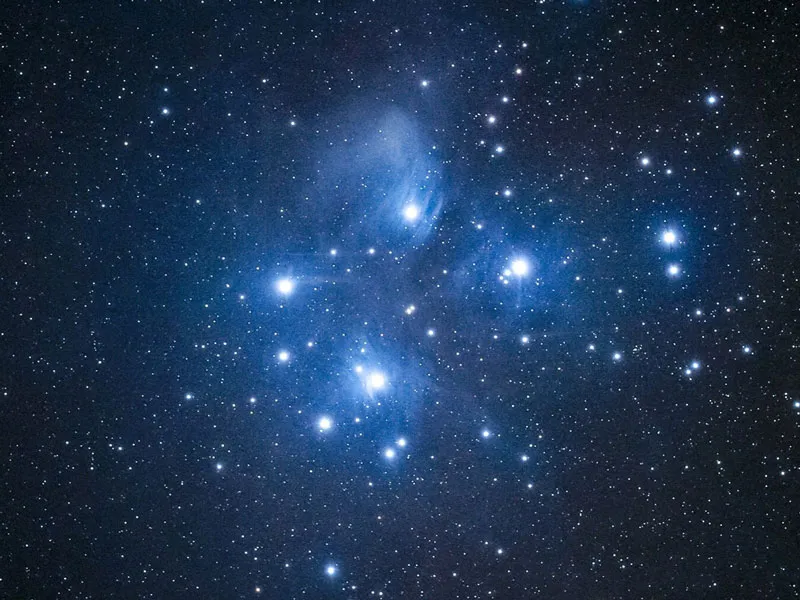
Central to the maramataka is Matariki, the event that marks the beginning of the Māori New Year. Matariki refers to a cluster of stars, with the name applying to both the cluster as a whole and to its central star. Matariki disappears from the night sky for a period each autumn and reappears low on the north-eastern horizon in the pre-dawn hours of midwinter, usually in the month of June. 1 This heliacal rising is a symbol of renewal — a time to remember those who have passed, celebrate the present, and set intentions for the year ahead. Celebrations vary between iwi and may include hautapu, a dawn ceremony where offerings are made and the rising stars are acknowledged through karakia and the sharing of food.
© Department of Conservation
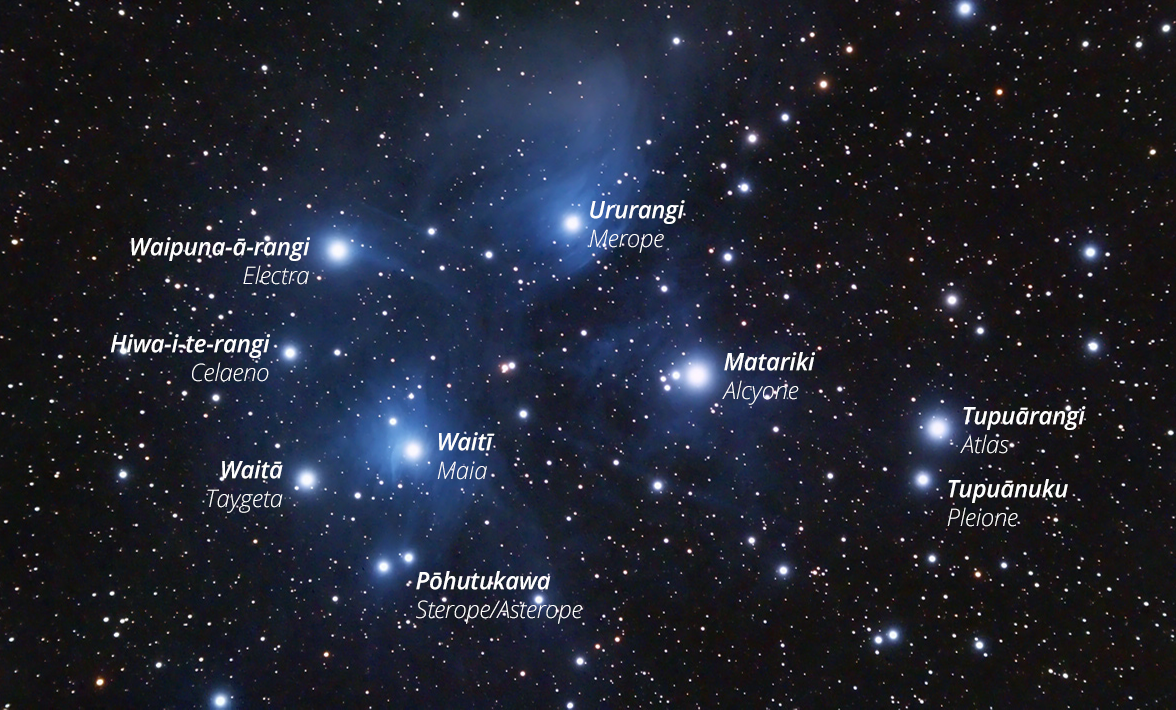
This cluster sits within the constellation of Taurus and contains around a thousand stars, though only a handful are visible to the naked eye. Some iwi and hapū in Aotearoa New Zealand recognise seven stars, describing Matariki as a mother accompanied by her six daughters. Others recognise nine, adding two further stars. Each star carries its own name and purpose:
- Matariki (Alcyone) herself is linked to health and well-being
- Waitī (Maia) to freshwater
- Waitā (Taygeta) to the ocean
- Tupuānuku (Pleione) to food grown in the soil
- Tupuārangi (Atlas) to food gathered from trees
- Waipuna-ā-rangi (Electra) to rain
- Ururangi (Merope) to the winds
- Pōhutukawa (Sterope) to those who have passed on
- Hiwa-i-te-rangi (Calæno) to hopes and aspirations for the year ahead
Pōhutukawa and Hiwa-i-te-rangi are stars said to have been lost from some oral traditions over time but preserved in others, including whakapapa (genealogy), whakataukī (proverbs), karakia (incantations), mōteatea (traditional songs) and most notably, manuscripts compiled by tohunga kōkōrangi (astronomy experts) Te Kōkau Himiona Te Pikikotuku and his son Rāwiri Te Kōkau of Tūhoe and Ngāti Pikiao. These differences are not contradictions but reflect the diversity of mātauranga (knowledge) passed down through distinct iwi and hapū.
Puanga
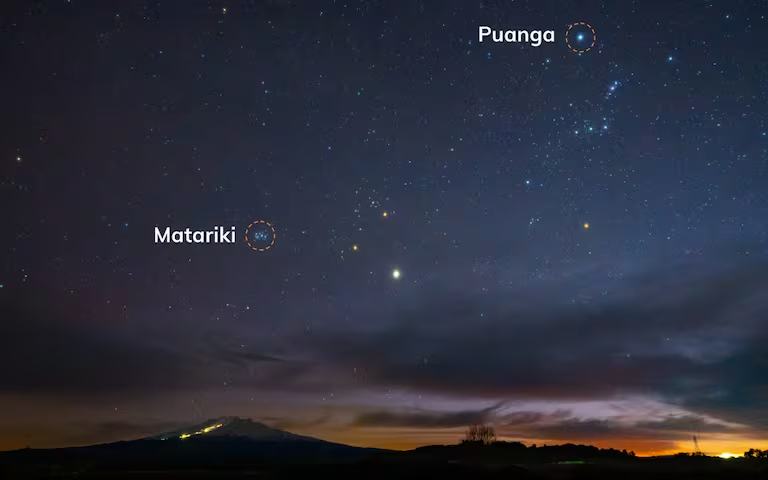
Not every part of Aotearoa New Zealand can see Matariki clearly from its horizon. In some regions of the North Island, particularly Te Taihauāuru (West Coast) and parts of Te Waipounamu (South Island), the star Puanga — known astronomically as Rigel in the constellation Orion — is more visible and marks the Māori new year instead. Puanga is a single star, distinct from the Matariki cluster, that appears in the evening sky shortly before Matariki rises each year. Puanga mā tōna whānau — Puanga and its companion stars — carry their own stories and significance, and communities who follow Puanga celebrate with the same values of remembrance, gratitude and renewal.
Puanga is linked to food and harvesting. A low, dim star in the night sky was taken as a sign of an abundant year ahead, while a bright star sitting high overhead suggested a harder year for crops.
Together, Matariki mā Puanga (Matariki and Puanga) reflects a shared purpose across many traditions: a time to look at the stars, honour the past, and gather as one for the year ahead.
© RNZ National
The Seven Sisters - Ancient Songlines
First Nations peoples from across this continent have observed these stars for tens of thousands of years. This knowledge is kept alive through ancient songlines, ceremony, and oral tradition. The Martu people of the Western Desert speak of the Manyipuru, seven sisters who move across the land evading the relentless pursuit of Yurla, their movements shaping country and creating significant landforms in their wake.
Matariki around the world
Since time immemorial, the star cluster widely known as the Pleiades or The Seven Sisters has been observed by cultures around the world. The name Pleiades is Greek, used by ancient seafarers to mark the opening of the sailing season in the Mediterranean (Hesiod, ca. 700 BCE/1988). In Hindu mythology, the Pleiades are known as Krittika, the wives of the seven sages. Their story of separation and ascension to the night sky is among the oldest recorded astronomical traditions in the world, traceable to the Indus Valley civilisation around 2300 BCE.
Matariki in the Pacific
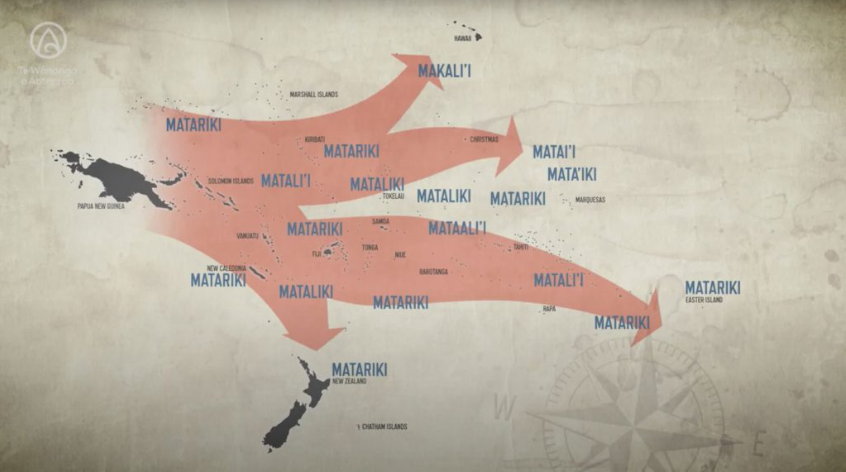
The knowledge and practices around Matariki in Aotearoa are a direct inheritance from the Pacific, carried across the ocean by ancestors and adapted to a new land. Across the Pacific, this same cluster of stars continues to be widely recognised as a marker of seasonal change, navigation, and the beginning of a new year, although timing and associated traditions vary between islands.
© Te Wananga o Aotearoa
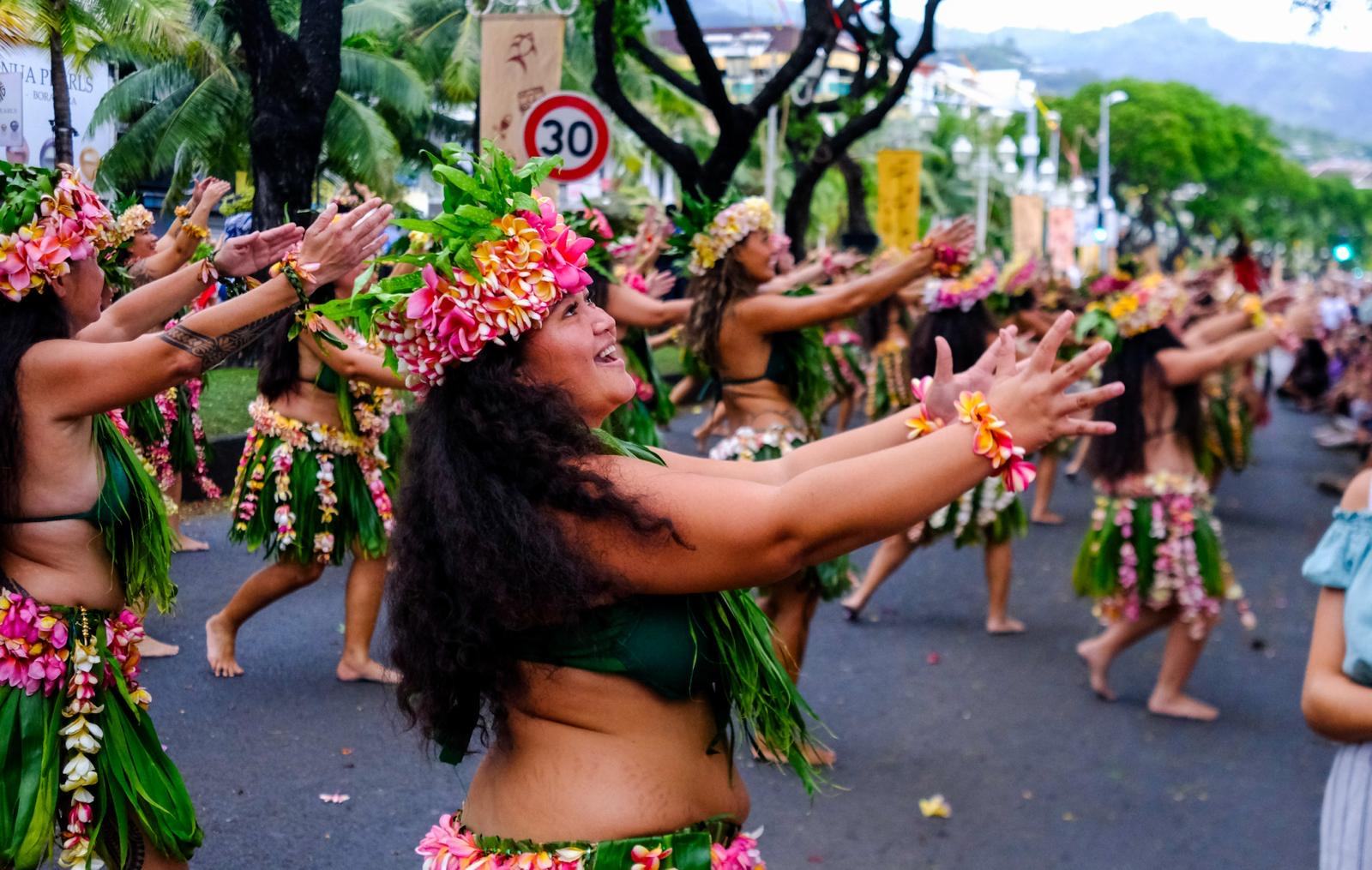
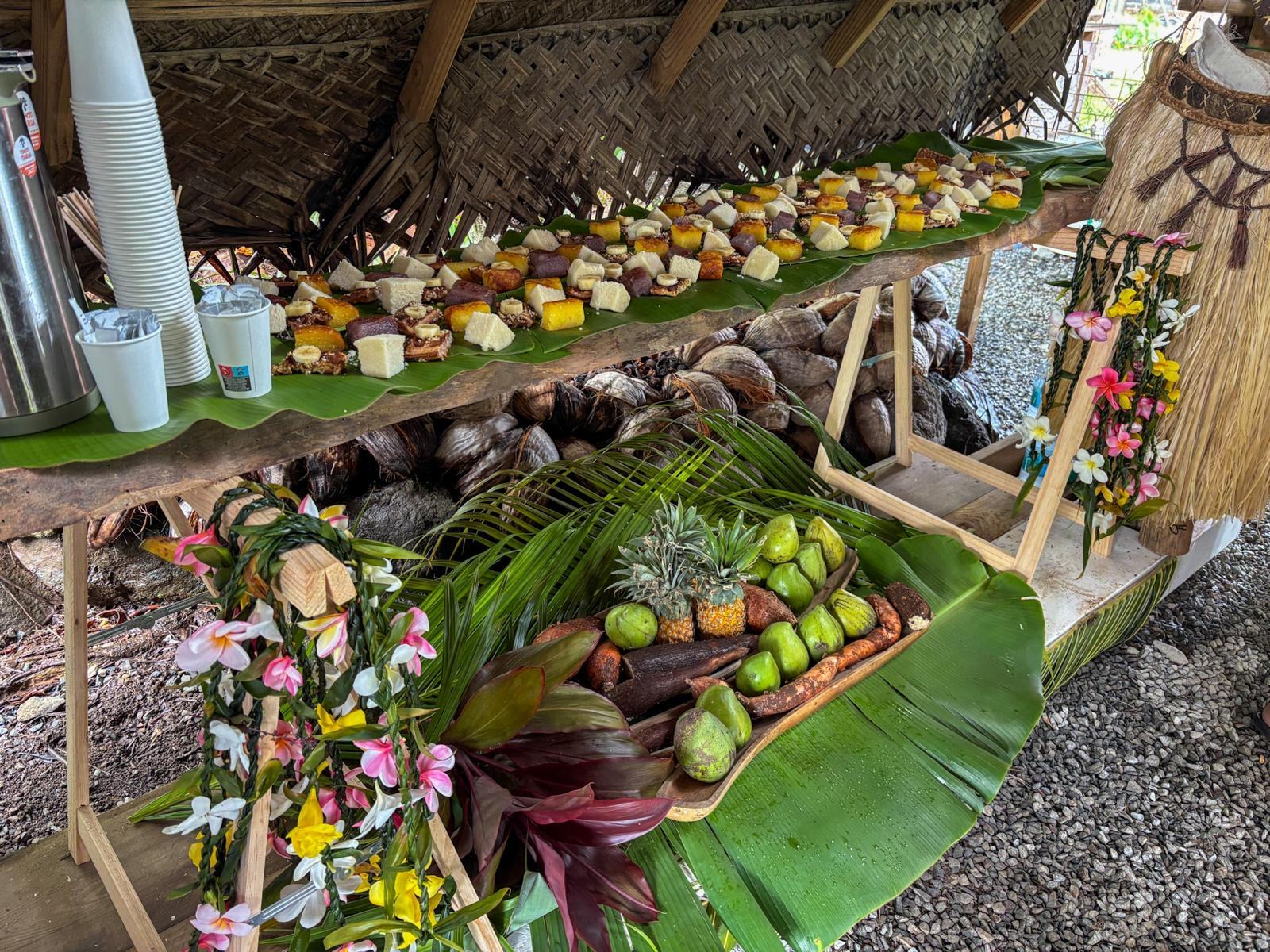
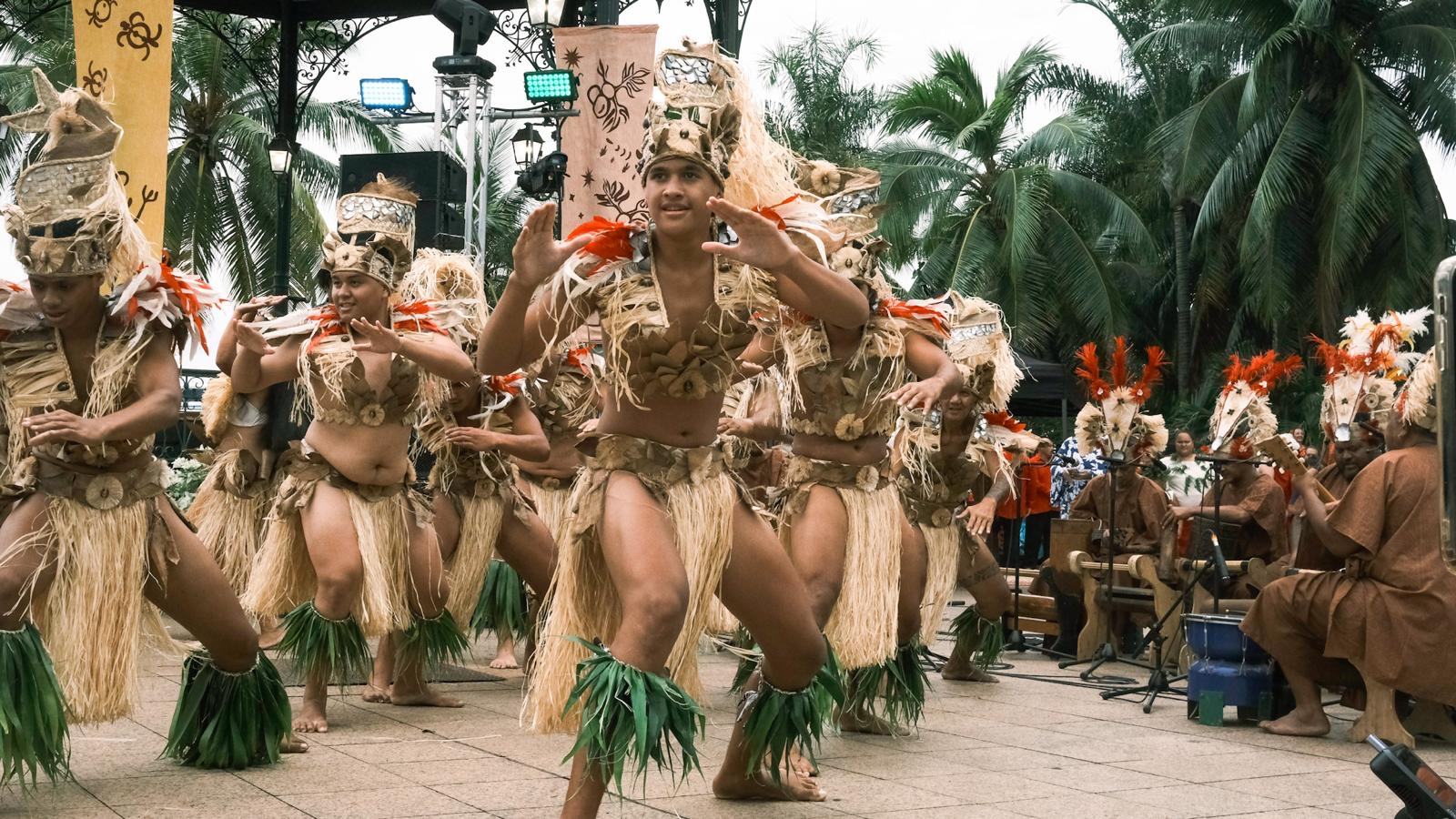
Known as Mata'ali'i in Sāmoa, Makali’i in Hawai’i, Mataliki in The Kingdom of Tonga and Matari’i in French Polynesia, this annual season is filled with feasting, reflection, and positive intention. The Kanaka Māoli (indigenous Hawaiians) of Hawai'i celebrate this time through traditional sports and games, and offerings to Lono, the God of Agriculture, peace, and fertility. French Polynesia celebrate their second year of Matari'i i Ni'a, a national holiday first recognised in 2025 in Papa'ete, Tahiti with elaborate floral parades, decorated floats, and traditional music and dance.
Observing Matariki in Australia
Māori people who have made Australia home watch the stars rise over a different horizon. As Matariki's revival has gained momentum, communities across Australia have responded with enthusiasm, reflected in grassroots initiatives such as the Matariki festival in Blacktown, Western Sydney, a hunger for ancestral knowledge and connection to roots on this side of Te Moana-a-Rehua (The Tasman Sea). To find Matariki in the eastern Australian sky, head outside between 5:30am and 6:30am in late June to mid-July, look northeast, locate Tautoru (Orion's Belt) and trace a line upward and to the left until you reach a small, tight cluster of stars. You have found Matariki!
“Ka ara mai a Matariki, ka ara mai a Puanga, ka mānawatia a Puanga, ka mānawatia a Matariki” Matariki rises, Puanga rises, celebrate Puanga, celebrate Matariki.
References
- Department of Conservation. (n.d.). Matariki. Conservation Blog. https://blog.doc.govt.nz/?s=matariki
- Hesiod. (ca. 700 BCE/1988). Works and days (M. L. West, Trans.). Oxford University Press.
- Keegan, T. T. A. G. (2017). Review of Matariki: The star of the year, by R. Matamua. [Journal name and volume needed — please supply.]
- Matamua, R. (2020). Matariki and the decolonisation of time. In Routledge handbook of critical Indigenous studies (pp. 65–77). Routledge.
- Neale, M., & Mahood, K. (Eds.). (2017). Songlines: Tracking the Seven Sisters. National Museum of Australia Press.
- Parpola, A. (1988). Religion reflected in the iconic signs of the Indus script. Visible Religion, 6, 114–135. https://www.harappa.com/script/parpola12.html
- Samoan Society. (1928). The Samoan division of time. The Journal of the Polynesian Society, 37(146), 228–240.
- Whaanga, H., Harris, P., & Matamua, R. (2020). The science and practice of Māori astronomy and Matariki. New Zealand Science Review, 76(1–2), 13–19.
- Wilson, C. (n.d.). The difference between Puanga and Matariki. Museum of New Zealand Te Papa Tongarewa. https://www.tepapa.govt.nz/digital-museum/explore-digital-museum/matariki-maori-new-year/matariki-regional-variations/difference
