
Heading south: Mawson and the Australasian Antarctic Expedition
A landmark scientific venture that helped shape our understanding of Antarctica.
On this page...
In December 1911, the Australasian Antarctic Expedition (AAE), led by geologist Douglas Mawson, set sail from Hobart and into the history books.
The Australian Museum holds a small but significant collection of objects from the AAE from 1911 to 1914. These surviving tools, instruments and specimens offer a rare material link to one of the most ambitious scientific expeditions ever undertaken in the southern hemisphere. Through them, we gain insight into the daily realities, dangers and achievements of Australia’s first major Antarctic venture.

Photograph of the Australasian Antarctic Expedition 1911-1914.
Image: Frank Hurley© State Library of NSW
Mawson's early Antarctic experiences
By the time the AAE set sail from Hobart on the Aurora in December 1911, Douglas Mawson was already an experienced polar explorer. He had served on Ernest Shackleton’s British Antarctic Expedition (BAE) of 1907–09, where he was tasked with racing to find the South Magnetic Pole and claim it for Britain.
The pole’s estimated position had been charted in the 1840s using star sightings and compass readings. But in a 1901 expedition, it became clear that the magnetic pole had moved considerably in 60 years, and by 1908 it was located in a remote inland region.
As the BAE's physicist, Mawson used a dip needle (a magnetic needle that can rotate vertically) to locate its exact position, with the vertical needle indicating when the pole was reached. He discovered that the pole was rotating in a circle over 20 miles in diameter every 24 hours, and so the team completed their mission at the centre point of its daily rotation.
In total, Mawson trekked over 2000 kilometres to find the South Magnetic Pole for Britain. His experiences on this expedition and his training as a geologist fuelled his ambition to lead an Australian expedition in Antarctica that would focus on scientific research over competition.
Mawson's technologies
Some three years after Shackleton's BAE expedition, the AAE’s goals were strictly investigative: to explore more of the geography, geology and biology of the Antarctic region than ever before. As such, Mawson took a range of both new and old technologies with him on the expedition. Some of these technologies are in the Australian Museum's collections today. From air tractors to the tried-and-true ice pick, you can explore these objects below and read about the extraordinary ingenuity of the scientific expedition.
Mawson saw great potential in exploring the region from the air. But his plan to ship a small aircraft to Antarctica came undone when the plane crashed during a test flight in Adelaide. Undaunted, he had the smashed wings removed and shipped the fuselage south to haul supplies as an ‘air tractor’ around the base he’d established at Cape Denison. The wooden propeller from this air tractor, the first aircraft to be used in the Antarctic, sits in the Australian Museum’s store in College Street.

© Australian Museum
The AAE established the first radio link between Antarctica and the outside world, relayed through Macquarie Island. Though radio was not yet powerful enough for long-distance inland sledging trips, the experiment marked a turning point in Antarctic communication and connected the expedition to Australia more directly than any previous mission.
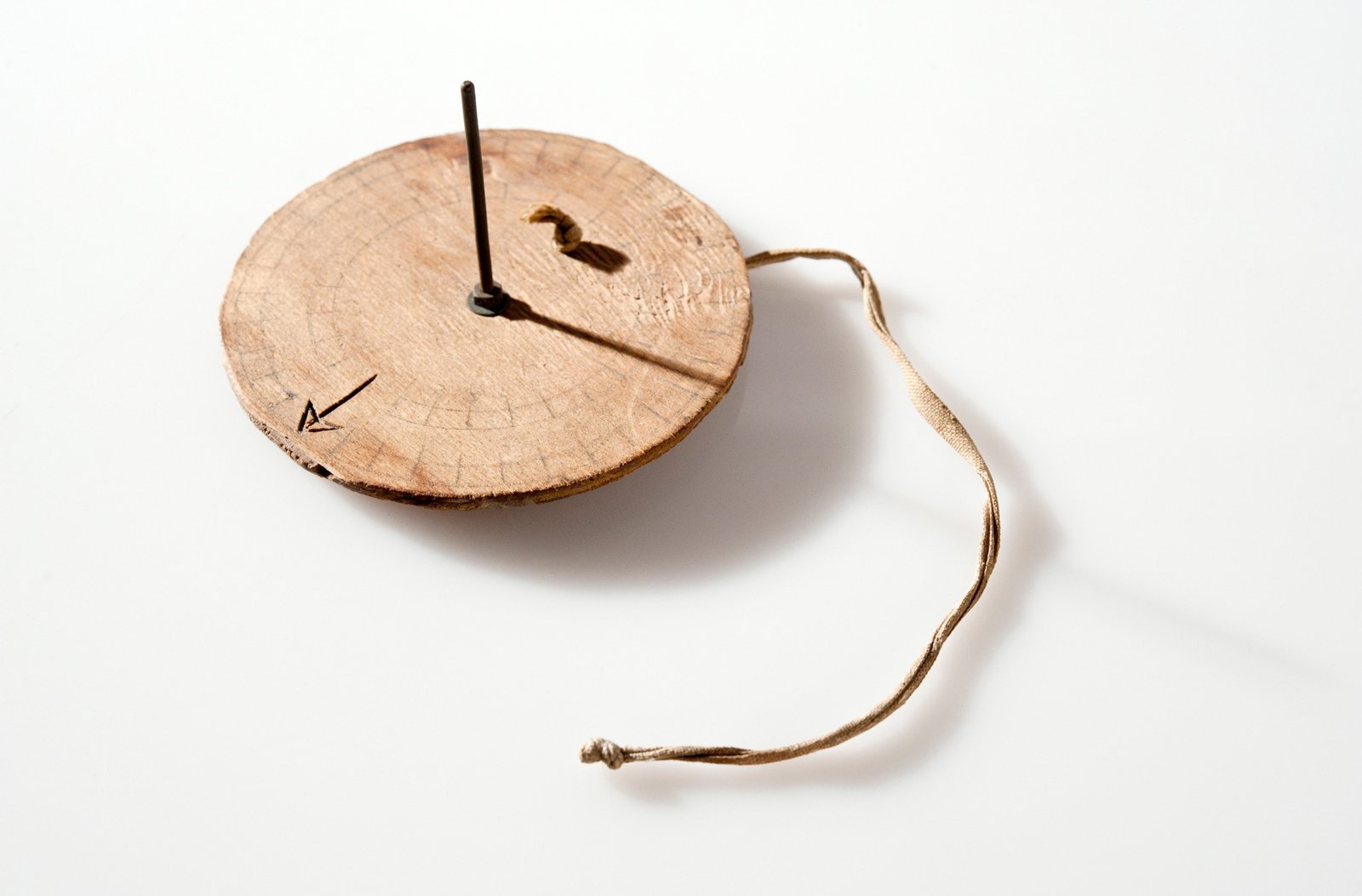
The magnetic compass proved unreliable near the poles, where magnetic fields diverge dramatically. Mawson’s team used homemade sun compasses—simple wooden discs with a central nail—to take solar bearings in combination with precise clocks and star observations. Each sledge carried one, firmly tied to prevent losing it to the Antarctic winds.
© Australian Museum
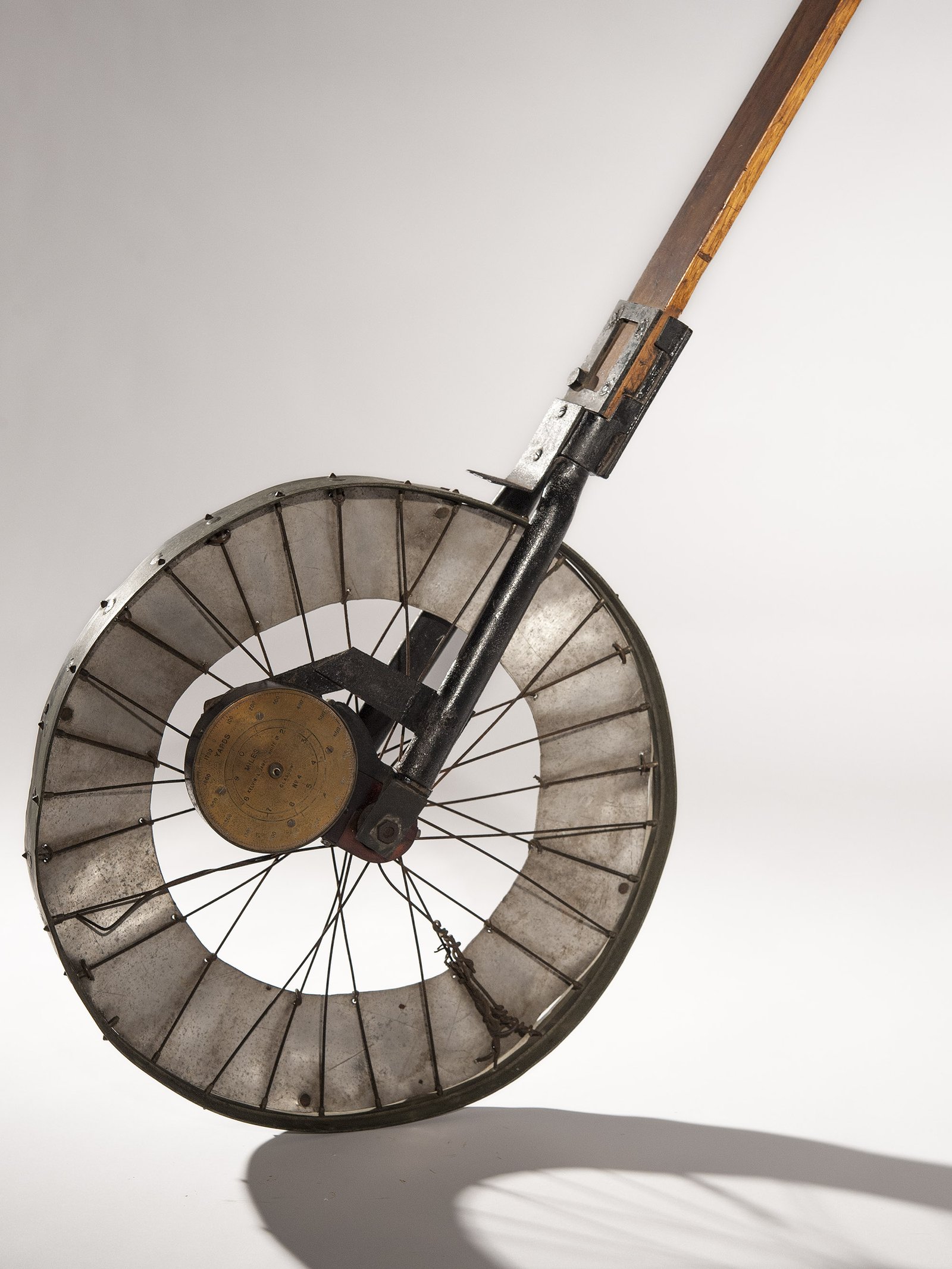
The Australian Museum also holds one of the sledgemeter's from the expedition. A sledgemeter was a small wheel attached to a sledge and linked to brass dials and gears that measured the distance travelled during long journeys. Accurate distance readings were essential for rationing food, planning return routes and assessing progress in an environment where visual landmarks were scarce.
© Australian Museum
While not necessarily a 'new' technology from the AAE, Mawson's ice pick is still evidence of his outstanding ingenuity and courage. Mawson used this very ice pick to haul his way out of the crevasses that would often appear beneath the thin covering ice. His name is stamped onto the pick head.

© Australian Museum
Living and working in Antarctica
With the help of these technologies, Mawson's expedition established a busy scientific base at Cape Denison in Commonwealth Bay, later known as one of the windiest places on Earth. Teams of geologists, biologists, meteorologists and magneticians worked in rotating parties, carrying out measurements, collecting specimens and charting previously unknown stretches of coastline.
Daily life was demanding. Blizzards routinely buried their base in snowdrifts, forcing the men to dig their way out before they could begin scientific work. Sledge journeys carried small parties into the interior and along the coast, mapping uncharted terrain and collecting rocks, ice samples and biological specimens. It was during these longer journeys that navigation tools like the sun compass and sledgemeter proved vital, helping parties track their bearings and measure progress in a featureless landscape.
Despite the harsh conditions, the expedition produced an extraordinary body of scientific data. Their coastal surveys extended Australia’s geographic knowledge of the region, while their weather records, collections and measurements helped build the foundations of modern Antarctic science.
© Australian Museum
Tragedy, survival and endurance
For months, the team balanced rigorous scientific work with the constant battle against wind, ice and isolation. Yet even amid this relentless routine, the greatest challenge still lay ahead. During one ambitious sledging journey to the east, the expedition was struck by tragedy.
In late 1912, the Far Eastern Sledging Party (made up of Douglas Mawson, Belgrave Ninnis and Xavier Mertz) set out from Cape Denison on to chart new territory along the eastern Antarctic coastline. Only a month into the journey, on 14 December 1912, tragedy struck: Ninnis fell through a hidden crevasse, taking with him his sledge, six dogs and most of the party’s food supplies. With drastically reduced provisions, Mawson and Mertz turned back toward base. Their progress slowed as they battled exhaustion, malnutrition and worsening weather. Mertz’s condition deteriorated rapidly, and he died on 8 January 1913 during the return journey.
Now alone and severely weakened, Mawson continued across the crevasse‑riddled terrain. He finally reached the base on 8 February 1913, only to learn that his ship, the Aurora, had departed a few hours earlier, unable to wait any longer in the extreme conditions. Mawson and six men who had remained behind to search for him were consequently forced to endure a second unplanned winter (1913) at Cape Denison.
Putting this extra time to good use, the remaining team of the Australasian Antarctic Expedition explored more than 6000 kilometres of Antarctica, collecting valuable scientific data and specimens about the region’s geology, biology, geomagnetism, oceanography and meteorology and laying down Australia’s claim to part of this great southern wilderness. A year after his fateful sledging journey, Mawson finally returned to the Australian mainland in February 1914.
© Australian Museum
Explore Mawson's Collection at the Australian Museum
The Australian Museum holds objects and specimens from Mawson's expedition in the Archives, Library, World Cultures, Mineralogy and Petrology and Life Sciences Collections. You can also see some of the Mawson Collection highlights on display in the Westpac Long Gallery (containing the permanent exhibition 200 Treasures of the Australian Museum).
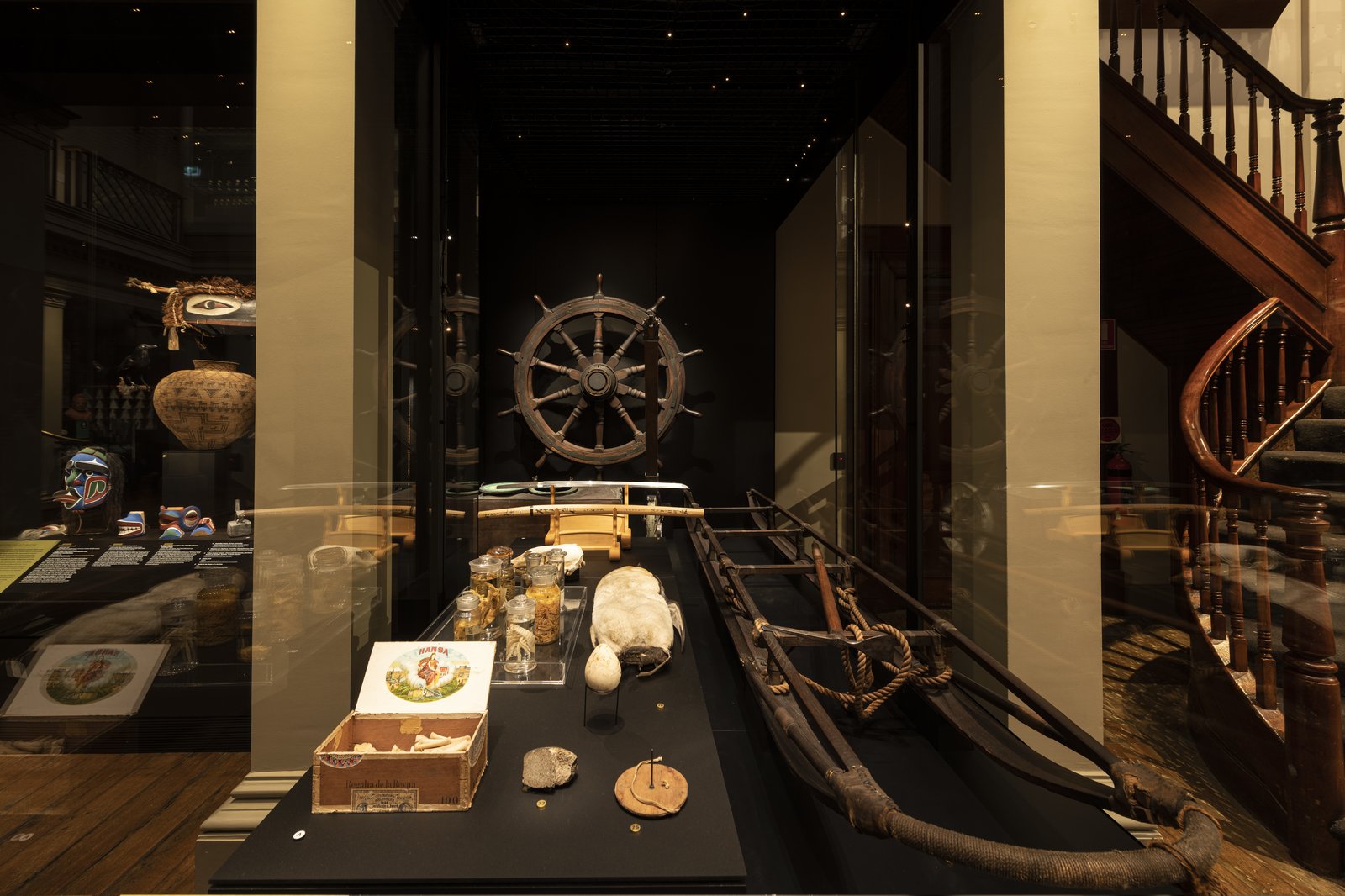
© Australian Museum
A condensed version of this article was first published in Explore 33(4) by Colin Macgregor, Manager, Materials Conservation, Australian Museum.
See the ABC's Karen Barlow interview Colin Macgregor here.
