
Executive Leadership Team
Meet the Museum Directors responsible for strategic planning and management of the nation’s first museum.

Kim McKay AO, Director & CEO
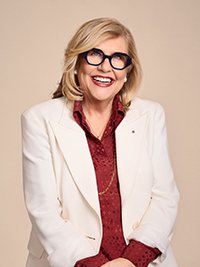
Kim McKay’s career has focused on public advocacy and community engagement programs around the natural environment and science both in Australia and internationally.
In her role as Director and CEO of the Australian Museum, Kim is responsible for the strategic direction and management of the nation’s first museum, including a collection of over 22 million natural science specimens and cultural objects.
Kim served on the Australian Museum Trust from 2012-2014. Since being appointed to the Director’s role 12 years ago in 2014 (the first woman in the AM’s 190+ year history), Kim has initiated a broad transformation program including overseeing Project Discover, the AM’s award-winning renovation of public spaces as well as expanding public visitation to the AM to reaching 1.5million visitors annually. She has prioritised First Nations Voices and the AM and has initiated an institution-wide focus on climate change research and solutions.
With a background in international marketing and communications, Kim has worked in the USA in senior roles for almost a decade in non-fiction television for Discovery Channel and National Geographic Channels International and developed global initiatives for the National Geographic Society; prior to that she co-founded the iconic Clean Up Australia and Clean Up the World campaigns in the 1990’s working in conjunction with the United Nations Environment Programme (UNEP). The co-author of five True Green books published in Australia by ABC Books and internationally by Nat Geo, Kim has received many awards for her environmental, citizen science and outreach work and was appointed an Officer of the Order of Australia (AO) in 2008 for distinguished service to the environment and the community.
She graduated from UTS (BA Communications) in 1981 and currently serves on the UTS Council. She was awarded and an Honorary Doctorate of Science from the University of Technology Sydney in 2023 in recognition of her achievements in the community, non-profit, cultural, environmental, communications and business sectors and an Honorary Doctorate of Science from the University of Wollongong in 2022 in recognition of her outstanding contribution to science, including her work on environmental and conservation issues. She has served on many not-for-profit boards and for four years chaired the NSW Government’s Museums and History Art Form Board. She is currently Chair of the Council of Australasian Museum Directors representing 26 leading museums in Australia and New Zealand.
Professor Shane Ahyong, Acting Chief Scientist and NSW Senior Principal Research Scientist
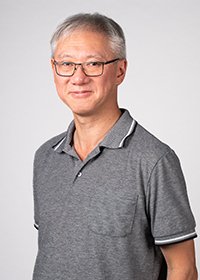
Professor Shane Ahyong has been appointed the Acting Chief Scientist of the AM following a distinguished local and international career. He has spent a lifetime exploring all things marine and freshwater, being driven by a fascination for aquatic life and has more than 30 years experience leading research programmes investigating the systematics and phylogenetics of aquatic invertebrates, marine biosecurity and invasive species, and climate change impacts. His research examines all aspects of the crustacean tree-of-life, fossil to living, in order to understand how they have evolved and how they live today. He is a world authority on the phylogeny and systematics of stomatopod and decapod crustaceans, making up some 15,000 species worldwide.
In 2010, Shane took on his current role at the Australian Museum where he maintains strong local and international collaborations. His almost 400 publications span research papers, book chapters and books, mostly focussed on marine and freshwater invertebrates.
Fiona Beatty, General Counsel & Associate Director
Fiona Beatty is a lawyer with over 20 years' experience providing strategic legal counsel to organisations across the corporate and not-for-profit sectors. As General Counsel, Fiona has led the legal function at the Australian Museum since 2023 and has been a member of the Executive Leadership Team since 2025.
Throughout her career, Fiona has worked in leading law firms in Sydney, London and New York, advising clients ranging from entrepreneurial start-ups to global corporations, universities and research institutions. Her expertise spans corporate governance, procurement, commercial contracting, intellectual property, privacy, data protection and technology transactions.
Fiona moved from private practice into the not-for-profit sector in 2017, working as Head of Legal at the Royal Horticultural Society in London. Fiona also served as a Trustee and Member of the Audit Risk and Governance Committee of Fulham Palace Trust, a heritage charity responsible for preservation and management of the historic residence and gardens of the Bishop of London. Through this work, Fiona developed significant expertise advising on legal and governance issues in the cultural heritage sector, and on how not-for-profit organisations can balance commercial sustainability, fundraising and philanthropy with conservation and public benefit objectives.
Fiona is currently Deputy Chair and Council Member of The Women's College within the University of Sydney, and sits on the Governance Committee of Council. She holds a Bachelor of Arts (Asian Studies)/Law from the University of Sydney and a Master of Laws from Duke University School of Law, USA.
Maggie Chien, Associate Director, People and Culture

Maggie leads the People and Culture function for the Museum as Associate Director, bringing over 15 years of comprehensive human resources management experience to the Museum. Maggie holds a Master of Commerce (HRM), a Bachelor of Commerce (Bus Econ) from University of NSW and is an AHRI Certified Academic of Human Resources (CAHRI).
Maggie is a member of the Museum’s Executive Leadership Team, responsible for development and implementation of People and Culture policies, strategies and projects to support the mission, values and strategic priorities of the Museum. Maggie ensures that people and culture considerations are central to all executive decision making and that best practice change management practices and frameworks are in place and applied.
Richard Dilly, Director, Exhibitions and Experience
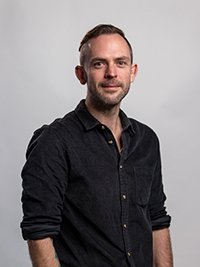
Richard Dilly is Director of Museum Experience and Engagement at the Australian Museum, where he leads exhibitions, public programs, visitor experience, and commercial operations.
Richard's work is anchored in the belief that great museums create moments of wonder, and that those moments should be accessible to everyone. His focus is on shaping an end-to-end audience journey where exhibitions, programs and services work together to engage diverse communities, broaden participation and inspire repeat visitation.
With over 20 years' experience leading visitor experience and commercial operations at world-class attractions, Richard brings a strong lens on what it takes to build sustainable, mission-driven organisations. At the AM, he is particularly focused on ensuring the museum's commercial performance actively fuels its cultural and scientific mission, and that every revenue decision is also a values decision.
A driving priority for Richard is embedding a culture of insight-led decision making across his division. He draws on audience data, evaluation and continuous improvement disciplines to sharpen the museum's impact, pilot new engagement approaches, and share learnings that lift performance across teams.
Richard is also a strong believer in the power of collaboration: within the museum and beyond it. He is co-chair of AM Pride, the museum's staff-led inclusion committee, and has previously served on the Board of the Zoo and Aquarium Association Australasia
Julie Ellmers, Director, Australian Museum Research Institute (AMRI)
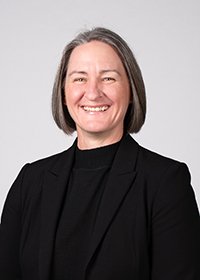
Newly appointed to the role of Director of AMRI, Julie will also join the Australian Museum’s Executive Leadership Team.
Julie has built a successful career over 25 years, managing and supporting scientific research efforts. Previously, as Associate Director of AMRI, she lead the Life and Geosciences Branch, and facilitated the pursuit of high-quality research and collection management, taking oversight of the Australian Museum’s natural science collections.
During her three years in the role, she has represented the museum as a member of the Council Heads of Australian Faunal Collection, she has also overseen significant recent recruitment within the Life and Geosciences Branch and contributed to several cross-divisional projects across the museum.
Before joining the AM, Julie was Chief Operating Officer of the ARC Centre of Excellence in Australian Biodiversity and Heritage (CABAH), a seven-year, $34-million program of research, headquartered at the University of Wollongong. A committed advocate for Equity, Diversity and Inclusion in the workplace, here Julie was joint-Chair of CABAH’s Equity, Diversity and Mentoring committee.
Amanda Farrar PSM, Director, Strategy, Governance & Development

Amanda has held senior leadership positions within the public service, television and media sectors for over 20 years. Amanda was promoted to Director, Strategy and Chief of Staff in 2024 and was previously the Director, Public Affairs and Development. Her role is responsible for the implementation of the AM’s strategic plan and major projects, securing government and philanthropic support the Museum’s flagship science, education and cultural programs.
Amanda also manages education, major cultural infrastructure stakeholder engagement, legal and governance and key stakeholder relationships and holds the position of Chief Audit Executive. Amanda is the executive champion for access, diversity and inclusion, and the AM’s Reconciliation Action Plan. In 2022, Amanda’s leadership skills were recognised with a Public Service Medal for outstanding public service to arts and culture in NSW.
Amanda was previously a senior advisor to former NSW Premier, Hon Mike Baird and the former Managing Director of National Geographic Channel Australia/New Zealand.
Amanda has a personal interest in First Nations affairs and community building and has been actively engaged in several place management and community building committees and advisory groups.
Erik Maranik, Director, Corporate Services

Erik Maranik is the Director of Corporate Services at the Australian Museum, responsible for the operational infrastructure that keeps the Museum functioning, evolving, and secure. The role sits at the intersection of engineering, technology, and institutional stewardship, and it draws on the full breadth of his career.
Erik's background spans natural resource management, environmental and civil engineering, and social and critical infrastructure. He brings experience across industry, academia, and government, including the utilities, housing, health, and education sectors. An agricultural upbringing gave him a grounding in systems, cycles, and the long view. That perspective shapes his approach to everything from the stewardship of heritage buildings to enterprise technology architecture.
He holds an Honours degree in Natural Resource Management and a degree in Civil Engineering, for which he received the final year prize in structural engineering design. He is a Chartered Professional Engineer and Fellow of Engineers Australia, and served as National Chair of Engineers Australia's Environmental Engineering College, contributing to the development of environmental engineering practice at a national level.
At the Australian Museum, Erik is the Senior Champion for accessible premises, embedding accessibility and inclusion into the Museum's facilities and digital practices in line with the Access and Inclusion Action Plan 2026–2028.
Prior to joining the Museum, Erik applied his expertise across climate change adaptation, infrastructure resilience, emergency response, and the economic and environmental co-design of utility and natural resource systems. He was an original member of Sydney Water's Climate Change Adaptation Expert Panel and supported the NSW Healthy Rivers Commission early in his career. He has authored key documents in biosecurity and critical infrastructure risk management.
Erik is a passionate advocate for infrastructure that serves communities, and for institutions that take seriously their obligations to the people, communities, and landscapes in which they exist.
Laura McBride, Director, First Nations

Laura McBride is a Wailwan woman and Director, First Nations at the Australian Museum (AM). Leading the First Nations strategic direction and operations, she oversees the management of the Museums Cultural Collections including: Archaeology, Aboriginal and Torres Strait Islander cultural collections, Pasifika cultural collections and World cultural collections.
Laura has been pivotal in guiding the Australian Museum towards fostering stronger connections with First Nations and Pasifika stakeholders and knowledge-holders, building Indigenous self-determination into the interpretation, care, classification, access and use of cultural objects, and ensuring First Nations communities authentically represent themselves and their cultures within the Museum.
With over 18 years of experience in museums, Indigenous education, and cultural heritage, Laura is a senior First Nations executive and recognised leader across exhibitions, repatriation, community engagement, cultural programs, and building cultural infrastructure and policy. Laura has won numerous awards for her First Nations curatorial leadership and has led her team in the delivery of further award-winning exhibitions including Wansolmoana permanent exhibition, the BURRA Learning Place, and the Her Name is Nanny Nellie documentary and display.
During her executive tenure, the AM's repatriation program has grown into one of the Country’s strongest overseeing 23 repatriation activities in 5 years to First Nations communities in Australia and the Pacific. She has made significant changes in investment into repatriation operations, policy and preparation including large scale provenance research, and enhancement to restricted collections stores and infrastructure.
Laura holds a Bachelor of Arts (University of Sydney, 2008) with a double major in Psychology and Australian Indigenous Studies, and a Master of Aboriginal Education (University of Technology Sydney, 2012).
Brett Ogier, Chief Financial Officer

Brett Ogier joined the Australian Museum in May 2022 and leads the Finance Division. As Chief Financial Officer, Brett is responsible for the Museum’s financial and risk management, financial budgeting and forecasting processes, performance monitoring and analysis, and financial reporting to stakeholders. As a member of the Executive Leadership Team, Brett plays a key role in developing and implementing the AM’s finance strategy including funding submissions. Brett is a Chartered Accountant and finance executive with over 25 years’ experience in financial leadership roles across listed entities, multinationals, as well as Federal and NSW Government entities.
Brett has extensive experience managing, advising on, and delivering a wide range of financial, strategic and other key functions in large and complex organisations across both the not-for-profit and for-profit sectors. At Ausgrid, Brett led the Financial Control team through the company’s transition from a NSW State Owned Corporation to private ownership in the largest acquisition in Australia in 2016. At NBN Co, Brett established and then led the Commercial Finance function of the wholesale broadband provider. Brett also worked for the NSW Department of Education where he was Director, Financial Analysis and Partnership. In this role, Brett was a key member of the Finance leadership team, where he implemented changes to the Department’s reporting suite across more than 2,200 NSW public schools, enabling more effective and easier tracking of costs.
He was the Finance lead on the COVID-19 Intensive Learning Support Program which was awarded the Secretary’s Award for Agility in 2021. Since beginning his career at KPMG in the Sydney and Los Angeles offices, Brett has also held senior roles at Ecolab and UGL Rail. Brett’s demonstrated success in government roles, projects-based and infrastructure intensive businesses has enabled him to make significant contributions to the Australian Museum’s Executive Leadership Team.
Brett holds a Bachelor of Economics from the University of Sydney, is a member of Chartered Accountants Australia and New Zealand and is a Graduate Member of the Australian Institute of Company Directors.
Jacinta Spurrett, Director, Marketing, Communications and Partnerships

Jacinta joined the Australian Museum as Director, Marketing, Communications, Commercial and Partnerships in 2016. An accomplished executive with more than 30 years' experience across the for-profit and not-for-profit sectors, she brings deep expertise in strategic leadership, fiscal management and commercial operations.
Prior to joining the AM, Jacinta spent eight years as CEO of the Eye Surgeons' Foundation, where she led a significant strategic and financial turnaround. Earlier roles include Managing Director of the National Geographic Channel Australia/New Zealand and Managing Director of Sydney public relations firm Prue MacSween & Associates.
As a member of the AM's Executive Leadership Team, Jacinta oversees business development and revenue across marketing, communications, sponsorship and partnerships, visitation, membership, tourism, digital and other commercial activities.
She also serves as the Museum’s Senior Champion for Access and Inclusion in marketing, communications and digital, leading the development of accessible content and inclusive communications practices in line with the Access and Inclusion Action Plan.
Jacinta holds a Bachelor of Arts in Communication from the University of Canberra, majoring in International Marketing and Media Studies.
Her expertise spans international management, business planning, negotiation and the full breadth of communications – including media, digital, stakeholder and talent management.
Organisation chart
Learn more about our staff
Discover the team delivering visitor experiences and collection research at the Australian Museum.
Find out more


