Citizen Science Grant Announcement Click to enlarge image
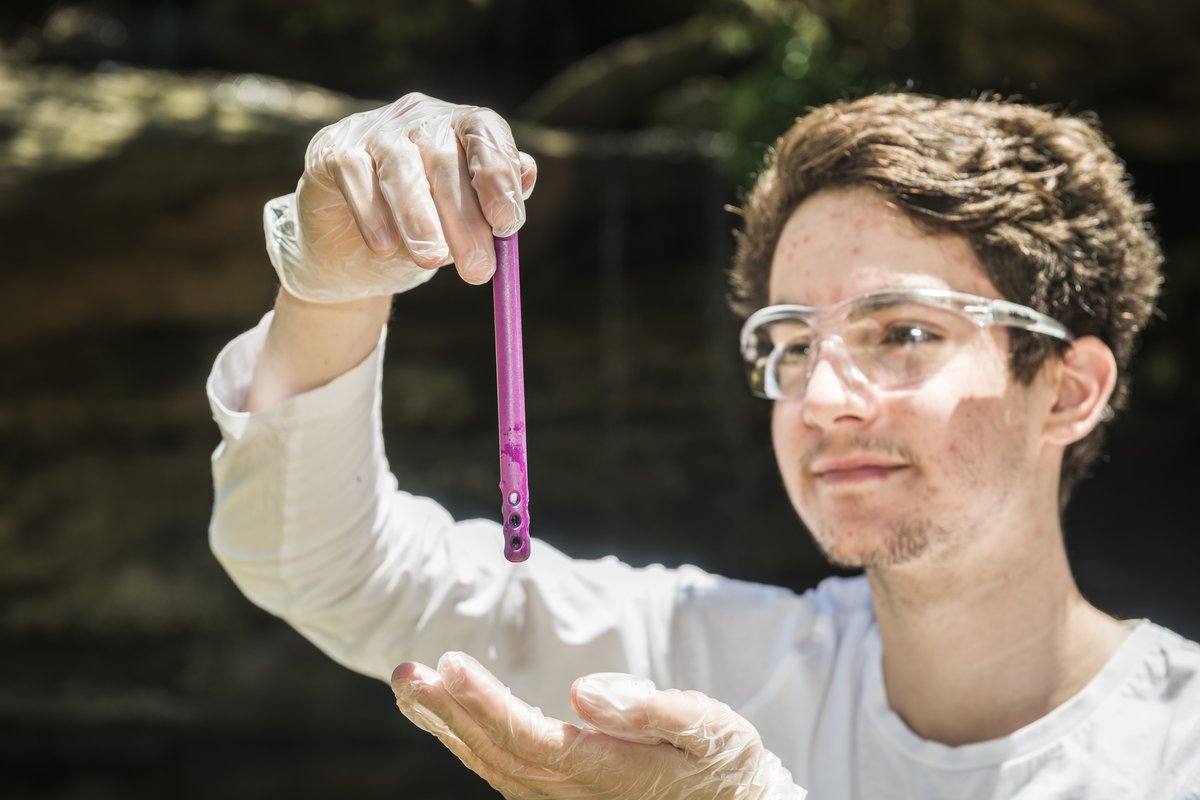
Federal Minister for Industry, Innovation and Science, Greg Hunt MP and Jason Salinski MP, Federal Member for Mackeller announced the opening of the Citizen Science Grants as part of the Inspiring Australia - Science Engagement Programme at Irrawong Reserve in Warriewood. The grants were opened at the Warriewood wetlands chapter of  the Australian Museum Streamwatch program which encourages local communities to monitor the water quality and health of their regional water ways. Representing the Australian Museum is Kim McKay, Director and CEO, Paul Flemons, Manager of Digital Collections and Citizen Science and Greg McDonald and Cecil Ellis of the Streamwatch project. Also present was Erin Rogers, Chair of the Australian Citizen Science Association. Image: Abram Powell
© ©Australian Museum

Chemical reactions for dissolved oxygen test.

Step 1

The addition of Manganous Sulfate solution (reagent No.1) and Alkaline Potassium Iodide Azide solution (reagent No. 2) to the sample. These reagents react to form a white precipitate of manganous hydroxide. This reaction can be written as:

MnSO4 +  2KOH  =    Mn(OH)2 + K2SO4
Manganous  Sulfate + Potassium  Hydroxide = Manganous  Hydroxide + Potassium Sulfate

At the same time the precipitate is formed, the oxygen in the water reacts with the manganous hydroxide to form brown-coloured manganic hydroxide. Chemically, this reaction can be written as:

4Mn(OH)2  + O2  + 2H20   =  4Mn(OH)3
Manganous Hydroxide +  Oxygen = Water + Manganic Hydroxide

Step 2 

After the brown precipitate is formed, sulfuric acid (reagent No. 3) is added to the sample. The acid converts the manganic hydroxide to manganic sulfate. This is called “fixing” the oxygen in the sample. Chemically, this reaction can be written as:

2Mn(OH)3 + 3H2SO4 = Mn2(SO4)3 + 6H2O
Manganic Hydroxide +  Sulfuric acid = Manganic Sulfate  + Water 

At the same time, iodine from the potassium iodide in the Alkaline Potassium  Iodide Azide solution (reagent No.2) is oxidized by manganic sulfate, releasing free iodine into the water. The amount of iodine released is directly proportional  to the amount of oxygen present in the original sample. The release of free iodine is indicated by the sample turning a yellow-brown colour. Chemically, this reaction can be written as:

Mn2(SO4)3 + 2KI  = 2MnSO4 + K2SO4 + I2
Manganic Sulfate + Potassium Iodide = Manganous Sulfate + Potassium  Sulfate + Iodine        

The wavelength of the yellow-brown colour is measured using a colorimeter. The darker, or more orange, the sample means that there is more Iodine and hence more dissolved oxygen in the sample.