The Enduring Bush
Australia's bushland includes eucalyptus forests, tropical rainforests, and semi-arid scrubland. These diverse ecosystems are home to many of Australia's iconic native animals and play a vital role in our natural heritage.
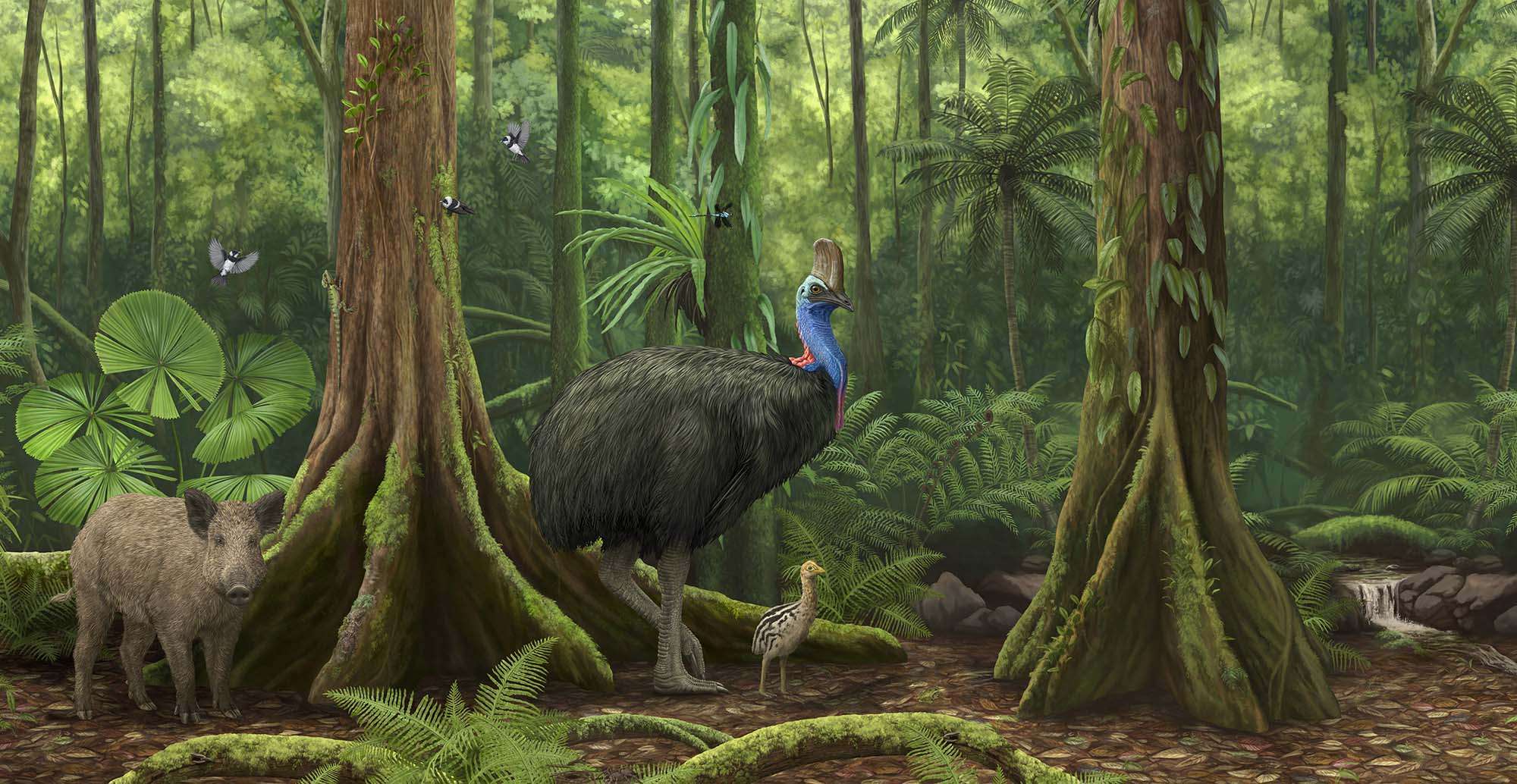
Living museum of evolution
Imagine an outdoor museum that preserves ancient species found nowhere else on Earth; that’s the Wet Tropics of Queensland. This World Heritage rainforest is one of the most ecologically significant regions in Australia, home to the highest biodiversity in the country. Its unparalleled evolutionary history makes the Wet Tropics an invaluable asset for scientific insights into the development of life in Australia – and on Earth.
Queensland's Wet Tropics is a vital refuge for rare and endemic wildlife. Explore them below.
Aussie legends of the forest
Australia’s forests are home to iconic animals, each uniquely adapted to thrive. From burrowers to canopy climbers, forest creatures use camouflage, calls and claws to survive. These animals have adapted to the protective cover of forests and life among the trees, but also to harsh conditions like drought and heat.

Koala
Phascolarctos cinereus
Koalas are famous for spending most of their time asleep in trees, their square bottoms wedged in the crook of a branch. Contrary to the popular myth, they aren’t drunk on eucalyptus – they’re conserving energy. Their diet consists almost exclusively of Eucalyptus gum leaves, which are unpalatable to most other animals and also very low in nutrition.
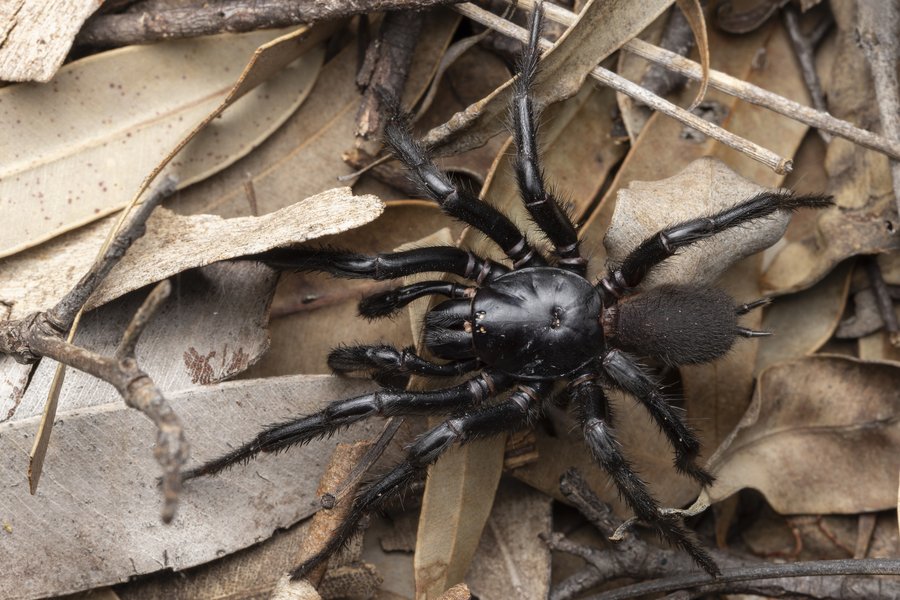
Sydney Funnel-web Spider
Atrax robustus
Funnel-webs hide in silk-lined burrows with trip lines to detect prey, then strike with powerful fangs and potent venom. The male Sydney Funnel-web Spider is one of the world’s most venomous spiders. Unfortunately, it is also the males that humans most often encounter – they wander from burrows in search of females during the mating season.
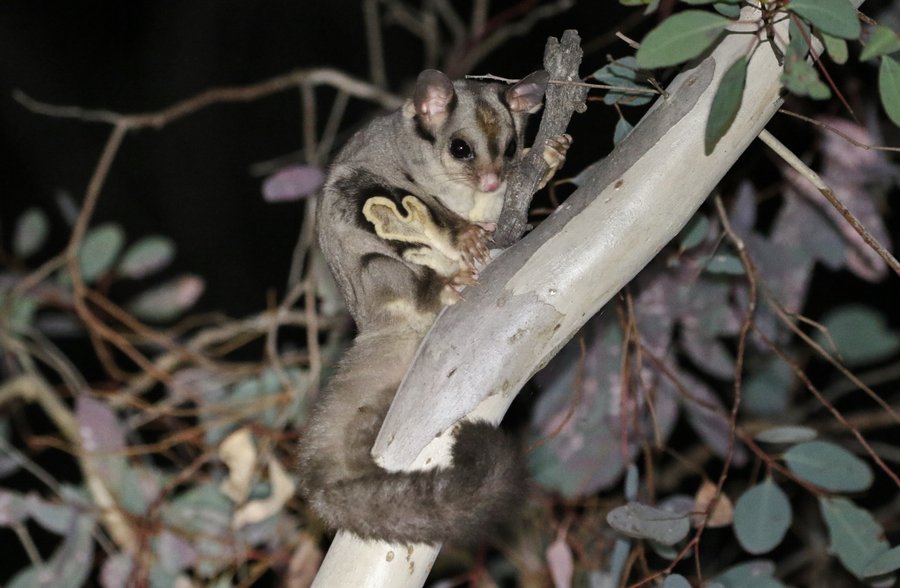
Sugar Glider
Petaurus breviceps
Not all flying animals need wings. Marsupial gliders move from tree to tree using thin flaps of skin (membranes) called a ‘patagium’ on either side of their bodies. Gliding saves energy and helps avoid predators. Their tails help steer, and large eyes enhance night vision. Sharp claws and gripping pads let them cling to bark and climb effortlessly.
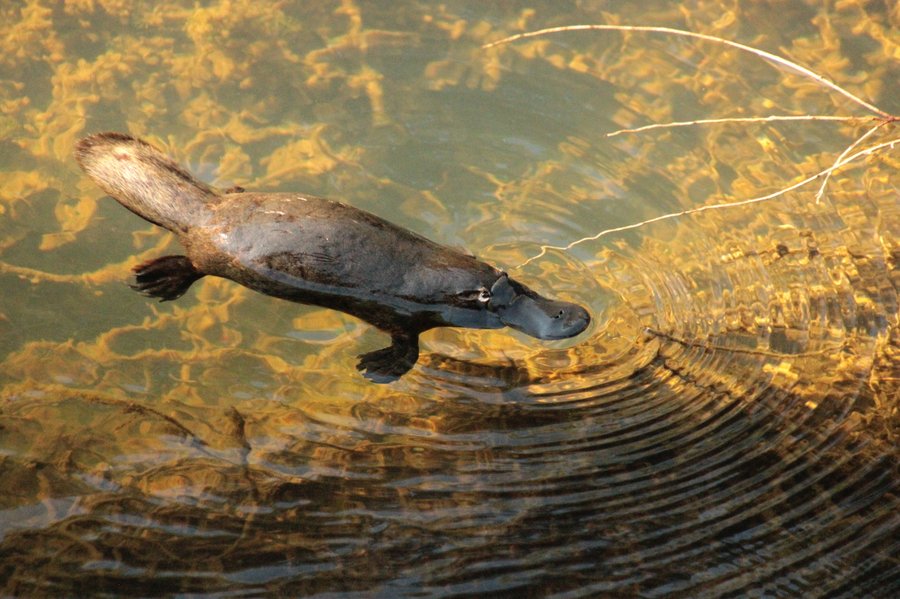
Platypus
Ornithorhynchus anatinus
The Platypus is an evolutionary oddity and one of the most unusual mammals living today. It has a duck-like beak covered in soft skin which can sense electricity, it lays eggs, and males have a venomous spur on their heel. Platypuses live in the rivers, streams and lakes of eastern Australia – but you’ll rarely see them. They are extremely shy and are most active at night.
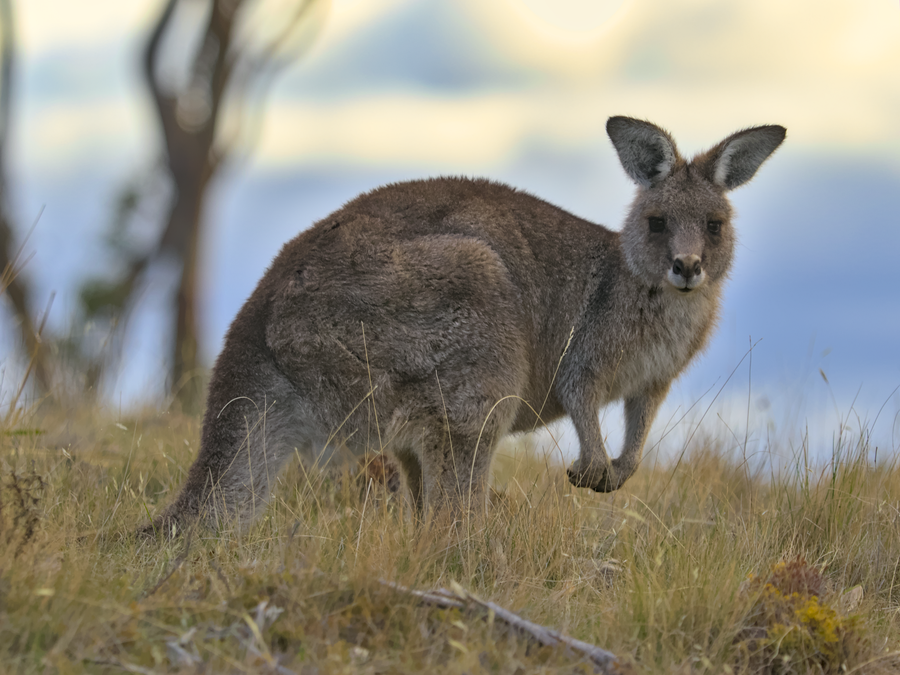
Eastern Grey Kangaroo
Macropus giganteus
There are at least 10 million of these iconic kangaroos in mainland Australia, with a small population in Tasmania. They live in open, grassy woodlands, forests and shrublands as well as the pastures developed for sheep and cattle – which have helped their numbers to increase.
Snakes: stealthy predators
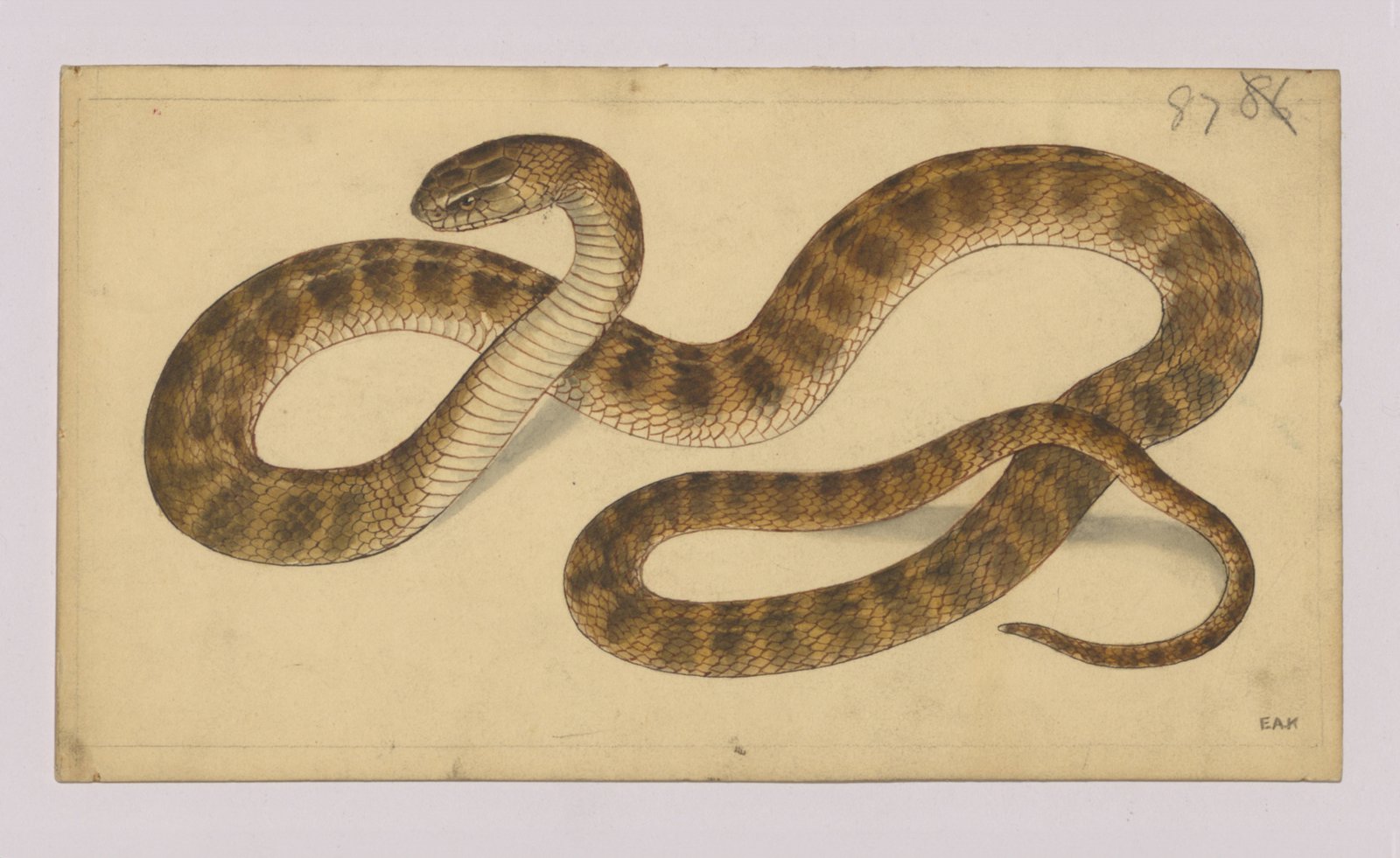
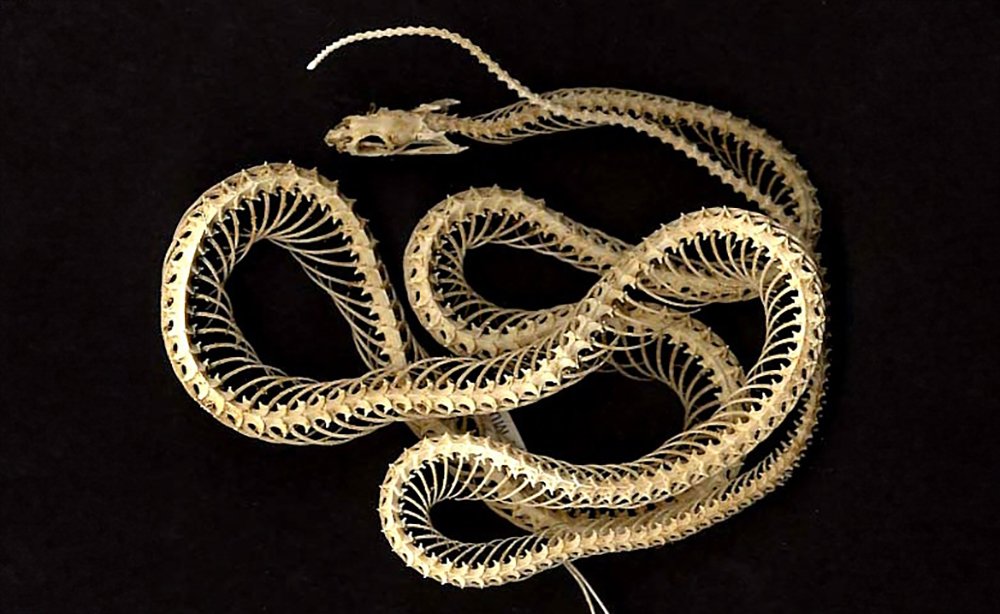
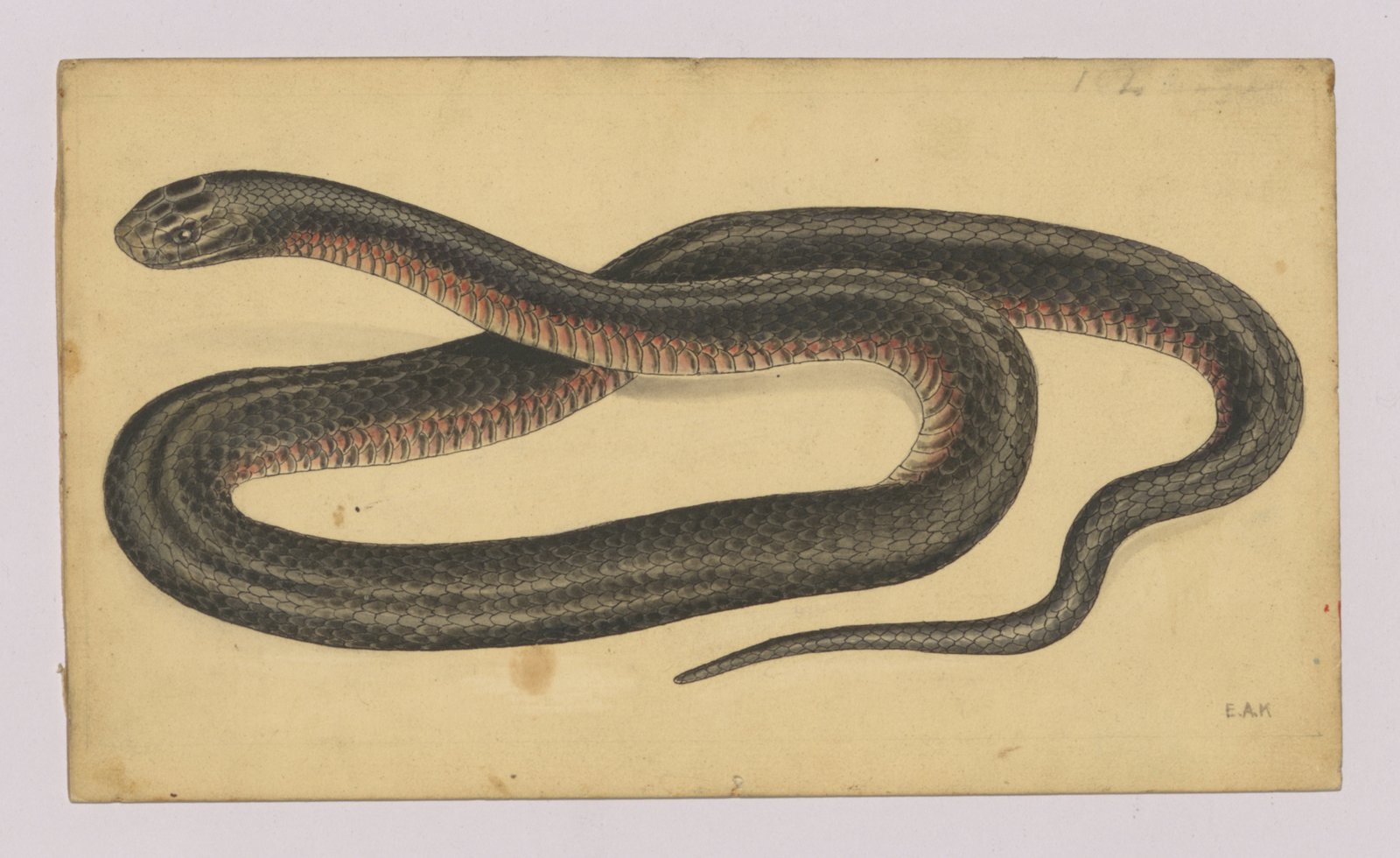
Australia’s snakes are stealthy predators – some are also dangerously venomous, like the Eastern Brown, Tiger Snake and Red-bellied Black Snake. Some species use heat-sensing, camouflage and ambush tactics to hunt. Despite fearsome reputations, bites are rare as most snakes prefer to avoid humans – smart choice! The introduction of antivenom has kept human deaths from bites low, but a few people still die each year.
Wildlife's housing crisis
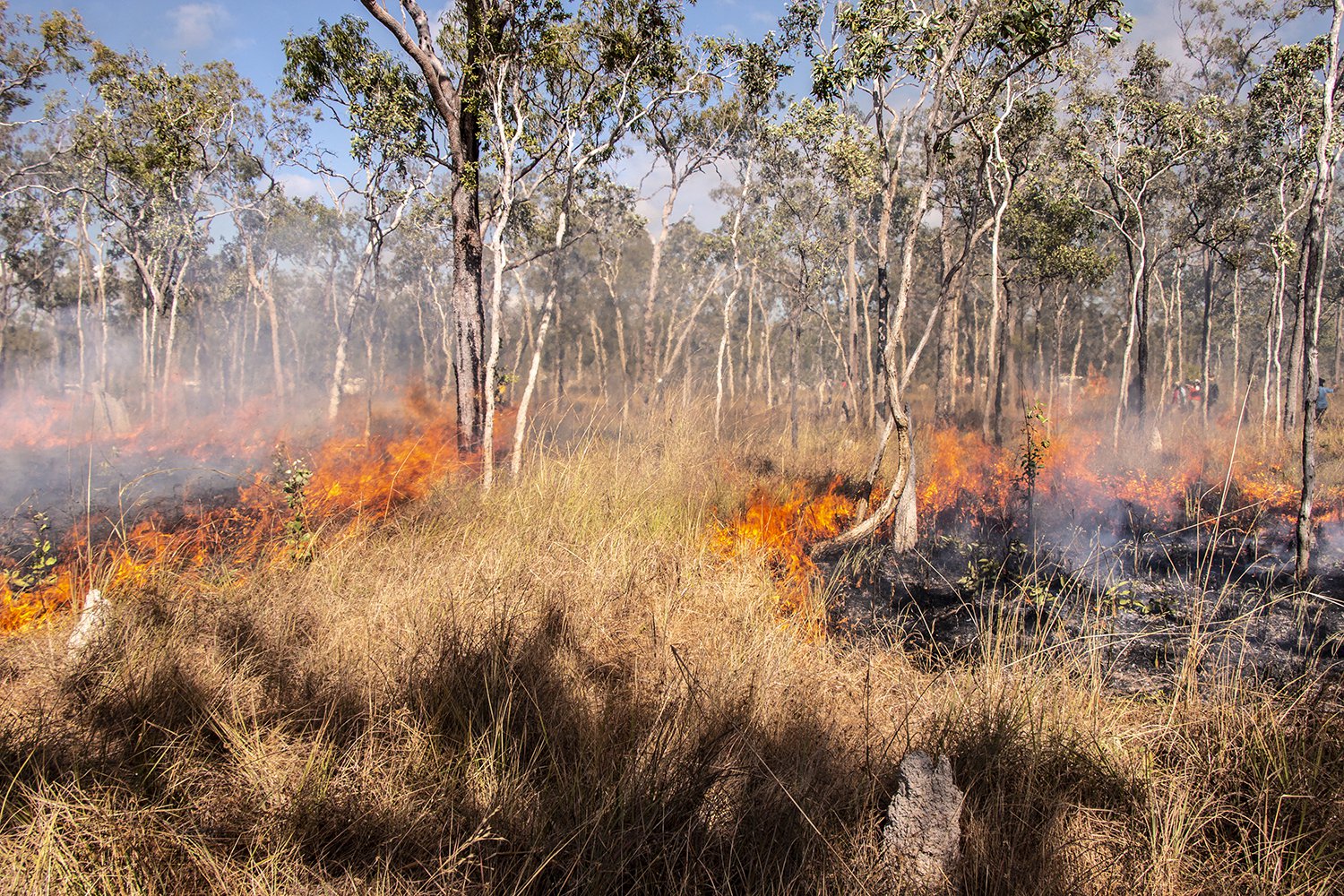
Australia’s wildlife is facing a housing crisis – fire is evicting them from the trees and dens they call home. Eucalyptus forests need fire to regenerate, but climate change is turning natural cycles into natural disasters. Intense wildfires are destroying animals’ homes. With rising temperatures and droughts fuelling more extreme fires, wildlife is being left homeless, vulnerable or dead.
First Nations peoples have long used cultural burning to manage and cleanse the land and reduce fire risk. By implementing First Nations’ knowledges and land care programs, we can treat fire with respect. This leads to healthy Country for human and animal kin.
Caring for Country supports the succession of all biodiversity, making it a healthy habitat for all animals. If we care for Country, we know Country will care for us.


Leaf litter: nature’s hidden world
Hidden under fallen branches and leaves lies a secret ecosystem vital to forest health. We call it leaf litter, but it isn't litter at all. It is home to thousands of different plants and animals and provides the nutrients needed for trees to grow. It is filled with microscopic life – like bacteria and tiny invertebrates – that break down dead plants, recycle nutrients and lock carbon into the soil, playing a vital role for climate regulation. The more you look, the more you will find.
Explore this 3D model of the Allothyrid Mite, Allothyrus australasiae, a microscopic decomposer that lives in leaf litter and helps maintain forest health by breaking down dead plants and recycling nutrients
Many hundreds of species of harmless micro-monsters decompose coarse leaves and wood into the soft forest underlay. We need this diversity, more than ever before to sustain our forest systems.