Vampires have appeared in stories, theatre, art, film, television, games, comics, music, and other popular culture for more than a century, while other bloodfeeding animals have also inspired fictional characters and creatures. This area explores how bloodfeeders have been represented in entertainment and popular media.
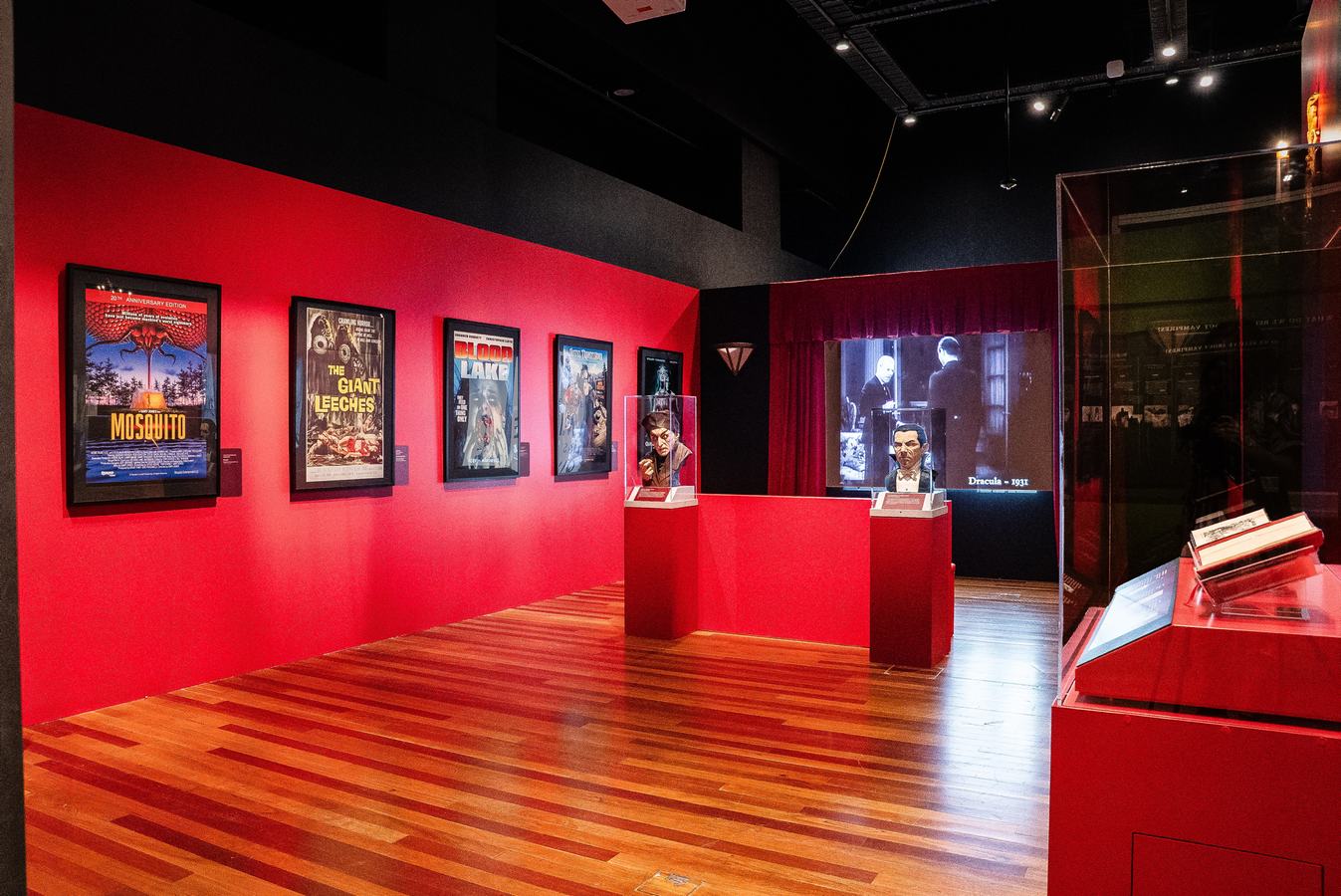
The space resembles a small cinema display area with dark red walls and red display panels. At the centre of the room is a projector screen framed by a red curtain. On either side of the screen are decorative wall light fixtures. In front of the screen is a red bench seat. Framed movie posters line the walls to the left and right. A display case on the left contains books and other printed material. A second display case on the right contains comics, toys, and additional collection items.
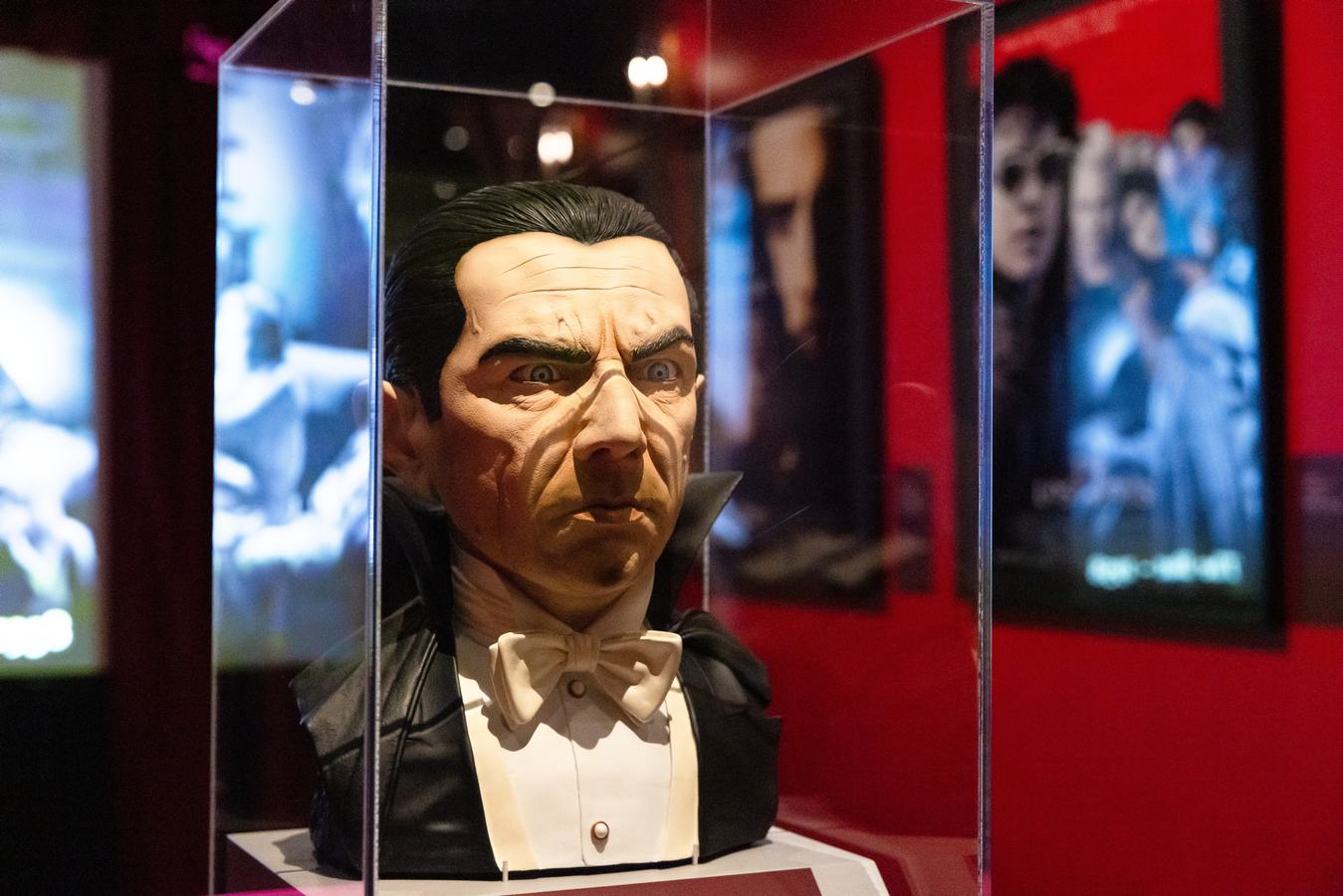
Behind the seat stand two bust models displayed on red plinths. A painted bust of Count Dracula is displayed inside a clear rectangular showcase. The head and upper chest are shown. The face is pale with deeply defined forehead lines, dark eyebrows, and grey-blue eyes. Black hair is combed straight back. A black formal jacket with wide lapels and a high-collared cape surrounds a white shirt fastened with round buttons and a large white bow tie. This representation is based on Bela Lugosi’s portrayal of Count Dracula, first performed on stage in 1924 before appearing in a 1931 film adaptation.