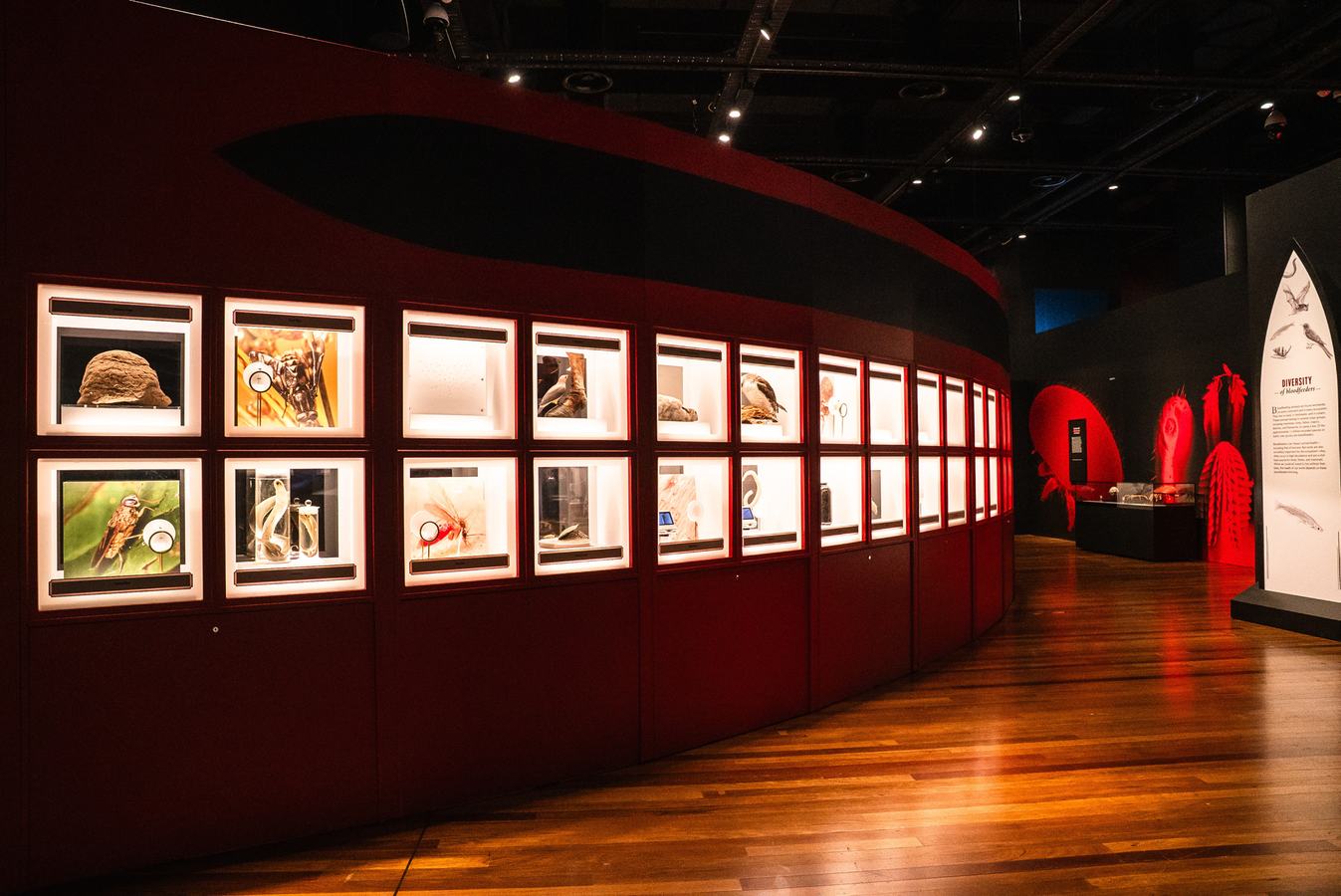
Blood-feeding animals are found in land, freshwater, and marine environments around the world. This area introduces the wide diversity of blood-feeding species and highlights their role within ecosystems.
The space features a large curved dark red coloured wall. Integrated into the wall are two horizontal rows of illuminated display cases that follow the curve of the structure. The display cases contain a combination of specimens, models, and images of different blood-feeding animals. Individual objects vary in size, shape, and colour. Some displays include magnified views shown within circular graphic elements. The ceiling above is dark with visible lighting fixtures directed toward the displays.
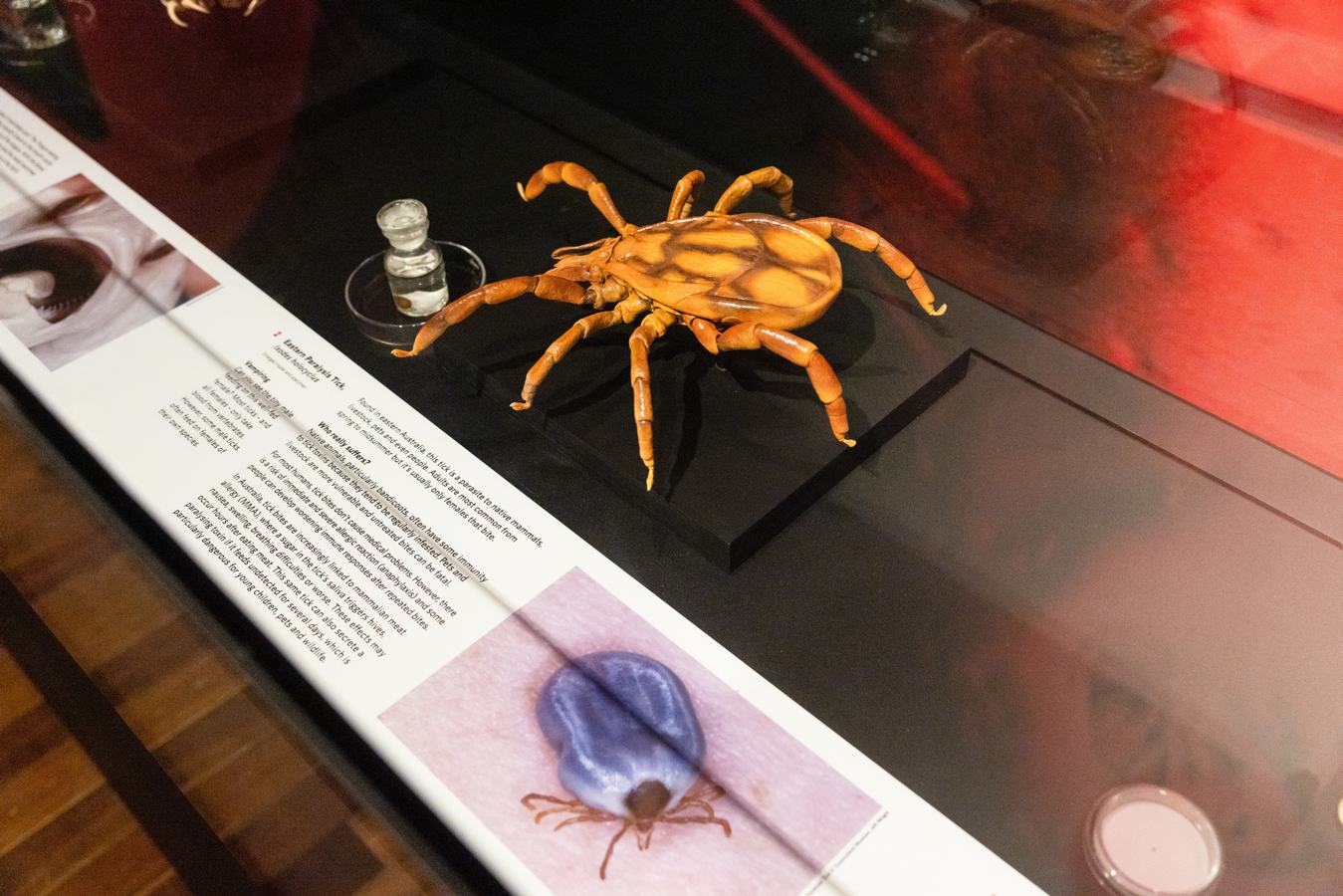
Further along the pathway, there is an additional showcase furniture and large graphic panels in red, black, and white positioned against a dark wall. Inside the showcase, an enlarged model and specimen of the Eastern Paralysis Tick, are displayed on a black platform. The model is brown with a broad oval body marked by darker branching patterns. Eight segmented legs extend outward around the body and pointed mouthparts project from the front. A preserved specimen is positioned nearby in a small clear jar. The tick is identified as a parasite found in eastern Australia that feeds on the blood of vertebrates. The accompanying image on the label shows an engorged female Eastern Paralysis Tick; it is a swollen grey-blue tick attached to pale skin, with a dark brown head and several visible slender brown legs.