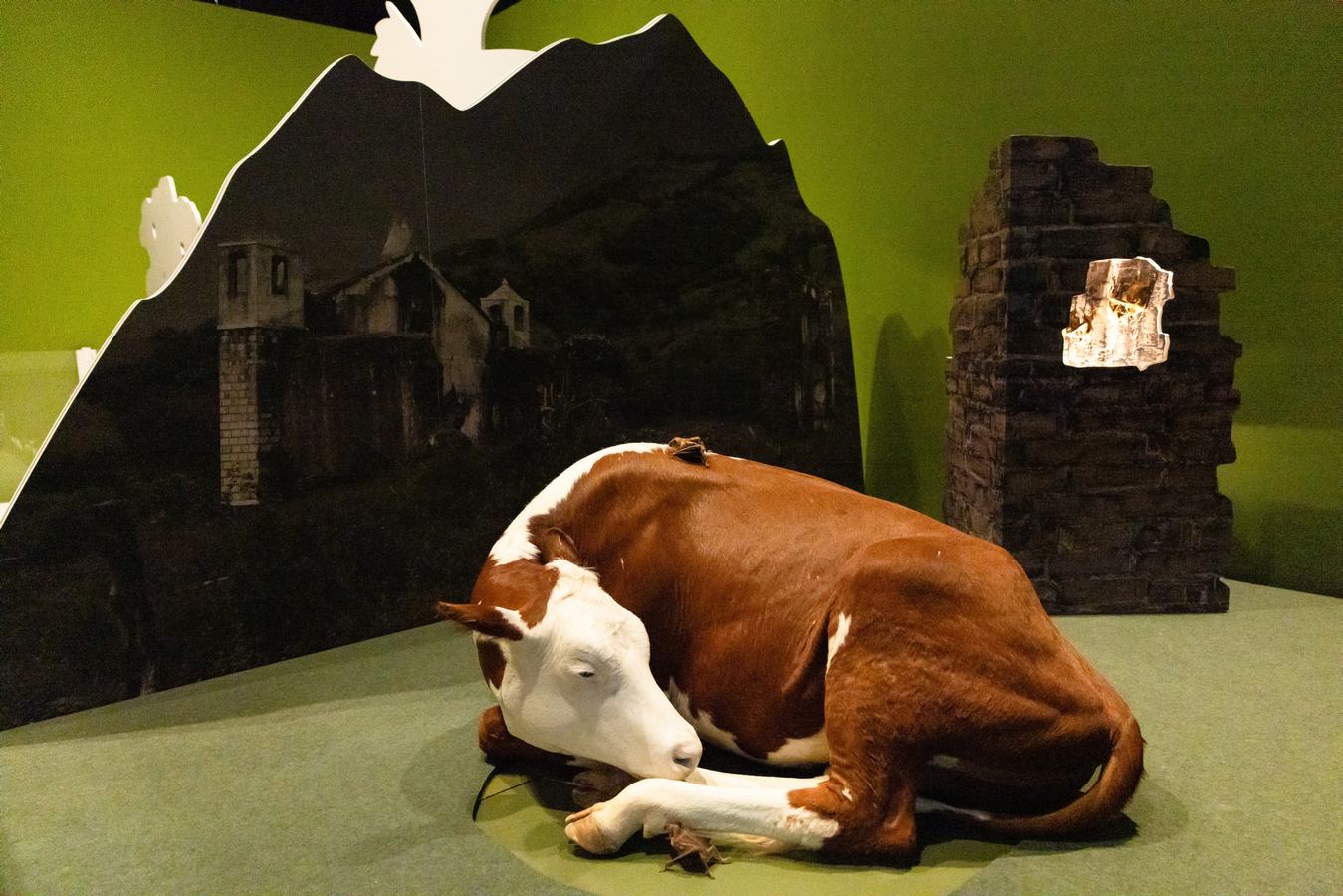
Behind an acrylic barrier, a life-sized model of a brown-and-white cow lies curled on a green display platform, with its head resting on the surface and its legs folded beneath its body. A small vampire bat is positioned on the cow’s back near the shoulders. Another vampire bat is on the platform in front of the cow, beneath its head and near its front legs. Behind the cow, a wall graphic depicts a rural farm landscape with buildings and vegetation. To the right, a model of a partially ruined building stands against a green wall. Inside a cavity in the structure, four vampire bats are roosting together.
The display introduces vampire bats, which are nocturnal animals that emerge at night to feed. Vampire bats mostly feed on wild mammals but may prefer domesticated livestock because they are easier prey. Vampire bats are light, weighing about 30 grams, and have sharp fangs that allow them to make quick bites. The bites often go unnoticed, and a bat can drink blood from a sleeping animal for more than 30 minutes without waking it.