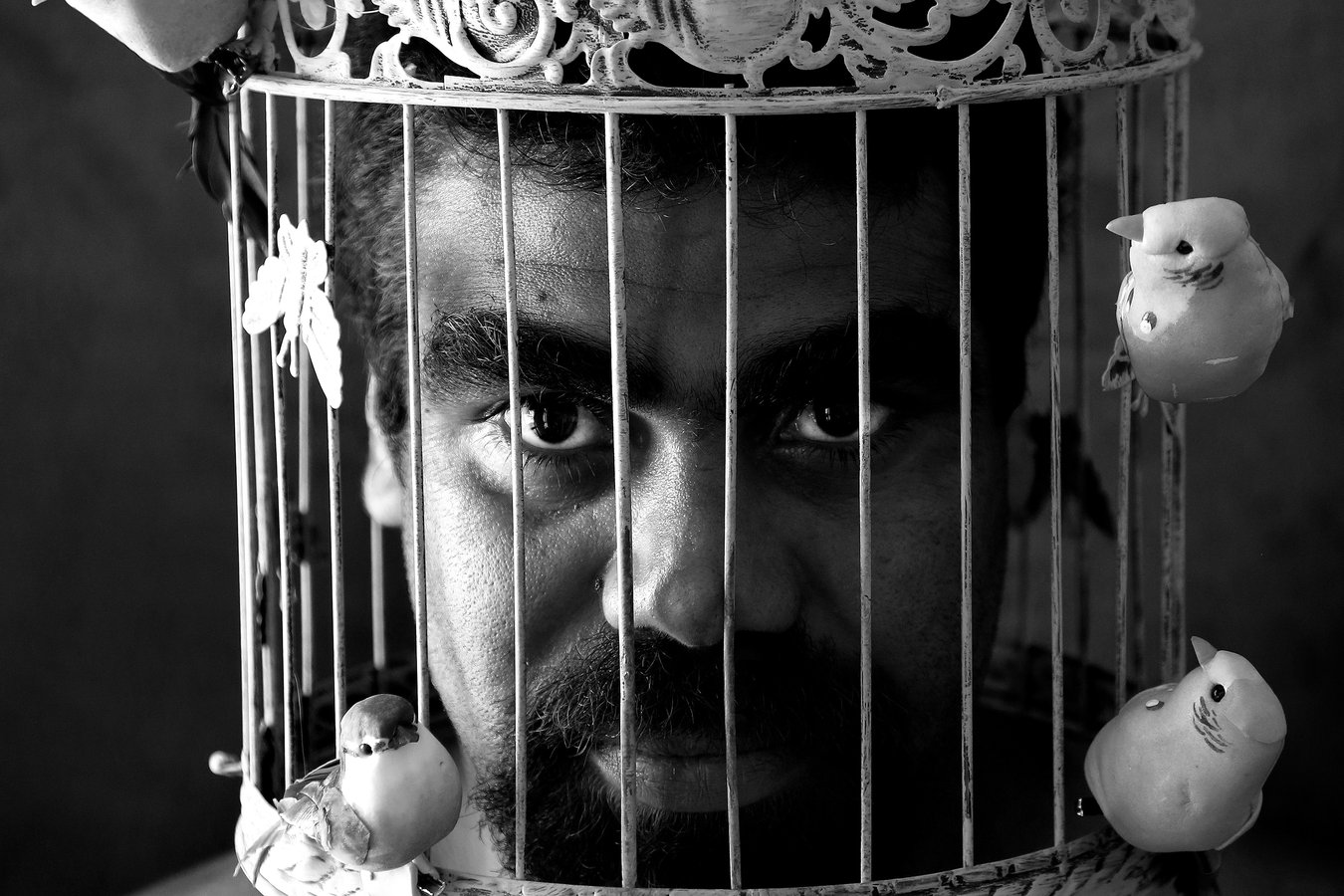
Gayle Kennedy: Yamatji Man, Marlon Noble’s portrait is called 'Noble Cause' Marlon says:
Marlon Noble: ‘He was charged with the sexual abuse and assault of two girls. And because he had an intellectual disability he was found unfit to plead. And therefore his charges were never ever put before a court, or assessed. In the last few years I got him reassessed by a forensic psychologist, and that forensic psychologist found out that he was fit to plead. The Department of Public Prosecutions refused to re indict him, because the girls were saying, quite clearly, that nothing ever happened. He has never had his day in court.’ No … I am not free. I am out of prison, but I am not free yet.’
Mick Gooda: As Aboriginal and Torres Strait Islander Social Justice Commissioner, along with Graeme Innes, the former Disability Discrimination Commissioner, we welcomed Marlon Noble’s release after 10 years behind bars without a trial. There is still a need for the criminal justice system and the mental health system to be more flexible in the way they deal with people with disabilities. We have also called for the removal of the onerous conditions placed on Mr Noble’s release. Despite being found unfit to stand trial in 2003 and never actually being convicted of anything, Marlon has remained in prison after being accused of sexually assaulting two girls in Western Australia in 2001. Even though Marlon was never convicted, the conditions attached to his release treat him like a convicted criminal. Marlon needs to be given an opportunity to clear his name and he needs to be able to return to the life he was robbed of 10 years ago. The conditions attached to his release read like a lifetime punishment, but they are for someone who has never been found guilty of anything. For example, he is not allowed to stay anywhere other than his own place without the permission of the Western Australian, Mentally Impaired Accused Review Board, something which will prevent him from travelling to visit the grave of his mother, who was murdered while he was in jail, unless he has the Board’s permission. The law needs to be reformed so that what happened to Marlon never happens to anyone else ever again.
Gayle Kennedy: Thank you to Mick Gooda who is the Aboriginal and Torres Strait Islander Social Justice Commissioner at the Australian Human Rights Commission. Mick is from the Gangulu People.